Monday, December 29, 2008

SLANTblog 2008 Sampler

[SarahPalin2b.jpg]
Sarah Palin remembered

In the publishing business, whether mainstream or blogstream, this is the season for filling space with looks back at the year about to end, through the publisher's prism. At their best, such navel-gazing exercises give us a best-of overview of the year, a time capsule that puts some recent history into an entertaining perspective.

No need to remind anybody of how much time can be wasted on reading such exercises that are just more copycat stories, fluffed up again.

Rather than call what follows the best of what appeared under the SLANTblog masthead, or a time-line for the year, let's just say it's SLANTblog's sampler of 2008 snapshots, with some random notions and images tossed in that ask for a second glance.
-- Words and art by F.T. Rea

Atheist or Christian president?

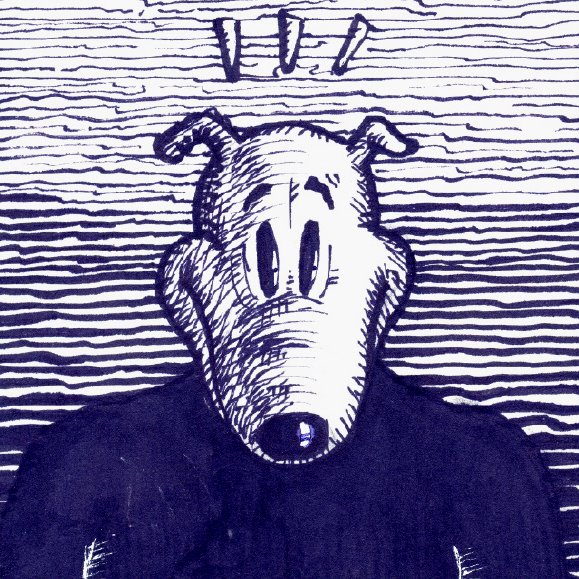
Speaking of religion, politics and inauguration invocations, Rebus, the only official spokesdog for SLANTblog wonders:

In the long run, wouldn't it be safer for us to have an atheist president with his finger on the button -- nuclear oblivion! -- than a Christian president, who truly believes in a heavenly afterlife?
An afterlife that is a better place? Uh-oh! Might an atheist president care more about the real life we are living now on Earth than a Christian president?

-- Art and words by F. T. Rea

Sunday, December 28, 2008

VCU's Seipel to Savannah College of Art and Design

Joe Seipel, a former owner of the Texas-Wisconsin Border Cafe, who did as much as anyone to put VCU's sculpture department on the national map, is leaving Richmond for Savannah.
For over three decades Seipel’s contributions an artist and educator have had quite an impact on Richmond’s art scene and have done much to put VCU on the map. He had a hand in selecting Stanley Bleifeld as the artist for the well-received Virginia Civil Rights Memorial that was dedicated in Capitol Square, this past summer.
Click here to read "Seipel to leave VCU" at the Fan District Hub.

Sanders paced Rams past Pirates

Sophomore forward Larry Sanders had a breakout game in leading VCU to a win over Hampton at the Siegel Center. Sanders, heretofore seen by some as a shot-blocking specialist, scored 21 points and grabbed 19 rebounds in pacing the Rams to a 59-54 decision over the Pirates.
A near sell-out crowd of 7,405 at the Siegel Center on Saturday night watched VCU sophomore forward Larry Sanders blossom into an intimidating inside presence that was just to much for the visiting Hampton Pirates to handle.
Click here to read more about the game at the Fan District Hub.

Saturday, December 27, 2008

Uncle Rick Warren

President-elect Barack Obama has chosen Rick Warren to give the invocation at the inauguration and some number of Obama’s bandwagon of supporters are way less than happy about it.

Chief among them are various spokespersons for gays and lesbians, who have being saying so, repeatedly, for the last week. The most vociferous of them apparently see Warren as a poster-boy enemy of their political agenda.

Yes, if you’ve paid attention to the political news, this holiday season, you know that Warren -- the celebrity pastor of Saddleback Church -- is on some lists of unacceptable preachers. Of course, “unacceptable” is in the eye of the beholder. Where have you gone Jeremiah Wright?

Along with all else it’s been, 2008 has been spotlight year for news-making celebrity preachers, who dabble in politics.

Even though Warren won’t be in Obama’s cabinet, or a member of his White House staff, or will likely have any effect on any policy whatsoever, pundits and propagandists have been drumming the Warren story like Obama had asked Richard Viguerie to be his Secretary of State, or Pat Robertson to be Attorney General.

Instead, what Obama has done is tantamount to asking a crazy uncle, who only shows up for Christmas dinner each year, to say grace over the banquet. This savvy move shines a light of worldly tolerance on all manner of Christian preachers, who have some out-of-date opinions -- from Reverend Warren to Reverend Wright.

So, to create a story they can run on a continuous loop, the eager-to-sell-advertising media are turning their cameras and microphones toward noisy single-issue types, who will hyperventilate on cue. Like, who knew that when Obama said he would reach across the aisle, to govern from the center, he really meant it?

For two more opinions on this angle, click here for Andrew Sullivan's "Freedom or Power," and here for "Why Obama Chose Rick Warren" by Jon Henke.

Tuesday, December 23, 2008

House of Freaks interview


The House of Freaks, a two-man band -- Johnny Hott on drums, the late Bryan Harvey on guitar and vocals -- appeared on Mondo City in 1990. Here's the second YouTube excerpt from that interview on the very local cable television show that I produced and hosted.

For a look at the first excerpt posted at YouTube, which actually came later in the program, click here. For more background on the deaths of the Harvey family click here.

Saturday, December 20, 2008

Fast break dreaming

My connection to basketball now is almost entirely vicarious; I like to write about college basketball for money. And, if nobody pays me, I write about it, anyway.

These days, I don’t watch nearly as many games on television as I used to. But last Saturday, being in the crowd that saw the VCU Rams steal a game from their archrival, the Richmond Spiders, was a gas.

Although the game had been tough on my body, at 46 I was still a basketball junkie, who had to play twice a week. My girlfriend in those days used to say I was much easier to deal with after I’d had my dose of hoops.

Then I quit. One day, after playing for 10 years without medical insurance, and living off of freelance work, I got too scared of getting hurt. Couldn't afford to be on crutches, again.

At first, I missed playing basketball terribly. Every now and then, I still dream about running on a fast break. When I woke up this morning there was a trace of one of those dreams lingering -- the flow, the angles, the improvisational weave.

Friday, December 19, 2008

One for the road?

From photographer Artie Probst, here's a shot (click on image to enlarge it) taken at Shenanigans' Christmas Party that might have a familiar look to a generation of Richmond's barflies and rock 'n' roll aficionados.Yes, that's Chuck Wrenn, dean of Richmond bartenders standing behind that bottle of Bushmills. To make the party just so, Chuck was the guest celebrity bartender at Thursday night's seasonal throwdown.

Hey Chuck, let's toss one back for ol' No. 33, Slingin' Sammy Baugh!

Unvarnishing Virginia History

This week's announcement of what has been found at the Lumpkin's Slave Jail site in the parking lot of Main Street Station brought to mind a piece I wrote for STYLE Weekly, back when the late Rozanne Epps was the Back Page editor. Here's an excerpt of "Unvarnishing Virginia History."
In 1961, my seventh-grade history book, which was the official history of Virginia for use in public schools — as decreed by the General Assembly — had this to say about slavery at the end of its Chapter 29:

Life among the Negroes of Virginia in slavery times was generally happy. The Negroes went about in a cheerful manner making a living for themselves and for those whom they worked. They were not so unhappy as some Northerners thought they were, nor were they so happy as some Southerners claimed. The Negroes had their problems and their troubles. But they were not worried by the furious arguments going on between Northerners and Southerners over what should be done with them. In fact, they paid little attention to those arguments.

In 1961 I had no reason to question that paragraph's veracity. Baseball was my No. 1 concern in those days. Now those words read quite differently.
Click here to read the entire piece at STYLE Weekly.

Yes, I know there are Richmonders who would rather have left what remains of that slave jail/human corral covered up. But it is part of our history and what happened needs to be understood. The only way for our grandchildren to know how officially twisted my 7th grade history book was is to shine a light on the truth.

Eventually, I hope some sort of museum-like display and proper memorial will stand on the place where Lumpkin once did business in Shockoe Bottom.

Wednesday, December 17, 2008

The people's disinfectant: Sunlight

At the Fan District Hub, a community news website, I've posted an OpEd style essay on "sunlight" into the workings of government. It advises Mayor-elect Dwight Jones to see sunlight as part of the solution to Richmond's problems. The beginning of the piece is as follows:

Over the last year, what had been an ambient longing for cultural and political change coalesced. The voters willingly took a leap of faith. But what happened on election day, with its dramatic mandate for change, wasn’t the fickle result of a tidal wave. It came from what had been a long steady rain.

With high-profile executives under fire in many quarters, 2008 has proven to be a bad year for bad leaders. In both the private and public sectors incompetent leadership has been denounced bitterly.

Just as the nation is now eagerly watching President-elect Barack Obama for signs of hope that change will mean brighter days ahead, Richmonders have their eyes on Mayor-elect Dwight Jones. Coincidentally, or not, Obama and Jones are both following executives whose once-shimmering luster of popularity has faded to black.

Now Dwight Jones has the power to make a savvy move that would put him in a good light, as he prepares to take office with the new year. He could act boldly to show everybody in town, including current and future employees of The City of Richmond, just how willing he’s going to be to break with the yesterday’s cloistered way of doing the people’s business.

Jones could say, “Let there be sunlight.”

Or, Jones could blow off the opportunity, to stick with the traditional way of running governments that has wanted as little kibitzing from John Q. Public as possible.

Whatever Jones does, “sunlight” is a political issue that is only going to get bigger.

Today’s technology makes it possible for City Hall to open itself up to scrutiny from any citizen with access to the Internet. If Richmond wants to do it in 2009, this city could allow the taxpayers to follow their money through the machinery of government to where it gets spent.

Please click here to read the rest of "Sunlight in 2009."

Tuesday, December 16, 2008

Daily newspapers on life-support

At TimesOnline Andrew Sullivan zeroes in on the topic that more and more writers are focusing on -- the death of the daily newspaper, as an institution.
[The newspaper industry] has been faltering badly under the pressure of new media for a few years. For much of the past decade, circulation for all papers has been declining at about 2% a year. The last year has been a test case of sorts. Newspapers had the story of a lifetime: an election campaign of historic interest, suspense, drama and personality. From Hil-lary to Barack, from John Edwards’s love child to Sarah Palin’s Down’s syndrome child, from John McCain’s wild lunges for relevance to the first black president, it was the kind of year in which circulation should have boomed. If you live for a story, this year was an embarrassment of riches.

And yet the decline didn’t just continue. It accelerated.

Click here to read the entire article by author and ace blogger Sullivan.

Closer to home several local bloggers have been posting about/covering what has been the steady withering of the Richmond Times-Dispatch. Could it be that there's a feeling in the air that one doesn't blog about their special list of the dumbest things Media General has done to save its sickly newspaper in Richmond, pronto, the RT-D will go belly up before they get in their licks?

"The Death of the Times-Dispatch," at Once Upon a Hot Summer Night, is the most recent post on this topic. It was written by a RT-D staffer who was just shown the door.

At Bacon's Rebellion, "Who will Report the News?"

I'll look around and post more links that pertain to this topic.

Meanwhile, there's a local blog that is a hub for stories on the inkstained mainstream media, new media, etc., with much of the emphasis on the dying newspapers angle. Click here to visit Blood in the Water, published by longtime Richmond writer/editor Greg Weatherford.

And, published by writer Mariane Matera (former publisher of the Richmond Music Journal), her blog is called Why the Richmond Times-Dispatch is Dying. Click here to visit it.

Still, you can't wrap a fish with a web site. In spite of how strange the economy is now, and how clueless the Richmond Times-Dispatch is seeming lately, I think printed periodicals are going to last a lot longer than those who seem to be delighting in the current trend are saying.

The smart ones will figure out what they do well and cut everything else loose. Maybe newspapers will come out less than every day. Maybe what is really dying are the media empires that own way too many entities to manage them all effectively.

In every line of business, empires are going out of style. Whether there is a General Motors, or not, cars that people want will be manufactured in this country by somebody. What's going to change fast is that overblown companies that make cars people don't want are going to die.

In Richmond, if a smart independent outfit started putting out a free, with-it, newsy, twice-a-week tabloid, maybe 32 to 48 pages, it could be done. No home delivery. It would be picked up at many sites, or mailed out with the receiver paying for the mailing.

With a state-of-the-art web site that changes 24/7, hooked up to the tabloid, it could be done.

It could be done with a lot smaller staff than anyone at Media General, or Landmark Communications seems to realize. Eventually, we'll probably see several efforts along this line.

Remains of infamous local slave jail discovered

On Wed., Dec. 17, at 10 a.m.-10:30 a.m. the findings of the Lumpkin's Slave Jail dig will be presented to the public by the Richmond City Council Slave Trail Commission at a press conference in the parking lot of Main Street Train Station, 15th & Franklin Sts., bordered by E. Broad St. in Shockoe Bottom, right below I-95 to the east.

Included in the what was discovered were the brick foundation, a cobblestone courtyard, the kitchen area and period artifacts.

Established in 1998 by Richmond's city council, the Slave Trail Commission was created to help promote awareness of the history and legacy of slavery in Richmond. The archaeological excavation of the slave jail in Shockoe Bottom has been a major project of the Commission.

Lumpkin's infamous jail was the largest slave holding facility in operation in Richmond from 1840 until the end of the Civil War in 1865. During that time, Richmond was home to the largest domestic slave export business in the United States.

Owned by Robert Lumpkin, the jail was a place that tens of thousands of African men, women and children were "stored" before being transported to their owners, who lived in places where slavery was legal.

Following Lumpkin's death shortly after the Civil war, his widow Mary Lumpkin, who was African-American and a former slave, inherited the estate. In 1867, she leased the jail to Reverend Nathaniel Colver, who established a school for freed slaves at the site. That school grew into what is now Virginia Union University.

-- The information above was provided by Steve Skinner at City Hall; call (804) 646-6052

What it is...

On a cold January morning, nearly 18 years ago, bright sunlight lit up the thin coating of freezing rain that had painted the city the evening before. In the crisp air a slender middle-aged man, a freelance artist/writer, walked at a careful but purposeful pace on the tricky sidewalk. The ice-clad trees along the street were dazzling, as seen through his trusty Ray-Bans. The woolly winter jacket his girlfriend had given him for Christmas felt good.

saddamtar-baby.jpg

Since the freelancer couldn’t concentrate on his reading of the morning’s Richmond Times-Dispatch, he left half a mug of black coffee and a dozing cat on his desk to walk to the post office. He hoped the overdue check from a magazine publisher was waiting in his post office box.

Anxiously, he opened the box with his key. It was empty. He shrugged. An empty box had its upside, too -- there were no cut-off notices in it. With his last 20 bucks in his pocket, the freelancer hummed a favorite Fats Domino tune, “Ain’t That a Shame,” as he headed home.

By the end of the workday the freelancer's mission was to finish an 800-word OpEd piece, with an accompanying illustration, and drop it all off on an editor’s desk. With the drum beat for war in the air he wanted to focus on the inevitable unintended consequences of any war. Yet, with the clock ticking on his deadline he was still at a loss for an angle.

In early-1991 the nation was mired in an economic recession. The national debt was skyrocketing. War with Iraq was looming, it seemed all but inevitable. Pondering what demons might be spawned by war in Iraq he detoured a couple of blocks, to pick up a Washington Post and a fresh cup of coffee.

Approaching the 7-Eleven store the freelancer noticed a panhandler standing off to the left of the front doors. The tall man was thin and frail. He wore a lightweight denim jacket with a hooded sweatshirt underneath. Snot was frozen in his mustache. The whites of his heavy-lidded eyes were an unhealthy shade of pink.

During a time when a much younger version of the freelancer had run a night-life business, one in which he dealt with the public, he had determined his policy should be to never in any way encourage panhandlers to hang around. The rigid policy had lingered well after the comfortable job was gone.

On this cold day it wasn’t easy for the freelancer to avert his eye from the poor soul’s trembling outstretched hand. Not hearing his hoarse plea for food money was impossible.

When there are always so many lives to be saved in our midst, he wondered, why do we have to go to the Middle East in the name of saving lives?

Inside the busy store the freelancer poured a large coffee. Fretting profusely, he snapped the cup’s lid in place. It was one of those times when the little freelancer with horns was standing on one of his shoulders, while his opposite -- the one with the halo -- was on the other, both offering counsel.

The freelancer decided to give the panhandler food, rather than hand over cash that might underwrite a bottle of sweet wine. It might change my luck, he thought. He almost smiled.

Trying to max out the bang-for-the-buck aspect of his charitable gesture, the freelancer settled on a king-sized hot dog with plenty of free stuff on it -- mustard, chopped onions, relish, jalapeno peppers, chili and some gooey cheese-like product. Not wanting to push it too far, he passed on the ketchup and mayonnaise.

Outside the store, the freelancer found the starving panhandler had vanished. So, the crestfallen philanthropist took the meal-on-a-bun with him as he walked, softly singing a Buffalo Springfield song, “For What It’s Worth.”

"There’s somethin’ happening here,
What it is ain’t exactly clear.
There’s a man with a gun over there,
Tellin’ me I gotta beware.

I think it’s time we stop, children, what's that sound,
Everybody look, what's going down."

A line from that song’s last verse -- “paranoia strikes deep” -- suddenly snapped an idea for the OpEd into place, which launched an instant mini-mania. A block closer to home an image for the illustration occurred to him. He picked up his pace.

Back in his studio, rather than waste money, the freelancer tore into the feast he had prepared for a beggar. The food scared, or perhaps offended the cat, who fled.

Between sloppy bites the artist wiped his hands off and sketched furiously to rough out a cartoon of Saddam Hussein as the provocative Tar Baby of the Uncle Remus story, taunting/inviting America into a war.

About an hour later the heartburn started. Eventually, it got brutal.

The writer described the way propaganda works to sell war -- every war -- as glorious and essential to the everyday people, who risk their lives. That, while the wealthy, who rarely take a genuine risk on anything, urge the patriots on and count their profits.

Thinking of the war in Vietnam that thinned out his generation, he wrote: “After the war the veterans were largely ignored, even scorned.”

The freelancer lamented the popular culture having gone wrong, so there was no longer a place for anti-war protest songs. He wrote, “Where are today’s non-conformists?"

The freelancer turned in his work at 4:50 p.m. An hour later his sour and noisy stomach began to calm down during his second happy hour beer, which a friend bought for him. When he recounted the tale of the stuffed frankfurter and the inspiration of the Buffalo Springfield song, he made his belly ache seem funny to those gathered at the elbow of the marble bar.

Once again, the freelancer had met his deadline.

-- 30 --

-- words and art by F.T. Rea

Portis must be traded

The remaining sports columnist at the Richmond Times-Dispatch, Paul Woody, hits a bulls-eye with his "Skins should sever ties with Portis."
From the media's standpoint, Portis is a delight to interview. He's polite and says what is on his mind.

As a running back for the Washington Redskins, Portis is a headache to coach.

Portis and coach Jim Zorn are having a difficult time co-existing. One of them must leave after this season.

It's time for Portis to go.

Click here to read the entire piece.

Portis is a star in the NFL. He may well have more All-Pro seasons ahead of him. But what he said this time on John Thompson's radio show wasn't funny and it went too far. It had to have divided the Redskins locker room. Some of Portis' friends are probably still saying he was right in what he said. Surely, other players are backing their embattled rookie head coach, Jim Zorn.

In a team sport, Portis did what players can't do, even if what they say has plenty of truth in it. What Portis said on the radio about his coach needed to be said behind closed doors, to the coach's face, or not at all.

It's no secret that Portis doesn't like to practice. Like the fantastic basketball player, Allen Iverson, he believes he should save his all for the games. Both guys play hard. But I suspect Iverson will never play on a NBA championship team. The same goes for Portis. Neither guy seems to understand that talent alone doesn't win championships in team sports. The best team wins.

The Redskins can get plenty for Portis. In the off-season he should be traded for the best offensive lineman they can get. Maybe they can get a draft choice thrown in, too.

Zorn inherited a team with an offensive line that was about to fall apart and a quarterback who lacked confidence. As a rookie, hired out of the blue, it was not Zorn's job to tell owner Dan Snyder's Executive Vice President of Football Operations, Vinny Cerrato, that the offense sucked. It was his job to take the personnel he inherited and score more points.

Next year, for the Redskins to be a better team they will need better players, especially on offense. And, that means players who understand you can't divide the locker room into feuding camps. It may also mean a different quarterback.

Friday, December 12, 2008

Tsunami of revulsion over sports $

With Major League Baseball's winter meetings in Las Vegas underway, the weather there is nice enough -- sunny and 60 degrees. But there’s a tsunami heading toward the New York Yankees, who just signed a pitcher -- C.C. Sabathia -- to a seven-year, $161 million contract. Sabathia, 6-7, 250, a southpaw, had been throwing baseballs from pitching mounds in the Big Leagues for the last eight seasons, mostly for the Cleveland Indians.

In 2009, based on his career stats -- an average of 207 innings per year -- Sabathia will make approximately $111,111.00 per inning pitched this season. In each of those innings he will throw about a dozen pitches, which will take him some 10 minutes. In most games he will throw something less than nine innings, usually six or seven.

Nice work ... if you can get it.

By April, when the season starts, there’s a good chance a lot of baseball fans will be out of work, probably more than are today. Some of them will be able to afford to go to games at the new zillion dollar Yankee Stadium. Many will not. So, they’ll have to watch the games on television.

Of course, for the Yankees fans who’ve had their cable TV disconnected, they’ll have to follow Sabathia’s adventures some other way. Newspaper? Maybe not.

The salaries of professional athletes have been popping eyes for decades. But the money was there, so capitalism has been good to star players. It’s been good to the owners of the teams and ESPN, too. In general, sports fans have seemed content with all that. The large money came from fans who paid for seats, and even more so from companies aiming an advertising message at those fans.

Well, in case you haven‘t noticed broadcast advertising is diminishing. Newspapers advertising is disappearing. Brother, can you spare a dime?

Yes, the money surrounding sports has been vulgar for a long time. In easy times, it was shrugged it off as inevitable. Now times are changing fast and the revulsion factor is on its way to reaching a tipping point.

So, all across the land, what has been a simmering disgust with publicly-financed stadiums is on its way to that tipping point, too. To get local, Richmond is in the same boat as the rest of America. Dig it: Richmond will not build a baseball stadium in Shockoe Bottom.

The public’s patience with millionaire snotty poseurs who cheat to win, and lie about it afterward, like pitcher Roger Clemens, is inching toward that tipping point.

The money that propped up the wretched excesses of professional sports is running out. The tsunami of public revulsion won‘t just punish the New York Yankees. It‘s going to change the relationship between sports and money forever.

Brother, can you spare $161 million?

Thursday, December 11, 2008

The Second Looking

The revulsion I felt at a particular moment in college comes to mind, from time to time. Revved up over an English class assignment to write a paper on The Second Coming, by W. B. Yeats, I stayed up all night crafting it, and thought I had hit a home run.

The professor, an awkward, gangly sort of fellow in his late-20s, gave me a “C” on it. A few days before he had given me a "B" on a pop quiz on a short story that I hadn't even read; all I knew was the title and who wrote it.

Well, I just had to ask him to explain to me what was wrong with the paper I had written on The Second Coming. In a private conference he told me my analysis of the poem didn't jibe with the accepted school of thought on what Yeats was saying. While admitting my writing and analytical technique were fine, he nervously explained that I was simply wrong in my conclusions, no matter how well-stated my case might have been.

Wrong!

That pissed me off, so I told him I thought that ambiguity could imply multiple meanings, and it deliberately invited alternative interpretations. Rather than defend as his rather narrow minded stance the man suddenly grabbed his face and broke into tears.

The sobbing professor went into a monologue on the shambles his life had fallen into. His personal life! Worst of all, he said, his deferral had just been denied by Selective Service, so he would soon be drafted.

He was wearing a pitiful brown suit. His thinning beige hair was oiled flat against his scalp. My anger over the bad grade turned into disgust from his out-of-control behavior. As I remember it, I walked out of his office to keep from telling him what I thought.

Now, 40 years later, I feel sorry as hell for the poor schlemiel. And, I can't understand why I had so little sympathy for him then. Instead, all I had to offer was the impatience of youth.

Over the years since, when I've read The Second Coming or seen a reference to it, that day's oddball occurrence flashes by. It did today.

Tuesday, December 09, 2008

Baseball in Richmond moving to the back burner

Lately, when I hear somebody talking about building a baseball stadium in Shockoe Bottom, I laugh. You see, I'm past the point of arguing that it's a terrible location and that too many of what were R-Braves fans -- the Little Leaguers in the uniforms, church groups, veterans in wheelchairs, parents with their children, etc. -- won't go to that neighborhood after dark, in sufficient numbers to make it work.

Now the reason not to build is more obvious and less debatable. No one in their right mind would prop up a zillion dollar development on anticipated revenues from shops around a baseball stadium. That concept isn't working in DeeCee and other cities that have hitched their wagons to that star.

Now, the stark reality is that with the economy sinking into whatever you want to call the no confidence/no credit time in which we find ourselves, just maintaining The City's deteriorating infrastructure is probably going to be difficult in the immediate future. Schools and streets and what's under the streets is likely to sop up most of what cash comes in next year.

So, the baseball issue in Richmond is moving to the back burner for a while. My guess is that cities all over the country are going to have to do the same thing.

The taxpayers aren't going to like seeing their dough going into such projects. With Citi Bank getting billions from the federal government, it isn't going over so well with some folks that substantial chunks of that money is apparently going toward the bank's sponsorship of the Rose Bowl Game on Jan. 1 and to pay for putting the bank's logo on the New York Mets new baseball stadium.

We'll see how that plays out. But I think Citi is going to suffer a hard hit, public relations-wise. As for the jokers in the government who are handing bailout cash to institutions like Citi Bank, well, perhaps we should save the hardest hits for them.

Meanwhile, in the suburbs of Atlanta there's trouble over baseball. It seems Gwinnett County is struggling with shortfalls, stemming in part from building its new stadium for the team that used to be called the "R-Braves. Click here to read "Gwinnett's Chickens Coming Home to Roost."

For an overview with many articles about baseball in Richmond, click here to view the links at Richmond Good Life's special section on the topic.

*

Update: There's an informative post and an ongoing discussion on the baseball stadium issue at Church Hill People's News. Click here to see it.

Lennon: "Stand by Me" cover


John Lennon (Oct. 9, 1940-Dec. 8, 1980)