Wednesday, February 01, 2012

Willard’s Wretched Demise

It should come as no surprise to most film buffs that sometimes there was a dark side to the business of doing business after dark. While some saw the Biograph Theatre as a beacon in the night, for others it was a place to hide out from a sad reality. Like any business, sometimes things just went wrong.

A man died watching "F.I.S.T." (1978). The guy was in his early-30s; he breathed his last sitting in a seat in the small auditorium. The movie was bad, but not that bad. His face was expressionless, he just expired.

As the rescue squad guys were shooting jolts of electricity into his heart, and his body was flopping around like a fish out of water on Theater No. 2’s floor, down in Theater No. 1 "The Rocky Horror Picture Show" was on the screen delighting its usual crowd of costumed screwballs.

There was a night someone fired five shots of high-powered ammo through one of the back exits into Theatre No. 1. Five bullets came through a back door's two quarter-inch steel plates to splinter seats. Amazingly, no one was hit. It happened just as the crowd was exiting the auditorium, about 11:30 p.m., and it seemed no one even caught on to what was happening.

Later the police were baffled, leaving us to speculate as to why it happened.

While it’s fun to brag about successful promotions, on the other hand, sometimes I bit off more than I could chew.

On October 22, 1982, “The Honeymoon Killers” (1969) opened as a midnight show. I had seen it somewhere and become convinced it would appeal to the same crowd that loved absurd comedies by Luis Buñuel and Robert Altman, and those trash culture aficionados who had adored previously popular midnight shows, such as “Eraserhead” (1977), or “Harold and Maude” (1971).

A droll murder spree movie in black and white, it turned out “The Honeymoon Killers” mostly appealed to me … when I was in a goofy mood. I saw it as a comedy. In its two-week-run, it nearly set the all-time record for worst attendance for a Biograph midnight show. The absolute worst? That little fiasco's story is best left for another time. 

Sometimes, with unpredictable situations, I just made the wrong call. Perhaps the worst of them was about another death in the Biograph.

Apparently some rat poisons make the victims crave water. Sometime in the mid-'70s, a popcorn-addicted rat we called Willard must have finally nibbled on some the exterminator’s poison; it died in the Coca-Cola machine's drain and totally clogged it up.

The situation called for a manager's quick decision to be made in the field. However, not knowing about the hidden rat corpse, and thinking I knew what to do, I poured a powerful drain clearing liquid -- we called it Tampax Dynamite -- into the problem. My experience told me that stuff could eat its way though any clog in a pipe.

Although the TD had previously done wonders in the theater's rest rooms, well, this wasn't one of my better decisions.

Before long before a foul-smelling brown liquid started bubbling in the drain and then backing up and into the lobby's carpet around the candy counter. There was no stopping its spread, as Willard’s revenge worked its way.

The wretched mess that ensued ran everybody out of there on a busy Saturday night -- the stench was unbearable. We had to close.

Oops!

My forgiving bosses in Georgetown had a new carpet installed in the lobby right away; it was much nicer than the original had been.

Sign of the Times

One summer afternoon in the mid-1970s, I was walking about 20 yards behind a guy heading east on the 800 block of West Grace Street. Then, like it was his, he casually picked up the Organic Food Store’s hand-painted sandwich board style sign from the sidewalk in front of the store.

Without even looking around for any witnesses to his act of dishonesty the sign thief kept going at the same pace.

As I walked faster to close the distance between us we continued down the red brick sidewalk. By the time we had passed the Biograph Theatre, where I worked, I had sized him up and decided what I would do. He was a big-haired hippie, 18 to 20 years old; he could have been a student. Or, he might have been a traveling panhandler/opportunist. In those days there were plenty of both in the neighborhood.

Passing by Sally Bell’s Kitchen, in the 700 block, I was within six or seven yards of him when I spoke the lines I had written for myself while walking. My tone was resolute, my voice clear: “Hey, I saw you steal the sign. Don’t turn around … just put it down and walk away.”

The thief’s body language announced that he had heard me, but he didn’t turn around. Instead he walked faster, with the sign under his right arm, holding the weight with his hand.

Moving closer to him, I said with more force: “Put the sign down. The cops are on the way. Walk away while you still can.”

Without further ado the wooden sign clattered onto the sidewalk. The sign thief kept going without looking back. As I gathered my neighbor’s property I watched the fleeing hippie break into a sprint, cross Grace Street and disappear going toward Monroe Park at the next corner.

Then I carried the recovered property back to the store, which was a few doors west of the Biograph. Obviously, I don’t really remember exactly what I said to the thief over three decades ago, verbatim, but that was a faithful recounting of the events.

What I had done came in part from a young man’s sense of righteous indignation, together with the spirit of camaraderie that existed among some of the neighborhood’s merchants in that time. There were several of us, then in our mid-to-late-20s, who were running businesses on that bohemian strip — bars, retail shops, etc. We were friends and we watched out for one another.

Now I’m amazed that I used to do such things. My tough guy performance had lasted less than a minute. The character I invented was drawn somewhat from Humphrey Bogart, with as much Robert Mitchum as I could muster. Hey, the thief must have felt lucky to get away.

Who knows? Maybe he’s still telling this same story, too, but from another angle.

This much I know — that quirky pop scene on Grace Street in those days was a goldmine of offbeat stories. Chelf’s Drug Store was at the corner of Grace and Shafer. With its antique soda fountain and a few booths, it had been a hangout for magazine-reading, alienated art students since the late-1940s. It seemed frozen in time.

The original Village Restaurant, a block west of Chelf’s, was a legendary beatnik watering hole, going back to the 1950s. Writer Tom Robbins and artist William Fletcher “Bill” Jones (1930-‘98) hung out there. Strangely, that location has remained boarded up for decades, while the new Village still goes on across Harrison Street. That same neighborhood was also home to cartoon-like characters such as the wandering Flashlight Lady and the Grace Street Midget.

During the late-‘60s the hippies had come on strong to replace the beats, as the strip went psychedelic, seemingly overnight. But by the mid-‘70s the hippie blue jean culture had peaked. It was about to be replaced by the black leather of Punk Rock and polyester of the Disco scene. All-night dance clubs became popular.

So, by the late-‘70s the mood on the strip had changed severely. Cocaine was becoming the preferred drug of choice with the druggie in-crowd, replacing pot. Several restaurants were serving liquor-by-the-drink, the dives catering to the young set began having rugged bouncers at the door.

Into the ‘80s I remember an angry, red-bearded street beggar with a missing foot threatening to “bite a plug out” of me, because I had had the temerity to tell him to stop bothering people in front of the Biograph, to move on.

In that moment it was painfully obvious to me that times had indeed changed. Wisely, I didn’t press my case any further that day. Instead, I moved on.

-- 30 --

Cowardly Elephants?

Given the painfully slow recovery from the 2008 economic meltdown and the nasty recession it set in motion, it follows that Obama would struggle to get reelected.

Given the glaring flaws of the two GOP frontrunners, it still mystifies me that the GOP hasn't been able to locate a better candidate to run against Obama.

Given the anxiety and anger in the air, it would seem Team Elephant could do better ... not that I'm complaining.


Tuesday, January 31, 2012

Fletcher on the Giants and Pats

Probably for Redskins fans only: All-Pro Washington linebacker London Fletcher's take on the Giants, with their stingy defense, and the offensive-minded Pats:
"Absolutely, because of his level of preparation. Because [Brady is] going to know you, he's going to study you, and know what you're going to do and what you like to do. So you've got to be on top of your assignments and execution, because it's going to be as much a mental game as it is physical against Brady.''
 Click here to read the entire article at SI.

Saturday, January 28, 2012

Propaganda 101: Control the language

Having grown up in Richmond, Virginia, I understand some things about a certain strain of conservatism. I know that to some conservatives any idea that challenges the establishment will be called “liberal.”

In the 1960s people who opposed the war in Vietnam were called “pinkos,” which was a pale shade of red -- meaning Bolshevik. Citizens who worked to end Jim Crow laws and segregation in public schools were accused of being in league with Moscow. The pinko label was also applied to those who were environmental activists.

Then, in the 1970s, right-to-life people who were opposed to the Roe vs. Wade decision on abortion -- those who wanted the government to regulate women's bodies -- claimed to be the true conservatives.

Today those who stand against the notion of “corporate personhood” are branded as liberals by those who agree with the Citizens United v. Federal Election Commission Supreme Court decision. Taxpayers who insist there be no additional regulation of Wall Street appear to think they are being true to their conservative school.

In this view of the political landscape the self-named conservatives appear to see themselves as standing on the sensible middle ground. To simplify their point of view to high contrast, they see feudalism to the right of them and communism to the left. Fascism is frequently viewed as an aberration to be ignored. 

Confused yet?

Please note that none of the characterizations above really have had much to do with classic stances of the “left” and “right” on basic economics issues.

Many so-called conservatives seem to believe the mainstream media in the United States are inevitably left-leaning. Never mind that in order to believe that fanciful notion you’d have to be convinced that the millionaires who run the giant corporations behind the broadcast networks, the largest newspapers and periodicals, etc., are dupes.

Dupes, because over the decades they would have to have been consistently tricked by liberal writers and producers into presenting a left-leaning version of the news that runs against their financial interests.

Don’t most multinational corporations want to pay little or no taxes on their income? Why would big media bosses deliberately hire lefties? Why would corporations that profit from war insist that news reports about a war be presented from an antiwar standpoint?

In the last year we’ve seen conservatives decry the negatively slanted coverage of Tea Party stories, and at the same time they complained that the Occupy Wall Street movement received too much coverage ... of course, they see that coverage as having been too sympathetic.

Now for the unvarnished truth about this propagandistic labeling business: To the pickled-brains fans of Rush Limbaugh and Fox News, anything they don’t like is seen as liberal. That’s it. And, anything the Democrats favor, they are adamantly against. Even when they were in favor of it a year ago, if Obama is for it, then it’s another dastardly step toward "European socialism" to be avoided at all costs.

In such a strange world of tortured definitions a “conservative” president can launch an elective war over bogus reasons that drives America way deep into debt. Then, of course, it's "conservative" to blame the war debt on the Democratic president that follows ... while calling for another war to be set in motion.

Friday, January 27, 2012

The Biograph's 40th and perhaps a new cinema

http://www.richmondmagazine.com/images/blogs/cd1b132d215de0ebd76df3c5a5c2542b.jpg

At Richmond Magazine Harry Kollatz focuses his blog, The Hat, on the Biograph Theatre's 40th anniversary celebration and perhaps a new artsy cinema in the works: 
The Biograph Theatre closed in December 1987, just shy of its 16th anniversary and amid its “Last Gasp Film Festival,” when the landlord padlocked its doors, ending a consistent run of art-house repertory cinema in Richmond. Since then, in peripatetic fashion, the banner has been taken up by the group known today as the James River Film Society, which is marking the 40th anniversary of the Biograph with a high-quality double feature as part of its effort to establish a “storefront cinema” here.
 Click here to read the entire post.

Click here to see the Facebook page for the event set to unfold on February 11th.

Click here to buy tickets.

Note: Tickets, $20 each, are also on sale at Plan 9 Music, Video Fan and Harrison Street Coffee. Proceeds to benefit the James River Film Society. 

Thursday, January 26, 2012

How About 139 Worthwhile Movies?

Why another list of old movies?


With the Biograph Theatre’s 40th anniversary celebration on Saturday, February 11, in mind -- "Breathless" (1960) and "Lonely Are the Brave" (1962) will be screened -- my theater manager's instinct to promote good movies was reawakened.

Whereupon, I forced myself to assemble a big fat favorites list and post it at the James River Film Journal. The 139 movies on the list all played at Richmond’s Biograph during my 139-month stint as its manager (1972-83).

For convenience the list was broken up into three posts. To see Part One, the first 40 titles, click here. The second 40 are here. The remaining 59 movies with film notes are here.

Hopefully, this effort represents a fair overview of the sort of movies that were staples at art houses and revival theaters during what was the Golden Age of Repertory Cinema. The James River Film Society is presenting the Biograph's 40th party as part of its focus this year on that Golden Age. Other events will follow.

The Biograph opened at 814 West Grace Street in February of 1972 and closed in December of 1987, two months shy of its 16th anniversary.

Saturday, January 21, 2012

Not exactly the Good Samaritan

So, pretend you're an evangelical conservative down in South Carolina. You're a school-of-hard-knocks, retired military guy.

Today you're wondering which campaigning Republican should get your vote. Since all four hopefuls claim to be purebred conservatives, which of them best lives up to your Christian values? And, of course, it matters which one stands the best chance of beating Obama.

Can you vote for a serial philanderer, who's pomposity is off the charts? Can you vote for a Mormon, who's not exactly the Good Samaritan of the business world? What about that eccentric antiwar doc, the one who's ready to legalize pot? Can you vote for a Santorum?

Thursday, January 19, 2012

Dog fights snake to protect girls

Here's a story lovers of good yarns about heroic dogs will like. 
An Australian family's dog is being called a hero after it rescued two young girls from a snake attack.18-month-old River spotted a two-foot-long brown snake hiding under a children's swing just as 7-year-old Michelle Lynch and 2-year-old Kaylee were headed its way.
Go here to read the entire article.

It reminds me of a true story from my own childhood. When I was about five years old I witnessed an event, to do with a snake, I still remember clearly.

In my back yard I saw a big snake that I was later told was a water moccasin. For whatever reason, I wasn't properly afraid of it; I wanted to see it more closely. My golden cocker spaniel, Pixie, would have none of it. She barked at me and nipped at my legs to chase me back toward the porch. Then she went over to the snake in the grass and kept running circles around it, barking continuously.

Suddenly, a kid about 15 named Bud, who lived next door, came to the rescue. With a garden hoe in his hand he jumped the fence. Then he chopped the snake into pieces. Can you imagine how cool that looked to a five-year-old boy?

Later on, some of the neighborhood's old men, including my grandfather, stood around the trash barrel in the yard telling snake stories. Naturally, I took it all in. The snake remains were in the barrel. One of the men told me we ought to separate the pieces of the snake, or it could grow back together, as the sun goes down. My grandfather laughed.

By the way, Pixie suffered no injuries. Needless to say, it was no easy task getting me to come inside the house as twilight descended on the scene. I recall standing guard over the barrel, watching the chunks of that dead snake for any movement whatsoever.

Wednesday, January 18, 2012

Oodles of Newt

If Newt Gingrich didn't even exist this election year, and, let's say I'm a fun-loving magician. Dig it: I can invent people out of thin air ... and I'm a Yellow Dog Democrat.

Well, I might take a look at awkward-in-his-blue-jeans Mitt Romney -- churning over his tax returns spin -- and say with a smile, let there be oodles of Newt!

Want to make Mitt reveal his tax info?

First you charge that he has paid ZERO taxes in his entire silver-spoon life. He will deny it.

Naturally, the lefty media will howl. Disgustingly, Newt will gain another 10 pounds.

More importantly, Romney is such a chump, it will boost him into admitting that while he has parked zillions off-planet, at times, he frequently paid more in taxes than did anyone in his battalion of secretaries. 

Saturday, January 07, 2012

God Creates Sidemen

1. "And so the great Leader Nebulon did embark upon a search for suitable Sidemen for his orchestra, and he could find none; for in those days there were not many, and those he could find were already working.

2. Some worked the Ark with the House of Noah, and some had the house gig at The Walls of Jericho. And many played behind the scat-singing team of Shadrach, Meshach, and Abednego.

3. So Nebulon did return to the Lord and saith, "Lord, there are many musicians, but no Sidemen!", and he rent his clothing asunder.

4. And the Lord did say, "Hast thou looked everywhere? Didst thou call the Union?"

5. And Nebulon did say, "Lord, I have looked high and low, especially low; and only one or two could I find. What shall I do?"

6. And the Lord did afflict Nebulon with boils, saying unto him, "Leave Me to think on this!"

7. And just to buy some time he did also visit a plague of locusts upon Egypt.

8. And the Lord did summon a league of Angels, and sent them forth over the land, commanding them to find Him some Sidemen.

9. And the Angels did go to the four corners of the earth, but the only unemployed Sideman they could find was one holy man in India who did play the horn with the slide.

10. So with great fear the Angels did return to the Lord with the bad news, and filled with wrath He said, "How can this be? At one time the world did teem with Sidemen, as dead oxen do with maggots!"

11. And the Angels did say, "Lord, many left the business, many have become idiots, and some have even become Leaders, and no Leader will work for another Leader."

12. So the Lord did cause drought for 40 days while He thought, and at last the answer came unto Him. He did recall that there was a factory, part of his Beasts Of The Field, Inc. division, that was in disuse.

13. For it had earlier been used to create Golems, for which there had been no great demand, and so He had closed down the operation. And He thought, 'We can retool, and start turning out Sidemen.'

14. And so it was done, and it came to pass that the Sidemen started rolling off the assembly line.

15. But somehow a remnant of the Golem program remained, and the Sidemen did come out acting unpredictably.

16. Some stammered and stuttered, some talked to themselves under their breath, and some would not bathe.

17. Some refused to shave their beards or to have their hair shorn, and some refused to wear the Gigging Toga.

18. And some wore the Toga, but left them crumpled in their chariots in between Gigs, or slept in them, or wore Togas from eons past, with ruffles.

19. And some did not believe in maps, and wandered the land aimlessly looking for the Gig, and some did not believe in the use of the hourglass, and arrived at the Gig whenever they chose.

20. And some loved the wine of dates, and some loved the burning of hemp.

21. And some were created without ears, and some with knuckles where their eyebrows should be.

22. And some did worship the gods Mahavishnu, Sun Ra, Trane, Jaco, Ornette, Cecile, and did therefore mock their Leaders at will.

23. And some did steal food from the buffet line, yea, even before the Guests had dined.

24. And some did try to lay with the Chick Singers, and some with the Guests, and some with the Little Sisters of these, the Chick Singers and the Guests.

25. And some did not Read, and some could only Read, but not Blow. And some could only Read one clef and not another. And some could only Blow in certain keys. And some did Blow the same notes no matter what the "Tune."

26. And some had no social skills, and some had no musical skills. And many of them were Dark, not in pigmentation of the skin, but in the Outlook on Life.

27. But every once in a while the line did miraculously produce a Perfect Sideman: One who followed orders without question; One who believed in the hourglass; One who wore the Toga; One whose chariot always ran; One who Knew all "Tunes" in any key.

28. But these Perfect Sidemen were few and far between, and besides their eyes were glazed, and they were shunned by the rest, for they were boring and knew not how to hang.

29. And soon the land teemed with Sidemen milling about, looking for Gigs, complaining and whining and arguing and occasionally stabbing each other in the back.

30. And the Lord looked down upon his work, and said, "It will do."

*

Note: This was sent to me a few years ago by Gregg Wetzel (piano and vocals).

Friday, January 06, 2012

In 44 days


In 44 days the Atlanta Braves' pitchers and catchers will report to spring training.

"People ask me what I do in the winter when there's no baseball. I'll tell you what I do. I stare out the window and wait for spring" -- Rogers Hornsby (pictured above)

Wednesday, January 04, 2012

Santorum and McDonnell ticket?

Proving she isn’t as crazy as some thought her to be, today Rep. Michelle Bachmann dropped out of the race to be the GOP’s presidential nominee. 

Wisely, most people wouldn't want to be president of the United States of America. Of course, there are still plenty who would gladly take the job, but running for president 25 hours a day for at least two solid years isn't all that inviting a prospect for people who enjoy life.

Is that why most of the Republicans who would have been decent candidates didn't want to run for the office this year? Like, in another year would they have run?

Perhaps they were simply afraid of facing Pres. Barack Obama?

Or, did the best and the brightest in the GOP decide to sit this one out, because they could see that the Tea Party, which seems to be waning in its popularity with most Americans,  is nonetheless determined to ruin the chances of any Republican hopeful who won’t stick strictly to its backward precepts?  

When all the primaries have come and gone, if Mitt Romney can't close the deal, how likely is a Rick Santorum and Bob McDonnell ticket?

Tuesday, January 03, 2012

Finally, Iowa's year in the spotlight is over

When you add up all the money spent on behalf of the Republican presidential hopefuls in Iowa over the last year, it's enough to build a high-speed railroad to Mars. 

Now, in the time-honored tradition of presidential punditry, based on nothing more than a willingness -- chutzpah? -- to make a guess, here is SLANTblog's worthless, last-minute prediction for the results in Iowa tonight:

Paul: 23%
Santorum: 19%
Romney: 18%
Perry: 12%
Gingrich 11%
Bachmann 10%
None of the above: 7%

Next up: The squabble is off to New Hampshire.

Friday, December 30, 2011

A Perfect Rainy Day


Fiction by F.T. Rea

“Com’ere Bustah,” the old coot barked gruffly.

Slouched on a bench of stone and wood, the man wore an oversized pea coat and a dark blue knit cap. Most noticeable were his pale swollen ankles, showing between high-water plaid trousers and scuffed brown brogans.

Roscoe Swift was content to simply ignore the rumpled stranger until the guy made his purpose clear with his next utterance: “Gotta match?”

Out in the bay, Alcatraz was partially visible in the chilly fog. The thick gray sky was speckled with noisy white seagulls.

Roscoe approached the weather-beaten character cautiously to hand him a matchbook. In spite of the breeze the man lit his hand-rolled cigarette on the first try. Then the man coughed, cleared his throat, and spat triumphantly on the heavy support of the nearby tourist telescope. Roscoe watched the oyster slime its way off the heavy base to collect on the pavement.

After a couple of greedy pulls on his smoke, the man tossed the matchbook into the bay and said, “Look’ere kid, y'er no prodigy -- nothing special."

Annoyed, Roscoe looked in the water for the matchbook. It floated up so he could still read the type on the cover. It said Fancy Melons.

“No sir, heh, heh, y'er just another thin-skinned boy -- ha! Maybe a skinless boy -- trying to bluff his way into heaven,” said the old timer. His pale blue eyes twinkled in a maze of wrinkles and broken capillaries.

The sea breeze gusted. When Swift rolled over, he woke up startled and confused. His situation was nearly as weird as his mysterious dream had been. He found that he'd been asleep on a stack of inflated rafts on the beach. Suddenly, it was a beautiful morning in Virginia Beach and Roscoe was very thirsty.

Slowly, he began to remember climbing the lifeguard stand in the sand to the top of a pile of rental rafts lashed to it. Strangely, in the moonlight, it had made sense to sleep on an open-air perch, 15 feet up. He shuddered as he thought of the old man in the dream that was already beginning to fade away.

Then Roscoe realized he was still dreaming.

*

April 9, 1980: Roscoe Swift woke up already aware of the warm, moist air wafting through the slightly open bedroom window. Contrary to the weather forecast, it was still raining. Selena Cross, asleep on her back, didn’t stir as he deftly climbed over her and down from his loft.

The dream-within-a-dream he had just endured was a new variation on a familiar haunt. It went back to when was 16 and actually did wake up on top of a stack of rafts on the beach. Roscoe shut off the alarm clock, so it wouldn't ring, and he gathered up his clothes from the night before -- a black Rock ‘n’ Roll High School T-shirt, khaki shorts, white socks, and high-top Converse All-Stars. He grabbed a new pair of white socks on his way to the bathroom, where he threw yesterday's socks and T-Shirt into the dirty clothes hamper.

After his morning bathroom routine, Roscoe passed the shoulder-level bed. Still asleep, Selena looked too good to be true. Indeed, their six-week-old secret affair -- out of context from all else -- seemed dream-like much of the time to him. Quietly, he grabbed an old J.W. Rayle softball shirt from the dresser and headed toward the kitchen.

Leggy and graceful, bright-eyed Selena had a feline quality that Roscoe told her was reminiscent of a young Brigitte Bardot, in “And God Created Woman.” While such a comparison was obviously meant to flatter, it also recognized her natural talent for mimicry and disguising her thoughts. To him, Selena usually seemed to be working from a script.

Roscoe and Selena had a big day planned -- a stolen day, removed from time. As he headed for the kitchen to scavenge up some breakfast, she opened her eyes, unbeknownst to him.

Selena Cross waitressed three nights a week at Soble’s on Floyd Avenue. To protect her image as one who never partied after hours, or strayed from her main squeeze, Selena invented a system to facilitate her “sessions” with Roscoe. On the nights she worked, he would swing by the bar on his way home from work at the Fan City Cinema, where he was the manager. Her fiancé -- a 30-year-old antique dealer, with money to burn -- traveled frequently, usually for a couple or three days, on short notice. If she was free and feeling amorous Selena would wear her honey-colored hair in a ponytail, to signal Roscoe she would be showing up at his place later. That way they could confine their conversation in the restaurant to small talk and leave at different times without huddled discussions.

In spite of the obvious chemistry between the two of them, Selena had convinced herself this subterfuge kept her coworkers and the bar’s regulars from suspecting anything.

In the summer between high school and college Selena had learned a lesson about being caught with her pants down, literally. Her outraged boyfriend, a judge’s son, beat her up. When the bruises faded she left her hometown for good.

Sometimes, Roscoe didn’t know whether to believe Selena. Nor was he sure the ponytail really had everybody fooled. Still, with the bangs, it was a great look for her. Just the sight of that ponytail, bobbing and swaying as she walked, had a hypnotic effect on him.

Until this particular occasion it had been her custom to leave Roscoe’s carriage house apartment, in the alley behind the 1200 block of Franklin Street, before the first light of day. This time her fiancé was scheduled to be away longer than usual. Thus, this was their first morning together.

Roscoe Swift, 32, was a divorced wannabe filmmaker, who was too existential for his own good. Having had the same job for nine years, he could coast most of the time. Selena was a 23-year-old art history graduate. She led a disciplined, goal-oriented life and was ready to make her mark on a world of unlimited opportunity. Aside from a shared taste for Rockabilly music and a similar appreciation for black humor, they really didn’t have much in common. Generally, Selena didn’t talk about the past and Roscoe didn’t talk about the future.

Roscoe switched on the kitchen radio and opened the refrigerator. Then he remembered that Selena had wolfed down his leftover pizza.

He was out of eggs, too. What he had to work with was: a half-loaf of wheat bread, an almost new stick of butter, jars of mayonnaise, mustard and strawberry jam, a box of fig bars, a tired-looking head of lettuce, a bottle of extra dry domestic champagne, two cans of ginger ale, seven cans of beer and an empty pizza box.

Roscoe took out the champagne and sat it on the counter next to a small watermelon Selena had brought with her from the restaurant. He opened a can of ginger ale. As he carved up the melon, he whistled along with the radio to the classic Everly Brothers’ not-so-thinly-disguised ode to masturbation: “All I Have to Do is Dream.”

Selena, naked but for her thick socks, entered the room without making a sound. Amused that Roscoe hadn’t noticed her, she leaned her butt against the damp windowsill and folded her arms.

“Morning!” said Roscoe. “Hot coffee, buttered toast and cold champagne, with a watermelon spear, served in a pewter goblet. Presto! A perfect rainy day breakfast.”

Selena grinned. “I like rainy days. With no shadows, colors look more thick and juicy…”

“Miss Cross,” said Roscoe, “would you please slide the coffee pot onto the burner. It’s already loaded up.”

“Done,” said Selena. “Watermelon and champagne, together?”

“Yep,” said Roscoe, watching the gas flame burst into action, “this is an old Southern favorite. They call it a ‘Spring Fling.’ You haven’t heard of it?”

“No, but it’s so appropriate,” she said with a yawn. The gesture fit perfectly with her decadent rich girl act -- sometimes Selena almost seemed to have walked out of a F. Scott Fitzgerald story. Given her blue-collar, small town background, it was a persona he enjoyed watching her affect.

Roscoe popped the cork off the bottle of bubbly and the moment’s perfection promptly fizzled. The bubbly wasn’t!

“Goddamn it!” he growled in a tone she hadn’t heard from him before.

While Selena’s body language had seemed to suggest that something other than breakfast was on her mind, anyway, the suddenly crestfallen Roscoe was focused on the flat champagne.

“I’ll be right back,” Roscoe blurted out, grabbing a hooded sweatshirt. He ran three-and-a-half blocks to a neighborhood wine shop in the rain, convinced the owner to open early, and returned with chilly bubbles aplenty.

“When you’re wet, you look fantastic!” Selena said, at first sight of him.

That prompted an impromptu session, with Selena seated on the porcelain kitchen table. Once again, they delighted in their collaborative ability to please one another. If anything, it was still improving. And, that was that.

The rain stopped and the clouds parted as they polished off their breakfast with gusto. During the drive from Richmond to their destination, Harper’s Ferry, West Virginia, Selena and Roscoe sang along with a taped compilation of cuts by Dave Edmunds and Nick Lowe.

With her hair gathered in a ponytail, Selena wore a pair of maroon short shorts and a lightweight gray sweatshirt with Bertand Russell's face on it that she borrowed from Roscoe. He knew she would try to steal it. Smitten with the sight of her, Roscoe could hardly keep his eyes on the road.

“I’ve smiled at you so much I feel like a Cheshire cat on two hits of acid,” Roscoe deadpanned, as he pulled his pale yellow 1973 Volvo wagon into the parking lot of the quaint Hilltop Hotel.

As soon as they got to their room, Selena went to the bathroom. As he waited, Roscoe lit a joint, took a hit, and asked, “Do you still want to go to the horse races in Charles Town? We’ve still got the rest of the day to go sightseeing, or do whatever…”

“Whatever suits me fine,” said Selena, as she opened the door wearing only the new Fan City Cinema T-shirt he had given her. That, and a spectacular smile.

“What the hell,” said Selena, who rarely smoked pot, “Up here I’m as out of town as it gets, give me a toke of that.”

After her second hit, she passed the joint back to him. Then Selena lifted her right foot to rub the instep along the back of her left calf. Roscoe stepped closer, tossing the joint at the bedside table’s ashtray. Her head tilted slightly to one side. The air between them was charged.

She pulled at his belt buckle as they landed on the bed. His hands cascaded along her rib cage to her bare hips.

Then Roscoe heard a loud explosion; he flinched. “Wha, what the hell was that?”

Selena laughed as Roscoe rolled onto his back, seemingly dazed. “What was what?” she cooed.

“That sound; like a gunshot, or a bomb,” he gasped. “That bang! Didn’t you hear it?”

“Passion!” she said, widening her eyes. “Pure, pure passion!”

Roscoe was disoriented. Hadn’t the noise been real? Hadn’t she heard it, too? He sat up. “Come on Selena, you didn’t hear that sound?

She kissed him with such fury that he had to stop talking.

Soon, thoughts of fiancés, ex-wives, everyday concerns in Richmond, horse races in Charles Town, and especially mysterious explosions in hotel rooms were put aside. Later they slept the sleep known only to lovers who’ve given their all to the moment.

*

The next day, in spite of his efforts, Roscoe was unable to determine if Selena had actually heard the explosion he had. They talked about it during the drive back to Richmond, but she never gave him a straight answer. She enjoyed teasing him -- maybe this, maybe that.

Exaggerating her southern accent, Selena would say, “Pah-shun.” Eventually Selena’s evasiveness began to rub Roscoe the wrong way, so he stopped asking.

They finished off the drive with little to say, accompanied by a Kraftwerk tape, turned up loud. He dropped her off at her Volkswagen bug, parked in a lot near his place. She planned to stop by her apartment and then take care of some errands. Selena’s parting words were: “I’ll call you around dinnertime, about getting together later ... if you’re up for a encore session.”

At 6 p.m., that same day, when Roscoe got home from playing Frisbee-golf, he found a message Selena had left on his new telephone answering machine. Essentially, it said her fiancé had returned from his business trip, without warning, two days early. Roscoe felt a sense of panic, wondering how much the man knew. There must have been some gossip.

Although she said twice that everything was “fine,” the fact she said it at all gave him a bad feeling.

The end was abrupt: Harper’s Ferry proved to be the finale for Selena and Roscoe. Two months later, Selena’s wedding took place in her husband’s hometown, Alexandria, Virginia. After a honeymoon in Ireland, the newlyweds surprised everyone by deciding to set up residence in Annapolis, Maryland, instead of Richmond.

And, that was that, except for a rainy day about a year after Harper’s Ferry. Upon returning from a week’s stay in San Francisco, visiting his old friend Finn Daley, Roscoe found a large brown paper bag on the driver’s seat of his Volvo, which he never locked. In the bag was a bottle of Dom Perignon, a small watermelon and an unlabeled tape cassette.

Roscoe shoved the cassette into the stereo and switched the ignition on. Roy Orbison’s “In Dreams” poured out of the speakers. He smiled.

“Passion,” said Roscoe, as he let out what was left of his clutch and turned up the volume.

* * *
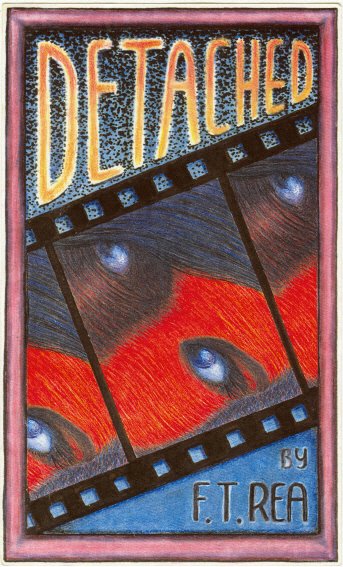
All rights reserved by the author. A Perfect Rainy Day with its accompanying illustration are part of a series of stories called Detached. Three remaining stories will be added, eventually. Links to the five others which have been finished are below:

A pox on loyalty oaths ...

... and political parties should pay for primaries.

Why not? How the hell did it get this way?

Although it’s taken the current Republican primary mess to shine a light on the intrinsic problem with holding statewide primaries and signing loyalty pledges in Virginia, solving the problem for the long run shouldn’t be a partisan political football. It's actually rather simple to fix this:

Political parties, major or minor, should have to rent the commonwealth's election facilities, at a fair price, or set up their own primary voting apparatus. It could be done online. Or, the party could just opt for the old smoke-filled-room style -- hold a convention.

The public has every reason to pay for and oversee general elections. But there's no good reason for the taxpayers to foot the bill for a political party's primary, or for that matter -- its convention. 

Political parties are private organizations the taxpayers have no say-so over. Such groups should pay their own bills for their own activities. That way, when members of a private group want to cheat their own candidates, except for its gossip value, it's none of my business.

In the short run, if disgruntled Republicans and other mischief-makers keep provoking judges to act in this affair, it won’t surprise me if some judge says, “Sorry Virginia Republicans, you can’t have a primary on March 6th.”

Thursday, December 29, 2011

Why is Iran so belligerent?

 
Looks like next year's foreign policy issue will be what-to-do-about-Iran. With sabers rattling as 2011 ends, are you interested in reading some in-depth background on America's checkered history with Iran? 

The quote below is a bullet point from the introduction to a sad story about mistakes made during Cold War times.
The Central Intelligence Agency's secret history of its covert operation to overthrow Iran's government in 1953 offers an inside look at how the agency stumbled into success, despite a series of mishaps that derailed its original plans.
Go here to see a special New York Times supplement created in 2000. It's chock-full of background information that will shed some light on why relations between Iran and the USA have been so strained for such a long time.   

Go here to see a map of the American military installations that surround Iran today. 

Wednesday, December 28, 2011

Biograph Theatre 40th Anniversary


 With the Biograph Theatre's 40th anniversary coming up on Feb. 11, 2012, there's a party brewing. Meanwhile, what follows are excerpts of Biograph Times

My first good look at what was to become the Biograph Theatre was in July of 1971. Having gotten a tip from a friend that the DeeCee-based owners were considering the hiring of a local manager, I went to the construction site chasing the opportunity.

That day I met David Levy, one of six men who owned the repertory cinema operation that would be housed in the cinderblock building going up at 814 West Grace Street. Of the six, Levy would prove to have the deepest knowledge of film history, as well as the most hands-on knowledge of how to run a movie theater. At 33, Levy, a Harvard trained lawyer, was 10 years my senior.

A couple of months later I was offered what I saw as the best job in my neighborhood, the Fan District. The adventure that followed surely went beyond any expectations I might have had about becoming the manager of the Biograph Theatre.


On the evening of February 11, 1972, the venture was launched with a gem of a party. The feature presented that evening was a delightful French war-mocking comedy — “King of Hearts” (1966); Genevieve Bujold was dazzling opposite the droll Alan Bates.

In the lobby, with its cinemascopic view of Grace Street through a glass front, the dry champagne flowed steadily. A trendy art show was hanging on the lobby walls. Hundreds of equally trendy invited guests were there. The local press was all over what was an important event for that bohemian commercial strip, just a stone's throw from the Virginia Commonwealth University campus.

During the 1960s, college film societies thrived. Knowing film was cool; it could get you laid. By the 1970s, many of the kids who had grown up watching old movies on television had learned to worship important movie directors.

The fashion of the day elevated certain foreign movies, selected American classics, a few films from the underground scene, etc., to a level above most of their more accessible Hollywood counterparts. Mixed and matched in double features and packaged into little festivals, such was at the heart of a repertory cinema’s style. In that pre-cable TV age, much of the current-release domestic product was viewed by the film aficionado in-crowd as laughingly naive or hopelessly corrupt.

Once I began to understand more fully what an opportunity my job offered, I wanted the Biograph Theatre to be a place both detached from its surroundings and a good neighbor; like nothing else in Richmond, but a part of the Fan District’s bohemian milieu.

The Biograph’s programs, printed schedules with film notes, covered about six weeks each. Program No. 1 was heavy on documentaries, featuring the work of Emile de Antonio and D.A. Pennebaker, among others. Also on that program were several titles by popular European directors, including Michaelangelo Antonioni, Costa-Gavras, Federico Fellini, and Roman Polanski.


Although most of what we did at the Biograph was standard practice in that era for art houses/repertory cinemas, we were somewhat of a trend-setter with regard to the development of midnight shows. While most of the basic style for what sort of product to exhibit within a repertory format had been set in the ‘60s, at 814 W. Grace St. we managed to get in on the midnight show phenomenon early enough to have played a small role in shaping America’s love affair with midnight shows in the ’70s.

Of course, late screenings were nothing new when the Biograph opened in February of 1972, and the term “midnight show” had been around forever. Still, the midnight show formula for how to do it consistently had not been established. Something as simple as playing the same program on both Friday and Saturday nights, only at midnight, was still not set in stone.

About two months after we opened, an underground twin bill of “Chafed Elbows” (1966) and “Scorpio Rising” (1964) was the first special late show we presented; I think it started at 11:30 p.m. Moving such presentations to midnight soon proved better, and over our initial year of operation we came to understand the sort of pictures that would work best in that limited role and how to promote them.

When the Biograph started running midnight shows in 1972 the bars in Richmond closed at midnight, so there was a lot less to do at 12:01 a.m. than when the official cutoff time was extended to 2 a.m. in 1976.

Another reason midnight shows caught on was that drive-in theaters, which had done well in the ’50s and 60s, were going out of style fast. Some of the low-budget product they had been exhibiting found a new home as late-night entertainment in hardtop theaters like the Biograph. “Mondo Cane” (1962), “Blood Feast” (1963) and “2,000 Maniacs” (1964) all played as Biograph midnight shows.

By the time we booked “The Rocky Horror Picture Show” to play, in June of 1978, going to a midnight show was no longer seen as an exotic thing to do in Richmond. Multiplexes in the suburbs ran them all the time. Which made the timing perfect for a kitschy spoof of/tribute to trashy rock ‘n’ roll and monster movies to become the all-time greatest midnight show draw.

The midnight show craze of the ‘70s could only have flourished then, when baby boomers were in their teens and 20s. It came before cable television was widely available and video rental stores popped up in every neighborhood.

Sometimes, a successful midnight show run came along in the nick of time to pay the rent for the Biograph Theatre.


Starting with the second anniversary, the Biograph Theatre’s birthdays always meant a party. Some of the celebrations were promoted and open to the public, others were small affairs for the staff and friends. Former staff members were always encouraged to attend, so the parties served as reunions, too.

Six months after the theater’s second anniversary splash, with its infamous “Devil” prank, the same month that Richard Nixon resigned the presidency, the Biograph closed down for a month to be converted into a twin cinema. With construction workers toiling 24 hours a day that accomplishment remains a story of extremes, to itself.

Automating the change-overs from one 35mm projector to the other was essential to controlling costs. Among other things that meant Xenon lamps, high intensity bulbs that could be ignited by switches, had to replace our out-of-date, manually-operated Peerless carbon arc lamps.

On the day the exchange was made I got to see the same scene projected onto the screen with the two light sources. The light from the old system, which used two burning carbon rods, was whiter and gave the picture more depth and sparkle. The Xenon light was slightly yellow and had a flattening effect on the image.

As the edgy punk style began replacing the hippie culture that had ruled the Grace Street strip for the better part of a decade, none of us who were working at the Biograph Theatre had an inkling that the zenith of the repertory cinema era, nationally, was in the rear-view mirror.


There were a lot of crazy things that happened in the years of babysitting “Rocky Horror.“ Among them was the Saturday night we threw out the entire full house, because so many people had gone wild; bare-chested rednecks were hosing the crowd down with our fire extinguishers. Fights were underway when we shut down the projector and the movie slowly ground to a halt. Everybody got their money back.

Interestingly, after that melodramatic stunt, we never had much trouble with violence to do with “Rocky Horror” again.

However, there was no stranger night than when about six weeks into the run, a man in his 30s breathed his last, as he sat in the small auditorium watching “F.I.S.T.” Yes, that Sylvester Stallone vehicle was particularly lame, but who knew it was potentially lethal?

The dead man’s face was expressionless … he just expired.

When the rescue squad guys got there they jerked him out of his chair and onto the floor. As jolts of electricity were shot through the dead man’s body, down in Theater No. 1 “Rocky Horror“ was on the Biograph’s larger screen delighting a packed house.

The audience had no idea of what was going on elsewhere in the building. A couple of times, I walked back and forth between the two scenes, feeling the bizarre juxtaposition.

Learning just how much to allow the performers to do, what limits were practical or necessary, came with experience. John Porter’s leadership of the regulars was a key to keeping it fun, but not out of control. For his part John, a VCU theater major, was given a lifetime pass to the Biograph.

On Friday, March 1, 1980, with its 88th consecutive week, “Rocky Horror” established a new record for longevity in Richmond. It broke the record of 87 weeks, established by “The Sound of Music” at the Willow Lawn in the 1960s.

That night, with Porter’s help in front of the full house, I smashed a “Sound of Music” soundtrack album with a hammer, which went over quite well with the folks on hand. A couple of the regulars came dressed as Julie Andrews, in a nice touch to underline the special night‘s theme.

The Richmond Times-Dispatch’s sweetheart of a movie critic, Carole Kass, wrote a nice piece on the shenanigans. She was always a big help.


On Friday, February 12, 1982, the Biograph celebrated its 10th anniversary with a party that surrounded the Richmond premiere of “My Dinner With Andre.” It was especially fitting, because the artsy film had been shot for the most part in Richmond.

To prepare for the occasion we did some touch-up work on the big collage in the hallway to Theatre No. 1 and the entire lobby got a new paint job. To make the party more fun we brought in the caterer who had prepared the dinner for the characters featured in the film, Chris Gibbs, to serve our $25-per-head guests exactly the same dish. The whole shebang was a benefit for VCU’s Anderson Gallery.

Each day of the shooting of the Louis Malle movie in the old Jefferson Hotel -- it was closed at the time, soon to be renovated -- Gibbs had shown up with a platter full of Cornish game hens and bowls of wild rice, etc. That's what the actors, Wally Shawn and Andre Gregory, had for dinner in the movie’s imaginary restaurant, supposedly in New York City.

About a year-and-a-half before the Biograph’s movie premiere party had been imagined, I had gone with Gibbs to the set, to see how it all looked. For each scene, the production crew had to pick apart the fresh sets of meals to make them look eaten/aged to the point that they fit the timing in the story.


Now, 40 years later, my hope is for these excerpts of the Biograph’s history will pass along some sense of what we who worked there meant, when we referred to the “Spirit of the Biograph.” In short, that spirit could be found in the voice of the theater’s better angels.

Although this telling of the Biograph’s story has been through my eyes, the contributions of its staff were always a considerable part of why that cinema -- with the worst seats in town -- had such a loyal following. The guys who had my back, the dutiful and underpaid assistant managers -- Chuck Wrenn, Bernie Hall, Trent Nicholas and Mike Jones -- kept that theater on the road more than a few times, when I was asleep at the wheel. My stint as manager ended in June 0f 1983.

By the time the Biograph's pair of screens went dark, many art houses and revival cinemas not unlike it had already closed all over the country. Behind on the rent, Richmond’s Biograph was seized by its landlord and closed forever in December, 1987. That was two months shy of its 16th anniversary.

Over the first year of operation we screened over 200 different features for our patrons. In all, I don’t know how many films were thrown onto the Biograph’s screens in its 190 months of existence as a repertory cinema. What I do know is that the advice of those better angels, just mentioned, made a noticeable difference in Richmond, Virginia ... in Biograph Times.


To see information about the Biograph's 40th anniversary celebration on February 11, 2012 click here.