Friday, September 02, 2022

Time Warping, Again

by F.T. Rea

Intro:

In 1955 RKO, which had just changed hands, became the first major Hollywood studio to sell most of the exhibition rights to its library of feature films to the hungry television network interests. Consequently, my early-baby boomer generation grew up watching that studio's well-crafted black and white movies on their TVs. In a way, RKO plays a cameo role in “The Rocky Horror Picture Show” (1975).

That particular campy send-up of old science fiction and monster flicks is by far the most significant midnight show attraction of all-time. As such, it needs its own chapter in any proper chronicle of the times at the Biograph Theatre in Richmond, Virginia – a repertory cinema I managed from its early-1972 opening until my departure in mid-1983.

 This photo of Larry Rohr riding up the aisle, during a 
midnight screening of the "The Rocky Horror 
Picture Show," was shot on Mar. 1, 1980. 

"The Rocky Horror Picture Show" (1975) was adapted from the British kitsch-celebrating, gender-bending stage musical, “The Rocky Horror Show.” The play, written in the early-1970s, opened in London in 1973. Its thin plot cashed in on that time's freedom to pursue pleasure, expressed by the hippies' popular trope – “if it feels good, do it.” Two years later the film adaptation was released.

Yet, to Fox's distribution department in 1975, the movie was just weird. It was weird in a way that made it too difficult to pigeonhole, marketing-wise. That factor couldn't have helped in the promotion of its first-run engagements, which were disappointing. Its weakness at the box office eventually prompted Fox to give up and put it on the shelf. 

At Midnight Only

While “Rocky Horror,” the film, became popular in the USA during what might now be seen as the punk era, it wasn't really all that connected to the aesthetic of punk's defiant nonchalance. Style-wise, its music, written by the play's author, Richard O'Brien, was sort of a bubble-gum knockoff of 1950s rock 'n' roll, fused with a measure of 1970s glam rock.

Overall, as pop music goes, the songs probably didn't expand any boundaries. Nonetheless, in the context of the movie the music had it own charm. As a movie musical, "Rocky Horror" was surely no worse than a good deal of the Hollywood musicals of the 1950s and '60s. 

Anyway, it didn't please the critics all that much, either. So when Fox took it out of release, no one could have anticipated the one-of-a-kind cult following it would eventually gather as a midnight show. No one saw its unique cult film status coming. 

Note: “The Rocky Horror Picture Show”: 100 minutes. Color. Directed by Jim Sharman (who had also directed the play). Cast: Tim Curry (as Dr. Frank-N-Furter), Susan Sarandon (as Janet), Barry Bostwick (as Brad), Richard O'Brien (as Riff Raff), Patricia Quinn (as Magenta), Nell Campbell (as Columbia), Meat Loaf (as Eddie), Peter Hinwood (as Rocky).

A little over a year later, the second life for “Rocky Horror” is said to have begun at the legendary Waverly Theater (now the IFC Center) in Greenwich Village. At midnight screenings, a few audience members with the nerve to do it, began calling out sarcastic comeback lines to the film's action and dialogue. The funniest remarks were appreciated, imitated, then eventually topped by an attendee at a subsequent screening.

Thus, the audience reaction that became a thing, wasn't originally some adman's brainchild. It just happened.

It should also be noted that midnight shows had been popular in New York City since the late-'60s. As well, they had been running at selected hip cinemas in other cities and some college towns for a good five years or more. Basically, if a midnight screening went well, it would be held over to the next weekend, which was a departure from calendar house programming. So the midnight show format had already been developed when “Rocky Horror” came along.

In the Richmond Biograph's first couple of years of operation midnight show screenings frequently helped keep the lights on. Some of the midnight show features that were popular enough to run for multiple weekends then were: “Performance” (1970); “Reefer Madness” (1936); “Deep Throat” (1972) w/ “The Andalusian Dog” (1929); “Night of the Living Dead” (1968); “El Topo” (1970); “Putney Swope” (1969); “Magical Mystery Tour” (1967). Routinely, they were promoted using handbills (small posters) and radio spots that ran on WGOE-AM.

During 1977 at the Waverly the role the audience played in the midnight shows enlarged to make the screenings into events with costumes and choreography, as the traditional wall between the screen and the viewers continued dissolving. When that unprecedented interaction phenomenon jumped from Manhattan to other markets where “Rocky Horror” was playing as a midnight show, such as Austin and Los Angeles, it became even more puzzling.

By the winter of 1977/78 “Rocky Horror” was playing to enthusiastic crowds in several cities. Yet, curiously, it had not caught on at others. What would eventually become a popular culture marvel was still flying below the radar for most of America.

As the spring of '78 approached, Alan Rubin, one of my two bosses at the Biograph in Georgetown, asked Fox once again about booking it for Richmond's Biograph. It was already playing at the rival Key Theatre in Georgetown, because Rubin's ex-partner, David Levy, had beaten him to the punch. Alan was told there still weren't any prints available.

Then, during a trip to Los Angles in May, I heard about the elaborate goings-on at the Tiffany Theatre to do with “Rocky Horror.” Upon my return to Richmond I told Alan and his partner, Lenny Poryles, what I'd learned about its growing popularity in LA. Subsequently, during a conference call with one of the guys at Fox, Alan, Lenny and I were told there was just no enthusiasm at his end for the picture’s prospects in Richmond. 

The Deal

To be fair, in those days Richmond was generally seen by most movie distributors as a rather weak market – not a place to waste resources. Besides, no one at Fox seemed to understand why the audience participation following for the picture had blossomed in the first place, or more importantly – what was making the movie's cult following catch on in some cities, but not at all in others. So they were holding off on ordering any new prints. Which meant there was no telling how long we might have to wait. It does seem funny now to recall how unconvinced the Fox folks were they had something that was new and old rules didn't apply.

Alan, Lenny and I continued our telephone conversation after the distributor's representative got off the line. That led us to agreeing to a plan: We would offer to front the cost of a new 35mm print, some $5,000, as I remember it, which would stand as an advance against standard film rental fees. There were two provisos: 1. The Biograph would continue hold the exclusive rights to exhibit “Rocky Horror” in the Richmond market as long as we held onto that print. 2. That I would promote it as I saw fit, creating my own materials, rather than rely on Fox's standard press kit stuff (which I was accustomed to doing when situations called for it).

When we called the Fox distributor's office back, it went smoothly. With nothing to lose, they went for the deal. After all, if anything, the Biograph had earned a reputation for being a pretty good venue for midnight shows.

Next, for research, I questioned a couple of publicity people at Fox a little more about how it had been promoted in various situations. Strangely, there was no consensus about what had prompted the successes or failures. However, Fox had encouraged a few exhibitors to call for attendees who would recite certain lines and dance in the aisles, etc. But when they tried to prime the pump in that way it hadn't worked.

After viewing the film, I decided it would be better not to over-promote it. That way there would be less risk of drawing the sort of general audience which might include too many unsatisfied customers – folks who might leave the theater bad-mouthing it. My strategy called for first getting the attention of the kids who had already been seeing “Rocky Horror” screenings at the Waverly or the Key, as well as a few of the most determined of local taste-makers who must see anything edgy first, so they can opine about it.

Accordingly, at WGOE's studio I produced a radio commercial using about 20 seconds of the film's signature song, “Time Warp.” The only ad copy came at the very end with a tag line. The listener heard my voice say, “Get in the act … midnight at the Biograph.”

There was no explanation of what the music was, or what the 30-second spot was even about. At that time the soundtrack for “Rocky Horror” still hadn't become all that well known. The hook was that the spot didn't offer listeners as much information as they expected, which hopefully added somewhat to its underground allure. The same less-is-more approach was used in the print materials.

The Floor Show

“The Rocky Horror Picture Show” opened in Richmond on June 30, 1978. It drew a decent crowd, but it was well short of a sell-out. Some of those who attended did occasionally call out wisecrack lines. Most did not. As I recall, a handful of people dressed up in costumes. As hoped, over the next few weeks a following for “Rocky Horror” steadily grew, as did the audience participation.

At the center of that following was a troupe that became the regulars who turned midnight screenings into performance-art adventures. John Porter, a VCU theater major, emerged as the leader of that group; they called themselves the Floor Show. Outfitted in his Frank-N-Furter get-up, Porter missed few, if any, midnight screenings for the next couple of years.

Plenty of crazy things happened in dealing with the “Rocky Horror” audience twice a week. There was the Saturday night an entire full house was thrown out, because some bare-chested roughnecks had run amuck. They were hosing down the crowd, using our fire extinguishers. Fights were underway. So after a stern warning from me to the crowd, to stop-or-else did no good, I pulled the plug. One by one, they all got their money back.

Interestingly, after that night we never had much trouble with violence to do with “Rocky Horror” again. The Floor Show kids helped to monitor the situation, to make it uncool to go too far. Porter’s leadership was a key to keeping it fun, but not out of control. For his part, John was given a lifetime pass to the Biograph.

There was no stranger episode than the night a man breathed his last, as he sat in the small auditorium (Theatre No. 2) watching “F.I.S.T” (1978). Yes, that lame Sylvester Stallone vehicle was hard to watch, but who knew it could be lethal?

Sitting upright in an aisle seat the dead man’s expressionless face offered no clues to his final thoughts. His eyes were open. He was about 30, which was my age.

The rescue squad guys jerked him out of his seat and threw him onto the floor. As jolts of electricity shot through the dead man’s body, down in Theater No. 1 “Rocky Horror” was on the Biograph’s larger screen delighting the audience. Walking back and forth between the two auditoriums, absorbing the bizarre juxtaposition of those scenes in the same building, was a strange trip, to say the least.

A brief item about the death appeared in the newspaper. It said he had been in bad health. Don't remember his name.

Looking on the bright side, after six-and-a-half years of showing screwball comedies, French New Wave films, rock 'n' roll movies, film noirs, and so forth, the Biograph had earned the chance to have what any theater needs to become fully-fledged – a ghost.

Chasing Dignity


On one of those busy nights early in the run of “Rocky Horror (I can't be sure of the date) a battle broke out in the middle of West Grace Street in front of the theater. Rocks, bottles and whatnot were flying back and forth between two factions of young men. Both squads consisted of four or five participants.

As I later discovered, the fight was between members of a VCU fraternity and an Oregon Hill crew. The most alarming angle of the fraught incident was that it was unfolding a perilous 30 yards from the cinemascopic, all-glass front of the Biograph. 

Yikes!

The box office had just closed and the cashier was in the midst of count-up duties. At the same time a small group of friends was in the lobby. Some of them were my Biograph Swordfish softball teammates. A few of us were playing a pinball machine. As the manager of the theater I felt obliged to fend off the danger. Accordingly, I asked the cashier to call the cops. 

I opened one of the twin exit doors, to step onto the sidewalk and yell at the kids. In so many words I told them to scram. As an added incentive I mentioned that the cops were already on the way. 

Well, that was good enough for the frat-boy team. They scampered off. Meanwhile, rather than pursue their enemies, the Oregon Hill gang promptly switched over to aiming their missiles at me. A rock hit the curb. A tumbling bottle shattered on the sidewalk, which prompted me to duck back inside.

A second or two later an incoming piece of red brick crashed through the door's lowest glass panel. It struck my right shin. That particular moment of this story stands out sharply in my memory. There were seven, maybe eight men running in the impromptu posse of employees and pinball players that went after the scattering hooligans. 

However, my focus was totally on the guy who had plunked me. I chased him as he headed west. Suddenly hemmed in by three of us in a public parking lot at the intersection of Shafer and Grace, he faked one way, then cut to the other. When his traction gave way in the gravel paving he stumbled to regain his balance. 

That was when I tackled him by the legs. The others in his group got away.

With some help from my friends – two of them held his arms – we marched the brick-thrower back toward the theater. During that trek I suppose there was some conversation. Don't recall any of what was said, but something the captured culprit said as we passed Grace Place (an excellent vegetarian restaurant) provoked one guy in my group to punch him in the jaw without warning.

One of the policemen in the assembled group of cops in front of the theater sarcastically complimented the puncher for his prisoner-escorting “technique.” Shortly thereafter the punchee was hauled off in the paddy wagon. Back in the lobby I told the puncher he had overreached in hitting the kid unnecessarily, especially while he was helpless.

Caught off-guard by my reaction, my softball teammate laughed. He disagreed, saying essentially that his summary punishment would likely be the only price the guy would ever pay for his assault. Another in the group quickly agreed with him. Others saw it my way, or said nothing.

Then we probably resumed the ongoing pinball game. More importantly, it's quite likely I went across the lobby to the theater's refrigerator in a closet and pulled out enough cans of cold beer to say, “thank you” to each member of the posse.

They had helped protect the Biograph from a menace. And, yes, it was satisfying to have at least caught the one who had just bloodied my shin. The next day I got a tetanus shot.

It wasn’t long after that night I found myself poring over a 1931 essay by F. Scott Fitzgerald, “Echoes of the Jazz Age.” Here is the last paragraph of that evocative piece:

“…Now once more the belt is tight and we summon the proper expression of horror as we look back at our wasted youth. Sometimes, though, there is a ghostly rumble among the drums, an asthmatic whisper in the trombones that swings me back into the early twenties when we drank wood alcohol and every day in every way grew better and better, and there was a first abortive shortening of the skirts, and girls all looked alike in sweater dresses, and people you didn’t want to know said ‘Yes, we have no bananas,’ and it seemed only a question of a few years before the older people would step aside and let the world be run by those who saw things as they were — and it all seems rosy and romantic to us who were young then, because we will never feel quite so intensely about our surroundings any more.”

During that reading, seated at my desk in the theater's office, it hit me that the shattering of the Biograph's glass door had been the sound to accompany the hippie era ending. Its trends, causes and distinctive styles had arrived in the late-'60s and they soon would be seen as nostalgia. In some ways the hippie decade had been similar to the Roaring ’20s.

Moreover, it seemed then that the peace-loving, pot-smoking, anti-establishment elements of my generation hadn't changed the world all that much in any enduring ways. Ending the Vietnam War and getting rid of Nixon just hadn't solved as many problems as our slogans had promised.

In the summer of '78, it was also time to admit to myself the neighborhood surrounding the Biograph was getting meaner. Which made little sense, even at the time, since it was adjacent to VCU's burgeoning academic campus. Still, for whatever reason the university didn't seem to care about it then, or for years after this.

A month later, in General District Court, I agreed to a proposal to drop the assault charge, providing the brick-thrower was convicted of a misdemeanor for breaking the glass and that he would reimburse the Biograph for the cost of the repairs. A payment schedule was set up.

As we spoke several times after that day in court I came to see the 19-year-old “hooligan” wasn’t really such a bad guy. His payments were made on a timely basis. With his last payment he asked for the name of the man who’d punched him.

While withholding the name, I agreed with him that regardless of my friend's intentions his adrenaline-fueled punch had mostly been a cheap shot. With the money aspect of the debt paid, we shook hands.

Debt and Irony

About a year later, during a Wednesday matinee the Biograph cashier, Gussie Armeniox, was counting a stack of one dollar bills when an opportunistic thief bolted in and snatched them from her hands. Although I was only a few feet away, behind the candy counter in the lobby, my back was turned. When I looked around, it was alarming to see the robber scurrying out the front door. 

Gussie's wide-eyed, frightened look was unforgettable. It boosted the intensity of the sense of violation. As I got to the sidewalk the thief was already a half-a-block away. 

Nonetheless, in spite of his foot speed it turned out he wasn't so good at avoiding capture. Instead of just running to the west, to put plenty of distance between us, he ducked between the buildings, trying to hide. He did it a couple of times, then, when I would find him and get close, he'd take off again.

During the chasing and searching I received some unexpected help from a total stranger. A young man slammed on his brakes and jumped out of his pickup truck. After that reinforcement it took less than five minutes to corner the thief in the men's room of a fast food restaurant. By then a policeman in a cruiser had showed up. Fortunately, that meant I didn't have to go into that men's room to drag the perpetrator out. The cops did it for me.

Of course, I thanked the volunteer and asked him why he’d stopped to help out. He told me he knew I was the Biograph’s manager, because a buddy of his had pointed me out to him. His friend?

It was the same Oregon Hill street-fighter I’d tackled a year before. My assistant thief-chaser said his friend told him the story about the broken glass and the assault charge being dropped. Then he said I'd dealt fairly with him. Consequently, a favor was owed to me.

Before he got back in his truck, my collaborator said that in his neighborhood the guys tend to stick together. Thus, he had supported me in my time of need, because of his friend’s debt. I was grateful and flabbergasted.

It now seems to me the sort of obligation he felt and acted upon has been evaporating out of the culture for some time, maybe since the time of this chase scene. The thief turned out to be a repeat offender, so the judge gave him six months for stealing 37 dollar bills.

Looking back on this story what connects those two chase scenes has become increasingly more satisfying. No doubt, that’s partly because in dealing with bad luck and other ordinary tests of character, too many times I’ve done nothing to brag about – even the wrong thing.

Maybe in this two-part adventure I came close to getting it right. In my view, both chases had something to do with pursuing justice and preserving something. Dignity perhaps.

The Exploding Motorcycle


On Friday, March 1, 1980, with its 88th consecutive week, “Rocky Horror” established a new record for longevity in Richmond. It broke the record of 87 weeks, established by “The Sound of Music” (1965), during its first-run engagement at the Willow Lawn Theater.

To celebrate Porter and I dressed in tuxedos to stand before the full house. He held up a “Sound of Music” soundtrack album and I smashed it with a hammer. It went over quite well. Now, thinking of how late in the evening it was, I am somewhat amazed that John trusted me to wield that hammer safely. 

The record-breaking ceremony prior to the screening.

In a nice touch to underline the special night‘s theme, a couple of the regulars came dressed as Julie Andrews. The late Carole Kass, the Richmond Times-Dispatch’s sweetheart of a entertainment writer/movie critic, wrote up a nice feature on what was basically hokum.

That same night Larry Rohr rode his motorcycle through the auditorium’s aisles at the point in the movie when Meat Loaf’s character in the film, Eddie, rides his motorcycle. Rohr’s careful but noisy rides happened only on a few special occasions, such as the record-breaking night. We were lucky nothing bad ever happened.

A few months later, I had a dream that the motorcycle exploded and blew the roof off of the theater (like a cartoon!). The nightmare scared me so much the motorcycle rides were discontinued. Anyway, that's what I told people about why we stopped. Yes, now it seems crazy as hell that I ever facilitated such risky shenanigans. Maybe I was somewhat carried away by the aforementioned wide-open permission that went along with the '70s.

With no more motorcycle rides, various Floor Show members sometimes rode a tricycle up and down the aisles. The way members of that group adapted playfully to whatever was said or done in previous weeks was an integral aspect of the fun. They were like players in a story that had new chapters being written for it, on the fly, each weekend.

However, while “Rocky Horror” had an underground cachet in the first year, even the second, eventually its status began to go sour. That was especially so in the eyes of the staff and Biograph regulars who hung out there. The rice, toast and all sorts of other stuff that got tossed around had to be cleaned up each and every time by the grumbling janitors, who naturally grew to detest the movie. To keep the peace they got “Rocky Horror” bonuses — a few extra bucks for their weekend shifts.

Once into the winter of 1980/81 the turnout for the screenings of “Rocky Horror” began a gradual withering. By then many of the originals had stopped coming every weekend. Much of the audience seemed to be made up of sightseers from the suburbs. The fast crowd in the artsy, black leather jacket scene were ignoring it, although the movie was still doing enough business to justify holding onto that original print.

In the summer of 1982 “Rocky Horror” celebrated its fourth anniversary at the Biograph. That same summer, for Program No. 60, I booked a six-week festival offering 12 RKO double features.

The Biograph's record-setting midnight show run of “The Rocky Horror Picture Show” ended on June 25, 1983. Although it had helped pay the rent (set at $3,000 a month), no one was happier to see that well-used 35mm print shipped out than those of us who had been warped by the “Rocky Horror” experience for five long years.


Outro:

In the Biograph lobby I always got a kick out of listening to enthusiastic new film buffs tell me why the old movie he or she had just watched was cool. Still cool! 

Of course, in agreeing with them I was mostly just doing my job. Anywhere, any time, stimulating a greater appreciation of good films made in previous times was an integral part of the Biograph Theatre manager's job. In a way, I've never gotten over feeling like it's my duty.

Speaking of time warps, here are the titles for that 1982 RKO fest, listed in the order in which they played: “Top Hat” (1935) and “Damsel in Distress” (1936); “The Hunchback of Notre Dame” (1939) and “The Informer” (1935); “King Kong” (1933) and “Mighty Joe Young” (1949); “Suspicion” (1941) and “They Live By Night” (1948); “Sylvia Scarlett” (1936) and “Mister Blandings Builds His Dream House” (1948); “Murder My Sweet” (1945) and “Macao” (1952); “The Mexican Spitfire” (1939) and “Room Service” (1938); “Journey Into Fear” (1942) and “This Land Is Mine” (1943); “The Thing” (1951) and “Cat People” (1942); “The Boy With Green Hair” (1948) and “Woman on the Beach” (1947); “Citizen Kane” (1941) and “Fort Apache” (1948); “The Curse of the Cat People” (1944) and “The Body Snatcher” (1945).

--  Photos by Ernie Brooks

– 30 –

Monday, August 29, 2022

Those Purloined Files at Mar-a-Lago

While pundits want to speculate about indicting Trump, or not -- as if that's all that matters! -- I'm just not ready yet to cut to the chase. Consequently, I still want to know who the people were that decided what not to take and what to take from the White House to Mar-a-Lago? Trump didn't do that alone.

So, I want to know about that process. After the decisions were made, who then physically gathered up the stuff that filled all those boxes that ended up in Florida? 

By the way, now I can't help wondering if all that "stuff" actually went straight to where the FBI found it on August 8th. Truth be told, we don't know all of what has happened to that sort of "stuff" since Trump first started stealing souvenirs and secret documents, to squirrel away and occasionally show off  ... whenever that was.

Thus, I need to know who secreted the stuff to the cars, or the helicopters, etc. Then who carried the purloined files into Trump's home/headquarters/club -- Mar-a-Lago? Then let's know, for sure, how many files have been photographed, or simply removed from those boxes and rented, or sold, to the highest bidder? 

All of which reminds me of an old saying about an ancient game, a highfalutin pastime that distills a war waged by kings and their courts into a board game -- chess.

Dig it: There would be no game of chess if the pawns refused to play.


Wednesday, August 24, 2022

VCU Men's Basketball Non-Conference Schedule

From VCU:

The VCU Rams will kick off their 2022-23 campaign on Mon., Nov. 7, when they will host Manhattan at the Siegel Center. That season-opener is the first of a nine-game non-conference home slate, which includes a first-ever visit from Vanderbilt, as well as road trips to Memphis, Temple and the Barclays Center. 

Additional home contests with Morgan State (Nov. 12), Kennesaw State (Nov. 26), Vanderbilt (Nov. 30), Jacksonville (Dec. 7), Radford (Dec. 14), Northern Illinois (Dec. 17) and Navy (Dec. 21) are on the schedule. Note: An opponent for one non-conference home date, Dec. 11, will be announced at a later time.

Vanderbilt will be making its first appearance at the Siegel Center. The Rams scored a 48-37 victory at Vandy last season in Nashville, Tenn. A pair of VCU’s 2022-23 home opponents, Jacksonville and Navy, are coming off 20-win campaigns in which they reached their conference championship game in the Atlantic Sun and Patriot League, respectively.

At the Barclays Center, VCU will return to the Legends Classic, presented by Old Trapper, Nov. 16-17, in Brooklyn, N.Y. The Rams are set to face Arizona State on Nov. 16 at 8:30 p.m. Then, the next day (Nov. 17), VCU will face either Michigan or Pittsburgh (ESPN2).

The Rams will also make high-profile road trips to Memphis (Nov. 20) and Temple (Dec. 3). It will be VCU’s eighth all-time meeting with Memphis.

Led by sixth-year Head Coach Mike Rhoades, VCU is coming off a 22-10 campaign, which culminated with the second round of the Postseason NIT. Last season's starting point guard, Ace Baldwin Jr. -- who was named to the A-10's all-conference second team -- returns to lead a veteran Rams squad that has added six newcomers, including three transfers.

More basic info about game times, TV networks, etc., will be released at a later date. The A-10 will announce the Rams’ league schedule in the coming weeks.

Note: VCU season tickets are on sale now and can be purchased by visiting VCUAthletics.com/tickets or by calling the VCU Ticket Office at 804-828-RAMS.

-- Logo art from VCU.

Tuesday, August 23, 2022

The 14th Amendment's Text

Note: The 14th Amendment was passed by Congress on June 13, 1866, which was a little over a year after the end of the Civil War. On July 9, 1868, once it had been ratified by the necessary 28 of 37 states, the 14th amendment became part of the law of the land; its text is displayed below.

AMENDMENT XIV

Section 1.
All persons born or naturalized in the United States, and subject to the jurisdiction thereof, are citizens of the United States and of the State wherein they reside. No State shall make or enforce any law which shall abridge the privileges or immunities of citizens of the United States; nor shall any State deprive any person of life, liberty, or property, without due process of law; nor deny to any person within its jurisdiction the equal protection of the laws.

Section 2.
Representatives shall be apportioned among the several States according to their respective numbers, counting the whole number of persons in each State, excluding Indians not taxed. But when the right to vote at any election for the choice of electors for President and Vice-President of the United States, Representatives in Congress, the Executive and Judicial officers of a State, or the members of the Legislature thereof, is denied to any of the male inhabitants of such State, being twenty-one years of age, and citizens of the United States, or in any way abridged, except for participation in rebellion, or other crime, the basis of representation therein shall be reduced in the proportion which the number of such male citizens shall bear to the whole number of male citizens twenty-one years of age in such State.

Section 3.
No person shall be a Senator or Representative in Congress, or elector of President and Vice-President, or hold any office, civil or military, under the United States, or under any State, who, having previously taken an oath, as a member of Congress, or as an officer of the United States, or as a member of any State legislature, or as an executive or judicial officer of any State, to support the Constitution of the United States, shall have engaged in insurrection or rebellion against the same, or given aid or comfort to the enemies thereof. But Congress may by a vote of two-thirds of each House, remove such disability.

Section 4.
The validity of the public debt of the United States, authorized by law, including debts incurred for payment of pensions and bounties for services in suppressing insurrection or rebellion, shall not be questioned. But neither the United States nor any State shall assume or pay any debt or obligation incurred in aid of insurrection or rebellion against the United States, or any claim for the loss or emancipation of any slave; but all such debts, obligations and claims shall be held illegal and void.

Section 5.
The Congress shall have the power to enforce, by appropriate legislation, the provisions of this article.

*   *   *


Monday, August 15, 2022

The Big Why

We've all heard countless times about the Big Lie -- the falsehood that in 2020 Biden stole the presidential election and Trump actually won. But what about the Big Why?

OK, now Trump is claiming the FBI seized his passport(s) during their August 8 visit to Mar-a-Lago. Which means it's possible that it could be true, partially true, or totally untrue. And, if it's true, it does make sense to wonder why the FBI took his passport(s). In context, that's just one of many Little Whys.

Meanwhile, now that I think about it, why would anybody assume that all of the stuff the FBI hauled away from a basement in Trump's clubhouse that day was put there at the same time -- on January 20, 2021? It seems to me that for any number of nefarious reasons Trump could have been squirreling away sensitive government documents during his entire time as president. Plus, we don't know the FBI found all the stuff it hoped to find.

So, now this FBI search and seizure story reminds me that I have always wondered why Trump moved his principle residence from New York to Florida, when he did, in 2019. To me, it never was explained satisfactorily. Could it  be that Trump decided it would be better to store and market the purloined secrets at Mar-a-Lago than any of his other pads?

Maybe it's all connected?  

Which, of course, circles us back to the Big Why – in the first place, why did Trump steal those particular records?

Anyway, at this point, we do all know why Trump is now being called, "Benedict Donald." 

Monday, August 08, 2022

The Coldest Warrior

Note: The piece below this note is an OpEd I wrote for Richmond.com 23 years ago; did the Nixon illustration back then, too. It was published to coincide with the 25th anniversary of Nixon's resignation. So the anniversaries mentioned in the first graf date from 1999.

*

August 9, 1999: August is usually a slow month for news, especially political news. So we are spoon-fed anniversaries to contemplate: Hiroshima’s 54th; Woodstock’s 30th; it was 25 years ago that Pres. Richard M. Nixon took the fall. The entire culture shifted gears the day Nixon threw in the towel.

The brilliant strategist, the awkward sleuth, the proud father, and the coldest of warriors had left the building. August 9, 1974 was a day to hoist one for his enemies, many of whom must have enjoyed his twisting in the wind of Watergate’s storm. It was the saddest of days for his staunch supporters, whose numbers were still legion.

Either way, Richard Nixon’s departure from D.C. left a peculiar void that no personality has since filled in anything close to the same way. For the first time since his earliest commie-baiting days, in the late-‘40s, Dick Nixon suddenly had no clout. 

Upon Nixon's departure, concern for social causes went out of style for a lot of young Americans. It was time to party. Soon what remained of the causes and accouterments of the ‘60s was packed into cardboard boxes to be tossed out, or stored in basements.

Watergate revelations killed off the Nixon administration’s chance of instituting national health insurance. On top of that, many people have forgotten that he was also rather liberal on environmental matters, at least compared to the science-doubting Republicans who have followed. Although he was a hawk, Nixon was moderate on some of the social issues.

Nixon's opening to China and efforts toward détente with the Soviets are often cited as evidence of his ability to maneuver deftly in the realm of foreign affairs. No doubt, that was his main focus. Still, at the bottom line, Nixon is remembered chiefly as the president who was driven from office. And for good reason.

Nixon’s nefarious strategy for securing power divided this country like nothing since the Civil War. Due to his fear of hippies and left-wing campus movements, Nixon looked at ex-Beatle John Lennon and instead of a sarcastic musician, in his view Nixon saw a raw power to galvanize a generation’s anti-establishment sentiments. Fearful of that imagined potential, the sneaky Nixon administration did everything it could to hound Lennon out of the country.

Nixon deliberately drove a wedge between fathers and sons. To rally support for his prosecution of the Vietnam War, he sought to expand the division between World War II era parents and their baby boomer offspring. The families that never recovered from that time's bitterness were just more collateral damage.

However, Nixon’s true legacy is that since his paranoia-driven scandal, the best young people have no longer felt drawn into public service. Since Watergate the citizens who’ve gravitated toward politics for a career have not had the intellect, the sense of purpose, or the strength of character of their predecessors. We can thank Tricky Dick for all that and more.

So weep not for the sad, crazy Nixon of August, 1974. He did far more harm to America than whatever good he intended.

Some commentators have suggested that he changed over that period, even mellowed. Don't buy it. The rest of us changed a lot more than he did. On top of that, Nixon had 20 years to come clean and clear the air. But he didn’t do it. He didn't even come close. In the two decades of his so-called “rehabilitation,” before his death in 1994, Nixon just kept on being Nixon.

So, spare me the soft-focus view of the Nixon White House years. Tricky Dick's humiliating downfall should be a lesson to us all -- he surely got what he deserved.

*   *   *

Thursday, August 04, 2022

The Kidnapping of Brittney Griner


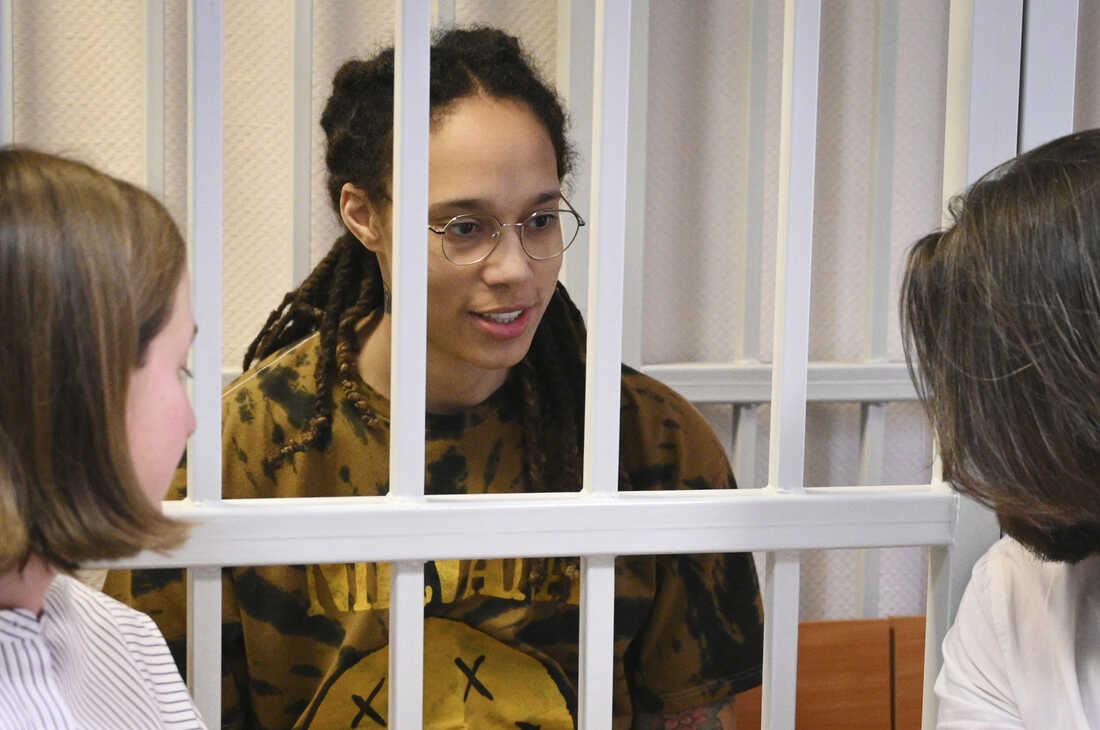
In a way, Russia has kidnapped Brittney Griner. News reports say the Biden administration is working to arrange a trade to gain her release. No doubt, swapping violent gangsters for famous athletes surely must be a tricky business.

Officially, Griner's jailers say she broke their drug laws. Now she has to pull nine years. Like millions of people in lots of places, I hope Griner is released from imprisonment soon and comes home safely. 

Still, there's a trend in motion that isn't helping that cause. Her captors already know America wants its All-Star basketball player back much more than the Russian bosses want to hold her prisoner. Right now, with Griner's victimhood story at the top of the news, her celebrity status is being enlarged. Moreover, that's only making the ransom price go up.

Maybe the best thing the professional news business could do to help Griner's cause is talk about something else for a while. For the time being, we know Boss Putin and his drinking buddies are reveling in glee as they watch the pain this whole matter is inflicting on the USA. That goes double for how it is making Americans get pissed off at Biden for being unable to free Brittney. 

Meanwhile, it looks to me like a new crime wave is coming: The kidnapping of particular people -- especially well known Americans -- in order to extract a ransom of some sort, is going to be a bigger and bigger problem in the future. After all, it's not hard to do on a low budget. Even easier when the kidnappers are professionals working for/in cooperation with an authoritarian government. 

Rogue nations and other audacious mobster organizations are bound to use kidnapping for ransom more and  more. Hey, why wouldn't they? It's a crime older than dirt. And, naturally, the media will probably go on helping to promote the kidnappers' work.

Bottom line: Don't go to Russia.  

-- Photo: NPR

Tuesday, July 26, 2022

Evil's Second Coming

Note:
This reaction-to-9/11 piece that I penned was originally published by STYLE Weekly on May 15, 2002. At that time, 20 years ago, most periodical publishers in Virginia (and elsewhere) were not much interested in running opinion pieces that questioned the Bush administration's post-9/11 policies and tactics in any way. Which, of course, helped pave the road into Iraq.
 
So, looking back on it, I have to thank Rozanne Epps, an editor at STYLE Weekly, for deciding to run this one on the Back Page. As far as I know, it was her call.

Evil's Second Coming
by F.T. Rea


Washing in on what poet William Butler Yeats (1865-1939) might have called a “blood-dimmed tide,” the specter of evil suddenly emerged from the periphery of modern life eight months ago. In the blue skies of the time before 9/11’s sucker punch, the notion of pure evil had an Old World air about it. Absolutes, such as good and evil, had no seat at the table of postmodern thinking.

After 9/11, a generation of Americans suddenly learned a bitter lesson: Evil never went away. Living in a land of plenty, it had gotten to be a pleasant habit to avert our eyes from evil-doings in lands of want. Evil had gone out of style, as a concept, only because times were so easy.

The last American president to get much mileage out of the word "evil" was probably Ronald Reagan, with his “evil empire” characterization of the USSR and its sphere of influence. Now, 20 years later, we have a president who sees “an axis of evil” — an alleged phenomenon that puzzles most of the world’s leaders, or so they say.

George W. Bush apparently has little use for Franklin D. Roosevelt’s stalwart advice to a nation in need of a boost in confidence — “We have nothing to fear but fear itself.”

Rather than urge his people to rise above it, Bush chooses to color-code fear. The propagandists of the Bush administration have been successful in cultivating the public’s anxiety since September. Whether that’s been done for our own good remains to be seen. Perhaps it has, but this much is clear now — all the official danger alerts about nuclear power plants, bridges and crop-dusters have been effective in keeping most of the natural questioning of the administration’s moves at bay.

To hear Attorney General John Ashcroft tell it, the architects of 9/11 are the personification of the most virulent form of evil ever known. Although much of the evidence that would establish his absolute guilt in connection with 9/11 remains a state secret, Osama bin Laden is said to have shot to the top of the chart.

Forget about Joseph Stalin, Adolph Hitler, Idi Amin and Pol Pot. They were amateurs.Then again, evil, like beauty, has always been in the eye of the beholder.

Wasn’t it evil to deliberately dump tons of potent pesticide into the James River during the ’70s to make a greedy buck? Once it was in Virginia’s water, Kepone wasn’t so different from a bio-terror agent in the same water.

With the news seeping out of the cloisters about child-molesting priests and the Catholic Church’s systematic cover-ups, whose betrayal was more evil, the molester or the higher-ups who hid and facilitated his crimes?

Whether evil exists in some pure form, off in another dimension, is not my department. What’s known here is that in the real world evil is contagious. Lurking in well-appointed rooms or hiding in caves, evil remains as it ever was — ready to spread.

None of this is to suggest that al Qaida shouldn’t be put out of business. It isn’t to say that knocking the Taliban off was a bad idea. There’s no question here about whether the United States should protect itself from the networks of organized terror that are hell-bent on destroying the modern world.

Still, today’s evil is the same evil our forefathers faced in their wars. Evil hasn’t changed; technology has. With modern weapons in their hands, the fanatics of the world have the potential to wreak havoc like never before.

What has changed is the extent to which the hate festering in the souls of the world’s would-be poobahs and their psychopathic followers can be weaponized. It’s worth noting that the weapons of mass destruction that are scaring us the most were developed during the arms-race days of the Cold War by the game’s principal players.

So another question arises, who is more dangerous to civilization, the guys who spent their treasure to weaponize germs, or the guys who want to steal the stuff and use it on somebody?

Decades ago this was a concern expressed by some in the disarmament movement. Its scary what-if scenarios always included the likelihood that the Super Powers would eventually lose track of some of their exotic weapons. Looking back on it now, it seems obvious there was no way any government could keep all that material locked away from the greed and hate of determined free-lancers.

A man with a briefcase-style nuclear device may be no more evil than a man armed with a knife. Either danger could kill you just as dead. Those of us who feel connected to others, those who care about humanity's future, understand which killer we ought to fear the most. The “rough beast” of dreadful evil “slouching towards” us is traveling on the back of technology of our own making.

While we watch out for terrorist invader cells in the short run, with a handy color code to guide us, it’s time to think more seriously about how to get rid of a lot of very dangerous weapons in the long run.

-- 30 --


Wednesday, July 20, 2022

Arthur Getz

  • So far, Arthur Getz (1913-96) has been the most prolific New Yorker cover artist -- in all, 213 covers from 1938 to 1988. Three of them are below.
  • The one to the left ran on July 20, 1957.
  • The one on the right appeared on the September 1, 1962, cover. 
  • The cover art below was published on May 1, 1948.

  • It seems Getz was one of those 20th century artists who was sometimes put down for being "too commercial" by snooty folks viewing it from within the fine art world. But I wonder if Getz was really too commercial, whatever that meant. Or were some of those critics maybe just a little envious of Getz's confident eye for design and his striking ability to deftly portray a mood.  

Remembering Bill Blue (1946-2022)

This obituary for Bill Blue was written by Ralph DePalma. It was published on July 20, 2022, by the Key West Citizen. 

* 

Once in a while, a special person comes along and has an impact on your life, music and everything special. Bill Blue impacted everything and everyone he touched.

On July 14, Key West lost this extraordinarily talented and well-loved blues musician to cancer. William Andrews Blue was born in Aberdeen, North Carolina, on July 23, 1946. The family moved to Yorktown, Virginia, when Bill was very young. His life was changed forever on Sept. 9, 1956, when Elvis Presley appeared on “The Ed Sullivan Show.” The following Monday morning, Gibson guitars had their best-ever sales day.
 
Like millions of young men, Bill was amazed by Elvis and started playing the guitar. One night in Richmond, a very scared young Bill Blue got on stage for the first time at the Crossroads Coffee House and played a few of his own songs. He was very young and very good. He went on to make a living playing guitar all of his adult life — he even later got to meet Elvis.
 
Bill’s life changed again when he met Arthur “Big Boy” Crudup who wrote, “That’s All Right, Mama”, the first song Elvis recorded. Crudup was living in a shack in a migrant worker camp (aka “truck farm”). Bill and Big Boy put together a band and started performing locally. Around the same time, Bonnie Raitt’s new manager, Dick Waterman, was gathering old blues musicians to tour. Crudup got a call and was asked if he could put together a band and join their tour. The following week, Bill Blue was playing with Crudup while touring with Raitt — pure serendipity.
 
Crudup, who passed away in 1974, never received any royalties for his work. Blue wrote a song about Big Boy called “On the Road for Big Boy,” and played it at almost every gig. Bill began touring on his own, sharing the stage with B.B. King, ZZ Top, the Allman Brothers and countless others.
 
His first musical gig in Key West was at Sloppy Joe’s on July 4, 1979. Bill was going through some tough personal times, and touring had taken its toll. Key West became a safe harbor, a port in a storm that lasted for more than 35 years.
 
When Bill arrived in town, he hooked up with a group of musicians and formed a band called “Bill Blue & the Nervous Guys.” Regular gigs at Sloppy Joe’s put the group on the music map in Key West. In the mid-1980s, Bill had a houseguest for six weeks — St. Petey Twig, known today as Barry Cuda. The two had met while touring Northern Europe. On his way to New Orleans, Cuda stopped in Key West to see Bill and play a few gigs. He began rolling a 350-pound upright piano to and from gigs around Key West and never made it to New Orleans.
 
One night, in 1994, while performing at Sloppy Joe’s, Bill’s high school sweetheart walked through the front door. Bill and Beverly immediately made eye contact. On a break, they spoke, reconnected and began to fall back in love. Coffee Butler performed at their wedding — Bill’s fourth. They lived in a small houseboat. Beverly sang backup at Bill’s gigs. She dove for lobsters behind Garrison Bight. It was an amazing 25-year love story.
 
The Green Parrot was hallowed ground for Bill. He was the first to play music, in 1983, at this most famous venue. He probably performed on the Green Parrot stage hundreds of times, to tens of thousands of adoring fans. It’s a cathedral of Bill Blue music.
 
Early one morning in 2013, Bill and I walked into an eerily still and empty Green Parrot to shoot photos for his “Mojolation” album cover. As Bill casually strolled passed the stage, you could feel a ghostly chill from his thousands of fans in this special place. We had searched all over Key West for a cover shot. As we walked past the stage, full of instruments ready for the next gig, we both instantly knew we would get the photograph we needed.
 
Bill loved the Green Parrot stage and especially his sound check fans. Caffeine Carl would often perform with him, and they would both rip up the stage. Carl performed Bill’s song, “Hunker Down,” at the recent Key West Blues Festival, and someone posted a video of the performance on Facebook. Bill saw it and sent Carl a message, “Thanks for doing my song … made me feel better … love you buddy.” Nothing could have made Carl feel better.
 
Bill’s life was an extended blues music set at an amazing gig. He could equally entertain a small group in a club or a huge crowd of thousands. Bill could master a solo acoustic ballad or rip up the stage with slide guitar magic. Over the years, Bill Blue was always ready to help a friend in need. I’ve joked that he’s raised enough money to buy Miami — probably not too far off. Bill had a sense of self that was confident but not overbearing. Bill Blue’s life is a series of legendary and sometimes outlandish stories, that will be told and retold forever.

Note: Bill Blue was a member of the Board of Directors of the Bahama Village Music Program. He helped raise thousands for the music program. His family has suggested in lieu of flowers, donations may be made to BVMP, https://bvmpkw.org/donations.

*   *   *

Tuesday, July 19, 2022

The Mad Don Zone

During the late-1980s and early-‘90s, some of the most power-hungry Republican pundits and politicians started going to school on the way ascending phrase-makers, such as radio personality Rush Limbaugh and Rep. Newt Gingrich (R-Ga), used rhetoric to cleverly frame issues and repetition to paint opponents as villains. 

Essentially, the word management strategy called for saying simple things about complex problems. Saying stuff their anti-intellectual audience enjoyed repeating to sound in-the-know. So, no highbrow wordsmithery. 

And, if the message runs on a continuous loop and is amplified by broadcast media, a low-information, right-wing audience might buy almost anything you're selling. Moreover, if the manipulative messages ride on the backs of long existing resentments and hatreds, that tailored message can gather a substantial following ... especially if all of the players stick to the script.

Well, it worked. Like a charm.

And, for a long time most of the Democrats acted stunned. It was like they had been sucker-punched by a focus group strategy. It was a strategy that really had little to do with solving real problems. It had everything to do with promulgating propaganda to put college professors, unions, minorities, artists of all stripes, governments, etc., in bad light.

For example, instead of saying religious intolerance and racism were lingering problems that each generation of Americans needed to step up and help
ameliorate, the swaggering Limbaugh/Gingrich conservative pundits and politicians repeatedly told the fools propping them up that liberal Democrats were hellbent on crushing their “freedom.” Now we can see that brainwashing process was equivalent to pouring gasoline on what were small white nationalism fires. 

Then, in 2000, George W. Bush’s advisors thought they could use the hordes of haters on the right. And the haters on the right thought they could use the traditional Republicans like Bush. Well, it turned out both sides of that unholy alliance were sort of right. 

Meanwhile, self-styled populist/mobster Donald Trump was listening and watching. Then came the Tea Party -- a hate-driven reaction to the election of Barack Obama in 2008.  And, after they accepted Sarah Palin as a legitimate VEEP nominee, Trump knew the Republican Party had become totally shameless.  

Subsequently, Trump saw his path to the White House open up. With the "birther" issue greasing the wheels of the Mad Don's gold-plated bandwagon, Democrats couldn't harness the will, or find the way, to stop a rather silly slogan -- Make America Great Again. 

Like it, or not, Trump surely knows how to strike a pose and sling red meat phrases at his adoring mob of cultists. Hey, they still love wearing those damn red MAGA baseball caps. 

*

To cut to the chase: With the January 6 Committee’s hearings, the Democrats (with the help of the two remaining traditional Republicans in the House of Representatives) have seized the moment. For the first time in over 20 years savvy Democrats are winning an important  propaganda war. The staging of the seven hearings, so far, has been a marvel.

Republicans are flabbergasted. The Committee's Episode 8 is airing in prime time (8 p.m. ET) on a list of networks and web sites on Thursday night.

2022's truth be told, for the sake of the USA's future as a democracy, this is not a word war Democrats can allow Trump to win. Stay tuned...

-- 30 --

Thursday, July 14, 2022

The Perpetual Threat

Like a lot of people who follow politics, I think Trump will eventually be running for president, AGAIN. You know how he must hate the publicity the January 6 Committee is generating, all of it at his expense. So, I say, if it's coming, anyway -- then the sooner the better. 

After all, if Trump starts fundraising next month for his 2024 presidential campaign, which we all know he's eager to do -- in spite of his advisers who say, "better to wait" -- it will drain off a lot of dough that would be helping the 2022 campaigns of Republican candidates, in races up and down the ballots, coast-to-coast. Plus, as a ranting, headline-making candidate, he will immediately become the all overshadowing issue in most of those races. 

Moreover, I expect that factor will damage more Republican candidates than it helps.

So with Trump's festering jealousy over the media attention other politicians are currently enjoying, together with his likely belief that being an active candidate might discourage some prosecutors from indicting him, and his insatiable need for more adulation and money, my guess is Trump will indeed announce his candidacy sooner than later. 

Does Mar-a-Lago have an escalator?

Remember, if things don't go well for him on the campaign trail, none of this means impulsive Trump will feel obligated to stay in the race. So what has he got to lose by announcing early? Thus, if his poll numbers fall off of a cliff and his rallies stop drawing big, adoring crowds, that could make him throw his lunch at a wall and call it quits.

Or, for the matter, there's no telling what such bitter disappointments would do to America's first Mobster-in-Chief. 

Nonetheless, candidate or not, 76-year-old Donald Trump will likely remain a perpetual threat to steal the political spotlight, any damn way he can, for as long as he possibly can. Win, lose, or draw, that much we can count on from Trump.  

-- Art and words by F.T. Rea

Sunday, July 10, 2022

Fan District Softball League Hall of Fame

The FDSL Hall of Fame plaque
The Fan District Softball League, which first began playing a regular schedule of games under the FDSL banner in 1975, established its Hall of Fame in 1986. The first class inducted was selected by the 12-team outfit’s designated team representatives/captains. 

To be eligible for the Hall that initial year one had to have retired from play and be considered to be among the league's founders. Ten names were selected as the first class of Hall-of-Famers.

The same rule held true in 1987, when six new names were put on the original plaque in a second column. However, by 1988, a few of those who had been inducted into the Hall had un-retired. So, in 1988, eligibility to the Hall was opened up to anyone who seemed deserving; in a third column nine names were added to the original plate, filling out the space on that large plate.

Those already in the Hall got to vote, as well as the usual captains. The meetings to select new inductees were always quite lively, as were most FDSL meetings. That's enough said on that topic. However, after discussion, the voting process and its result were probably no more twisted than any hall of fame’s way of choosing worthy names.

For 1989 six additional names were added on a small plate under the original. The class of ‘90 included seven names. In 1991 no vote was held. In ‘92 the last five names were tacked on to the list. No one remembers if there were any more Hall of Fame meetings.

In all, 41 players and two umpires were tapped. That finished list, as it stands, leans heavily toward guys who made significant contributions to the league in its early years. Thus, a few guys who came along in the last six or seven six years, who maybe ought to have been considered, probably weren't given their due. So it goes... 

The 43 men who were inducted into the FDSL’s Hall are as follows: 

Ricardo Adams, Herbie Atkinson, Howard Awad, Boogie Bailey, Yogi Bair, Jay Barrows, Otto Brauer, Ernie Brooks, Hank Brown, Bobby Cassell, Jack Colan, Willie Collins, Dickie deTreville, Jack deTreville, Henry Ford, Danny Gammon, Donald Greshham, James Jackson, Dennis Johnson, Mike Kittle, Leo Koury, Jim Letizia, Junie Loving, Tony Martin, Kenny Meyer, Cliff Mowells, Buddy Noble, Randy Noble, Henry Pollard, Artie Probst, Terry Rea, John Richardson, Jerry Robinson, Larry Rohr, Billy Snead, Jim Story, Hook Shepherd, Pudy Stallard, Durwood Usry, Jumpy White, Barry Winn, Chuck Wrenn.

The Fan District Softball League folded after the 1994 season. It had lasted 20 years, which was a wonder in itself. There are plenty of true stories from those years at Chandler Ballfield that are almost unbelievable.

 --30 -- 

Friday, July 08, 2022

Life in a Single Frame

An abstract cartoon?

As a kid I had a few recurring dreams that routinely woke me up in a panic. Some were violent.  

In my mid-30s, I started trying to make art based on a couple of those haunting dreams. The image above is the result of one of those attempts in 1983. There was a sense of swirling inward or converging to the dream that I tried to capture and depict. At the time, I was happy with the finished product. I remember thinking then that it was sort of an abstract cartoon.

Anyway, the recurring dreams of my childhood weren't all scary. I liked the ones in which I could fly. Waking up was always a disappointment. One of those other un-scary recurring dreams left a mysterious image tattooed on my memory, but I didn't know what it meant. Rather than a storyboard of a scene, it was just a single frame. In the frame was the shadow of a man that was being cast upon the leaf-covered ground. It looked like a black-and-white photo that had been tinted subtly with earthy colors. 

There was no clue as to who the man was; no sense of what he was doing. The image did move, ever so slightly, then the picture faded to black. Or maybe it just disappeared.

As an adult, my recurring dreams gradually stopped. Occasionally, something would remind me of one of the scary ones, but the spooky feeling those dreams used to leave as an aftermath was gone. And, by then I didn't even think about the shadow man image any more. 

Many years later, one afternoon in the fall, I was walking along a Frisbee-golf course fairway as it skirted the woods. Suddenly I stopped in my tracks, looking down at the mysterious man from my childhood on the ground. 

The shadow moved ever so slightly, as I stood watching, knowing at that moment that the shadow man dream of my childhood had been a preview of me with the body and stance of a man in his 50s. 

A connection was made and the circle was complete.That was my own "La Jetée" (1962) moment. So far, the only one. 

 
*
 
Note: To read brief film notes about Chris Marker's "La Jetée" and/or to watch it (28 minutes), please click here. It is in French with English subtitles (hit the CC).
 
-- Art and words by F.T. Rea

Tuesday, July 05, 2022

In the Crowd

My age group, commonly referred to as, "the baby boomers," has been a crowd-loving generation. For many of us, some of our favorite memorable moments took place when we were in a crowd at an event. 

We grew up with our thinking being shaped by the same media -- LIFE Magazine and MAD Magazine and from watching the same cartoons on television. In our teens and twenties my generation poured into live music festivals in crazy large numbers. We baby boomers went to boot camp in crowds and we protested war in marching crowds. It was a thrill watching "Jaws" (1975) as part of a sell-out crowd. 

Now, as geezers, the remaining baby boomers are learning to avoid crowds. After going to nearly every VCU men's basketball game ever staged at the Siegel Center, the last Rams basketball game I attended was in March of 2020. 

Hey, everybody can see that people of all ages are getting shot in crowds. Especially young people who tend to be out and about. And those same young people, at least the smart ones, can see that crowds are an epidemic's best friend. Thus, in reaction to how dangerous being in a crowd seems to have recently become, isn't our society bound to change its ways, to adjust? To cope? 

After all, it's just math: The bigger the crowd, the more risk is presented. Some shooters are looking for big crowds. Germs prefer big crowds, too.

OK, don't get me wrong. I'm not saying anyone ought to avoid crowds. That's your business. However, I am saying that in 2022 the entertainment industry has not only taken a hit in the last couple of years, it is going to have to change with the times. For the foreseeable future, for some people, being jammed shoulder-to-shoulder for a couple of hours, with a lot of attendees you don't know, has somewhat less allure than it once did. 

Which has to mean this probably isn't the best time to borrow a bunch of money to build a new large sports arena. Or to build any sort of entertainment venue designed to accommodate big crowds. And, look on the bright side, some niche forms of entertainment actually work better in small rooms, anyway. 

Bottom line: If presenting over-produced rock n' roll shows in big-ass stadiums goes out of style, well, that won't necessarily be a bad thing.

-- 30 --