Friday, October 23, 2015

Flashback: Virginia's 1994 Senate Race

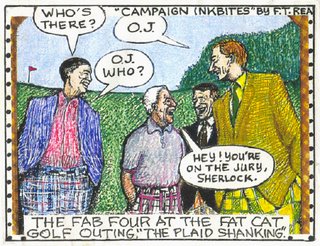
In the summer of 1994 O.J. Simpson-related material was on television round-the-clock. Meanwhile, a four-way race political race developed in Virginia, as three candidates emerged to challenge the incumbent Chuck Robb for his seat in the U.S. Senate.

Republican Ollie North was nominated by a convention at the Richmond Coliseum. Former governor Doug Wilder, a Democrat, threw his hat in as an Independent. Finally, Marshall Coleman, a Republican former attorney general and failed gubernatorial candidate, ran as an Independent, too.

Naturally, both Wilder and Coleman were seen immediately as spoilers by many observers. The few members of the national press that weren't assigned to the story of Simpson's soon-to-begin trial were all over the circus-like story of the quartet of candidates in Virginia. Although Robb was the incumbent, North was easily the biggest celebrity in the group. Wilder might have argued that point.

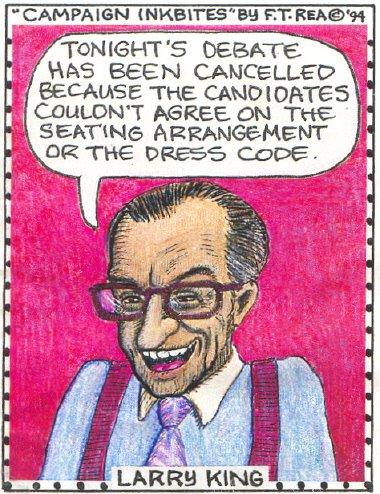
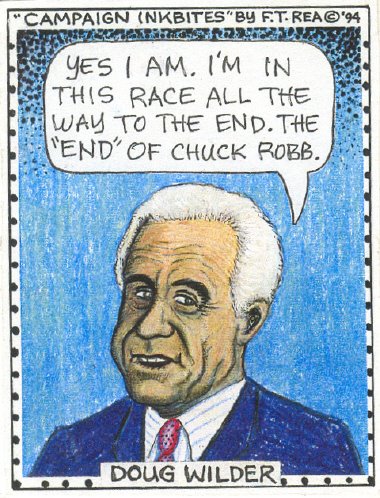
In late August, I issued what was then my fourth set of collectible cards -- “Campaign Inkbites: The ‘94 VA Senate Race.”

After swearing he was in the race 'til the finish, the mercurial Wilder withdrew in October. The wooden Coleman stayed the course, with stubborn Sen. John Warner as his chief backer. North, ever the checkered-shirted dandy, raised and spent over $25 million; what was then a new record for the most ever in a U.S. Senate race ... any state. In the end the awkward Robb outlasted them all and won reelection.

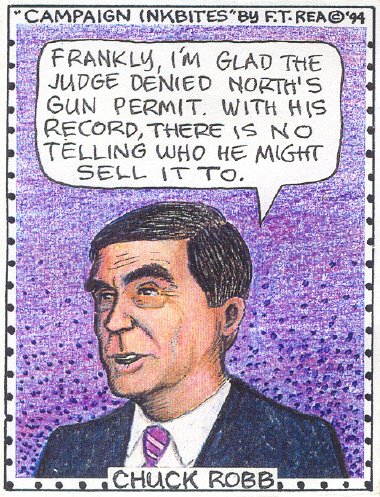
Beneath the 1994 newspaper article about that card collection are scans of 12 of the 15 original cards from the set. With 21 years of dust on the cards, some of my attempts at humor may not work so well now, hopefully the caricatures are still fun to look at. As I produced these cards, it was an interesting challenge to try to write lines for the dialogue balloons that would hold up for a month or two, no matter what the developments.

Right out of the gate, this edition was lucky with publicity, the article reprinted below started it:
Sept. 6, 1994: David Poole and Dwayne Yancey (Virginian-Pilot)
Odds and ends from the past week of Virginia's U.S. Senate campaign: I'll swap you two Doug Wilders for a Tai Collins. The colorful U.S. Senate race has spawned a set of trading cards featuring the four candidates and a host of supporting characters - including the former Miss Virginia who gave a nude massage to Chuck Robb in a New York hotel.

There’s U.S. Sen. John Warner sounding defensive about his hand-picked candidate, Marshall Coleman: “Why should I strain to name an office he hasn't sought, or an abortion stance he hasn't taken? The point is: Marshall isn't Ollie.”

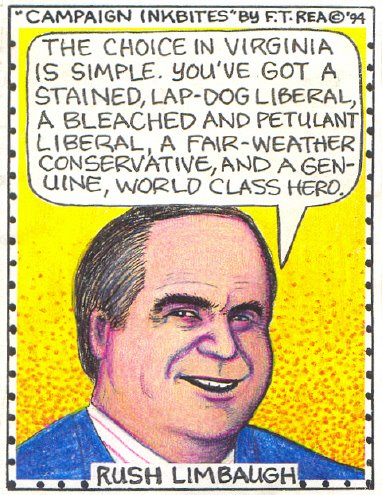
There’s conservative talk-show host Rush Limbaugh assessing the race: “The choice in Virginia is simple. You’ve got a stained, lap-dog liberal, a bleached and petulant liberal, a fair-weather conservative, and a genuine, world-class hero.”


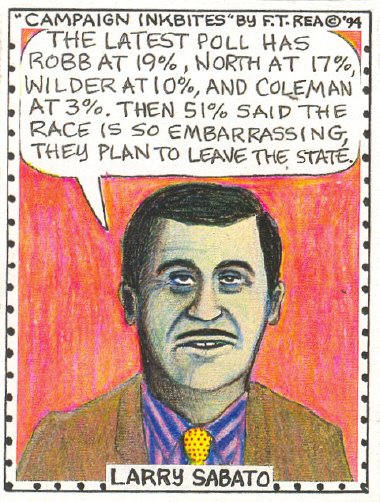
There’s political pundit Larry Sabato reporting on the latest poll results: “Fifty-one percent said the race is so embarrassing they plan to leave the state.”
The “Campaign Inkbites” are the brainchild of F.T. Rea, a Richmond artist who a decade ago issued a similar deck of cards commemorating a massive death-row escape at Mecklenberg Correctional Center [by the notorious Briley brothers and four others]. The set of 15 Senate cards is available at Biff’s bookstore [also at Chickens, the snack bar in the State Capitol] in Richmond for $12 a pack.

The most unflattering likeness in the set is that of Sabato, whose green skin gives him the look of a vampire.

“Ironically, he’s my best customer,” Rea said of Sabato. “He bought 12
packs.”
Then an AP story written by Martha Slud ran. Lots of newspapers (1, 2) picked it up and printed various versions of it. Some ran the whole piece, as shown below, others edited it down.
Then came a five-minute report on the card set by Bob Woodruff that appeared on CNN.

Previously, Woodruff had done a report on earlier card project of mine. As it happened, I just happened to run into him and he asked what I was up to. All that publicity prompted political memorabilia collectors from far and wide to buy the cards through the mail.

STYLE Weekly then asked me to do a cover and a five-page spread of cartoons on the same campaign. That feature ran in the Oct. 18, 1994, issue.

It was a wild ride.

*

Note: Click on any of the cards or the article to enlarge them.

Tuesday, October 06, 2015

Blood Isn't Just Red

Each time we ask basically the same questions: Why is it almost always a young white male? Did the mayhem stem from a humiliating rejection? Was it television or video games that made an already disturbed individual into a crazy shooter? The Internet? What role did his family life play in bending his mind? Were the words of crackpot celebrities rattling around in the shooter's head? Did a dog tell him to do it?

Sorry, I can't offer a conclusive answer. But pretending that people do things, even strange things, for a single reason doesn't usually get us closer to the truth. Searching for an overriding motive for spraying bullets into a schoolroom or a movie theater -- some clue to make sense of it -- doesn't usually lead to any sort of satisfaction .... but to ease our pain we always look, anyway.

Will we ever really understand how someone could do such a thing? I doubt it, but our common sense tells us there's something in America's culture that has been contributing to these massacres. Certainly, the availability of the rapid-fire weapons facilitates the slaughter, but what else can be said to be a common denominator? 

The piece that follows was published by the Richmond Times-Dispatch on its May 1, 1999 OpEd Page. The point it makes about the long-term effects of repeated violent images on television still seems apt to me.
Blood Isn’t Just Red
by F.T. Rea

Television has dominated the American cultural landscape for the past 50 years. A boon to modern life in many ways, television is nonetheless transmitting an endless stream of cruel and bloody images into everyone’s head.

However, if you’re still waiting for absolute proof that a steady diet of video violence can be harmful to the viewer, forget it. We’ll all be dead before such a thing can be proven. This is a common sense call that can and should be made without benefit of dueling experts. Short of blinding denial, any serious person can see that the influence television has on young minds is among the factors playing a role in the crime statistics.

How significant that role has been/is can be debated.

Please don’t get me wrong. I’m as dedicated to protecting freedom of speech as the next guy. So perish the thought that I’m calling for the government to regulate violence on television. It’s not a matter of preventing a particular scene, or act, from being aired. The problem is that the flow of virtual mayhem is constant.

Eventually splattered blood becomes ambient: just another option for the art director.

My angle here is that in the marketplace of ideas, the repeated image has a decided advantage. The significance of repetition in advertising was taught to me over 25 years ago by a man named Lee Jackoway. He was a master salesman, veteran broadcaster, and my boss at WRNL-AM. And, like many in the advertising business, he enjoyed holding court and telling war stories.

He had found me struggling with the writing of some copy for a radio commercial. At the time he asked me a few questions and let it go. But later, in front of a group of salesmen and disc jockeys, Jackoway explained to his audience what I was doing was wrong. Basically, he said that instead of stretching to write good copy, the real effort should be focused on selling the client more time, so the ad spot would get additional exposure.

Essentially, Jackoway told us to forget about trying to be the next Stan Freeberg. Forget about cute copy and far-flung schemes. What matters is results. If you know the target audience and you have the right vehicle to reach it, then all you have to do is saturate that audience. If you hit that target often enough, the results are money in the bank.

Jackoway told us most of the large money spent on production went to satisfying the ego of the client, or to promoting the ad agency’s creativity. While he might have oversimplified the way ad biz works to make his point, my experience with media has brought me to the same bottom line: When all else fails, saturation works.

Take it from me, dear reader, it doesn’t matter how much you think you’re ignoring the commercials that are beamed your way; more often than not repetition bores the message into your head. Ask the average self-absorbed consumer why he chooses a particular motor oil or breakfast cereal, and chances are he’ll claim the thousands of commercials he paid no heed had nothing to do with his choices.

Meanwhile, good old Lee Jackoway knows that same chump is pouring Pennzoil on his Frosted Flakes because he has been influenced by aggressive advertising all day long, every day.

OK, if repetition works so well in television’s advertising, why would repetition fail to sell whatever messages stem from the rest of its fare? When you consider all the murders, all the rapes, all the malevolence that television dishes out 24 hours a day, it adds up. It has to.

What to do?

I have to believe that if the sponsors of the worst, most pointless violent programs felt the sting of a boycott from time to time, they would react. Check your history; boycotts work.

It’s not as though advertisers are intrinsically evil. No, they are merely trying to reach their target audience as cheaply as possible. The company that produces a commercial has no real interest in pickling your child’s brain with violence; it just wants to reach the kid with a promotional message.

If enough consumers eschew worthless programs and stop buying the products that sponsor them, the advertiser will change its strategy. It really is that simple.

As we all know: A day passes whether anything is accomplished or not. Well, parents, a childhood passes, too, whether anything of value is learned or not.

Maybe television is blocking your child off from a lesson that needs to be learned firsthand -- in the real world where blood isn’t just red, it’s wet.

-- 30 --

Thursday, October 01, 2015

Remembering High on the Hog 1977-2006

Note: This piece was originally published by Brick Weekly in 2007.  

Memphis Rockabilly Band (and impresario Chuck Wrenn)
on the HOTH stage in Libby Hill Park for the last time.

Due  to the intrusion of an all-day downpour, last year’s edition of High on the Hog, No. 30, was a soggy affair. Two of the bands scheduled couldn’t play under the circumstances. Yet, in spite of the stormy weather, the Bopcats and the Memphis Rockabilly Band performed using a scaled down sound system. Tarps were lashed to the sides and back of the stage to block the wind-driven rain.

A few party stalwarts danced in the mud with umbrellas. The show went on … but perhaps for the last time.

“It was a Nor’easterner that settled over Richmond,” said the longtime director of matters musical, Chuck Wrenn. “We’ll see what the future brings.”

Meanwhile, there certainly will be no High on the Hog 31 this year.

So, the director of matters porcine, Larry Ham, won’t be slathering his Carolina red vinegar basting sauce over slow-cooking pork this Saturday in Libby Hill Park. Moreover, it seems likely that High on the Hog—which for three decades has served a generation as a reliable reunion party—has probably happened for the last time.

The heavy losses sustained from last year’s fizzler meant the handful of friends/neighbors who have staged and financially backed HOTH since its inception took a bath in red ink ... the rainy day fund was wiped out.

Going back to HOTH’s origins, other than Ham, among Wrenn’s chief co-conspirators have been: Bobby Long, Dave O’Kelly, John Cochran, Randy Smith and Steve McKay. For such veterans last year’s weather had to bring to mind another rainy day, 26 years before. 1980 was the year they significantly enlarged the plan for what had originally been a small annual neighborhood party.

Three rousing rock n’ roll bands played on a flatbed trailer in the cobblestone alley behind Wrenn’s 2808 East Franklin Street back yard for what was the then-largest HOTH crowd ever.

Yet, this was a time when one couldn’t get a permit from the proper authorities for such an event. Amplified rock simply wasn’t allowed at outdoor shindigs in Richmond, most especially on public property. So, in a sense HOTH 4 was flying below, or perhaps above, the radar. For whatever reason the cops on the beat chose not to bust it.

When it suddenly began raining in 1980, rather than lose momentum by shutting off the electricity and clearing the stage—to wait out the downpour—Wrenn broke out his staple gun and large rolls of heavy-gauge transparent plastic. With the help of volunteers an awning was hastily improvised to keep the rain off the stage. A portion of the yard closest to it was also protected, somewhat.

Then, with the electric guitars of Don’ Ax Me ... Bitch wailing in defiance of the chilly rainstorm, the sense of common purpose felt by those dancing in the mud was unforgettable. The full potential of live rock n’ roll music to simultaneously express both lamentation and celebration was realized.

In 1983 HOTH had outgrown its alley venue, so it shifted gears and moved into the park across the street. The throwdown even went legit. Subsequently, HOTH’s rollicking success and noteworthy lack of trouble planted the seeds for Jumpin’ in July, Friday Cheers and the outdoor music festivals that have blossomed since.

The HOTH record for beer sales on a Saturday afternoon still stands at 209 kegs; it was some time in the early ‘90s, according to Chuck. At its peak, it took some 350 volunteers to chop the pork, serve the beer, tend the stage, etc. Each year volunteers got a new HOTH T-shirt for their trouble; extras were sold to the public. There have been 25 different models.

What was a beloved local gospel group, The Silver Stars, holds the record for most HOTH appearances with 10 (1987-‘96). The Memphis Rockabilly Band played the gig seven times (1980, ‘81, ‘84-‘87, ‘06).

“The Silver Stars, we got every year we could ... until they died,” Wrenn recalled.

What were locally-based bands with multiple appearances include: The Bopcats, The Good Humor Band, Billy Ray Hatley’s bands, Page Wilson with Reckless Abandon and The Wall-O-Matics. Maybe the three most noteworthy national acts were: Billy Price and the Keystone Rhythm Band in ‘83 and ‘85; NRBQ in ‘87; Marcia Ball in ‘01.

Presented with the prospect that HOTH has run it course, a smiling Chuck Wrenn offered familiar advice, “Don’t forget to have a good time.”

Those coveted laminated backstage credentials, which meant free beer to the wearer, will probably be selling on eBay soon. Who knows what T-shirts will eventually be worth?

Appropriately, as it stands now, the last band to perform was the impeccably authentic Memphis Rockabilly Band. Although it was unplanned, they were the perfect act to play an encore for 30 years of smiles ... one last fast dance in the mud.

-- Word and photo by F.T. Rea

Saturday, September 26, 2015

The Big Stretch


Note: This piece first appeared in STYLE Weekly as a Back Page in 2002.


*
  
The prototype was assembled during a lull in seventh grade shop class. After tying some 15 rubber bands together to make a chain, a collaborator held one end of the contraption as I stepped back to stretch it out for a test. Squinting to sight along the taut line to take proper aim, finally, I let go.

The whole thing gathered itself and shot past the holder. The released tip struck a target smartly, several feet beyond the holder. While the satisfaction I felt was a rush, the encouragement from the boys who witnessed that launching felt transforming.

Through a pleasant sequence of trial-and-error experiments, it was soon determined how to best maximize distance and accuracy. Once guys across the room were getting popped with the bitter end of my brainchild -- dubbed The Stretch -- the spitballs that routinely flew around classrooms in 1961 at Albert H. Hill Junior High -- were strictly old news.

A couple of days later, uncharacteristically, I appeared on the schoolyard an hour before the first bell. Inside a brown paper bag I had was an updated version of my invention. This one was some 60 links long -- the Big Stretch. No one at school had seen it and I was only too happy to change that.

Once the Big Stretch was tested on the schoolyard, demonstrating its amazing new range, boys were soon shoving one another aside just to act as holders. Most of the time I did the shooting. Occasionally, one of the guys from my inner circle was permitted to be the shooter. As the wonder whizzed by it made such a splendid noise that just standing close by the holder was a thrill, too. On the asphalt playground behind the yellow brick school building an enthusiastic throng cheered each flight.

The Big Stretch went on to make an appearance at an afternoon football game, where its operators established to the delight of the audience that cheerleaders on the sideline could be zapped on their bouncing butts with impunity from more than 25 yards away. After a couple of days of demonstrations around the neighborhood and at Willow Lawn shopping center, again, I significantly lengthened the chain of rubber bands.

But the new version -- about 100 rubber bands long -- proved too heavy for its own good. It was not as accurate or powerful as the previous model. Then came the morning a couple of beefy ninth-grade football players weren’t content with taking a single turn with the new Big Stretch. Although there was a line behind them they demanded another go.

Surrounded by seventh-grade devotees of the Big Stretch, I stood my ground and refused. But my fair-weather entourage was useless in a pinch. Faced with no good options, I fled with my claim-to-fame in hand. In short order I was cornered and pounded until the determined thieves got the loot they wanted. They fooled around for a while trying to hit their buddies with it. Eventually, several rubber bands broke and the Big Stretch was literally pulled to pieces and scattered.

By then my nose had stopped bleeding, so I gathered my dignity and shrugged off the whole affair, as best I could. I chose not to make another version of the Big Stretch. A couple of other kids copied it, but nobody seemed to care. Just as abruptly as it had gotten underway, the connected-rubber-band craze ran out of gas at Hill School.

It was over.

At that time the slang meaning of “cool” had an underground cachet which has been stretched out of shape since. We’re told the concept of cool, and the term itself, seeped out of the early bebop scene in Manhattan in the ‘40s. That may be, but to me the same delightful sense of spontaneity and understated defiance seems abundantly evident in forms of expression that predate the Dizzy Gillespie/Thelonious Monk era at Minton’s, on 118th Street.

Wasn’t that Round Table scene at the Algonquin Hotel, back in the ‘20s, something akin to cool? If Dorothy Parker wasn’t cool, who the hell was? (Of course, I mean on paper, not necessarily in her day-to-day deportment.) And, in the decades that preceded the advent of bebop jazz, surely modern art -- with its cubism, surrealism, constructivism, and so forth -- was laying down some of the rules for what became known as cool.

Cool’s zenith had probably been passed by the time I became enamored with the Beats, via national magazines. Widespread exposure and cool were more or less incompatible. Significantly, cool -- with its ability to be flippant and profound in the same gesture -- rose and fell without the encouragement of the ruling class. Underdogs invented cool out of thin air. It was a style that was beyond what money could buy.

The artful grasping of a moment’s unique truth was cool. However, just as the one-time-only perfect notes blown in a jam session can’t be duplicated, authentic cool was difficult to harness; even more difficult to mass-produce.

By the ‘70s, the mobs of hippies attuned to stadium rock ‘n’ roll shrugged nothing off. Cool was probably too subtle for them to appreciate. The Disco craze ignored cool. Punk Rockers searched for it in all the wrong places, then caught a buzz and gave up.

Eventually, in targeting self-absorbed Baby Boomers as a market, Madison Avenue promoted everything under the sun -- including schmaltz, and worse -- as cool. The expression subsequently lost its moorings and dissolved into the soup of mainstream vernacular.

Time tends to stretch slang expressions thin as they are assimilated; pronunciations and definitions come and go. Since then, when people say, “ku-wul,” usually it's to express their ordinary approval of routine things.

The process of becoming cool, then popular, pulled The Big Stretch to pieces. Once the experimental aspect of it was over it got old, like any worn out joke. Then it began to play as just another showoff gimmick, which was something less-than-cool, even to seventh-graders a long time ago.
-- 30 --

-- Photo of Albert H. Hill Middle School from RVA Schools

Friday, September 18, 2015

Richmond's Handbill War


Note: The clipping above is from Throttle magazine's July 1982 issue.


*

In 1982 the City of Richmond tweaked its City Code to crack down on the posting of unauthorized messages on fixtures in the public way. With a focus on the Fan District, policemen pulled handbills from utility poles and charged who they held responsible for posting the handbill with violating the new statutes.

On June 28 of that same year, David Stover, a photographer and part-time usher at the Biograph Theatre, was ordered by a General District Court judge, R.W. Duling, to pay a $25 fine. Stover’s misdemeanor conviction stemmed from promoting a gig for his band, The Prevaricators. He admitted to having stapled copies of a letter-sized promotional flier to utility poles.

In the weeks before Stover’s court date others in bands had been fined for committing the same crime. In the early-80s Richmond’s live music scene was probably the strongest it had been in decades, but the crackdown suddenly had most clubs and bands afraid to rely on handbill campaigns to promote their shows. As fliers were the main promotional tool for most of the Rock 'n' Roll shows the crackdown threatened to throw a wet blanket over the aforementioned live music scene.

As the manager of the Biograph, I had been using the same sort of handbills on a regular basis for 10 years to promote that repertory cinema’s fare, in particular the midnight shows. Xerography had made the cost of a short run of little posters much more affordable. So, I wasn’t about to give up such a reliable and inexpensive method of promotion without a fight.

It felt to me like the City of Richmond was not only trampling on my freedom of speech rights, but it was trying to destroy the nightlife scene the Biograph was part of in the Fan District. The local authorities appeared to be trying to scrub away what some in Richmond had come to see as an undesirable element -- much of which was affiliated with VCU. 

Given those thoughts, I decided to go on stapling fliers to utility poles, more or less to invite a bust.

It wasn’t long before a polite cop showed up at the Biograph with a flier for the movie we were playing, “The Atomic Café.” He said he had removed it from a pole in the neighborhood. I admitted to putting it up and was issued a summons. Due to procedural delays, it took over four months for my day in court to arrive.

Which was fortunate, because I used that time window to build my case.

In a larger sense, it was another battle in a conflict we have come to know as the Culture War, which has been dragging on since the late-1960s. In part, the crackdown was blowback from the resentment some property owners in the Fan felt toward VCU’s growing presence. In 1982 the look associated with Punk Rock -- how the kids dressed, as well as their art -- was just as off-putting to some conservative old folks and Yuppies as the amplified sound of the music, itself. 

Consequently, the Fan District Association of that era was dead set against irreverent handbills that promoted edgy happenings in the Fan. Prompted by that civic association’s pressure, the City of Richmond said the whole mess was mostly about trash -- fliers stapled to poles were officially branded as litter. 

So, I started reading about similar situations in other places, cases that involved using fixtures in the public way, such as utility poles. I found some useful precedents that backed up my thinking. Plus, I began to read about and look at political art and outlaw art, down through history, more than ever.

The study of laws and decisions about free speech and the use of public property became my obsession. Scheming about how to present the argument filled my head for the next four months. First, I wanted the court to see an essential context -- our society tolerates all sorts of signage on utility poles, because the messages are considered useful and the practice works.

Then, I wanted to convince a judge that once you considered all the handbills in the neighborhood around VCU, as a whole, it could be seen as an information system. It was a system that some young people were relying on for information, just the same as others might rely on newspapers obtained from a box sitting on public sidewalk.

After all, what right did the newspaper company have to block the public sidewalk with its box full of information, including a lot of advertising? What allowed for that?

One person might read the entertainment section in a local newspaper. Another person might look to the utility poles in their neighborhood, to read the posters touting live music shows or poetry readings. Some would trust the information found in a newspaper. Others might put more faith in the handbills posted on certain poles they walk past regularly. 

The only reason privately owned utility poles had ever been allowed to impose on public property, in the first place, was that electricity and telephone lines had been seen as serving the commonweal. So, why not use the bottom of the same poles as kiosks?   

Somewhere along the line, I told my bosses it would cost them nothing in legal fees. A couple of my friends who were on the theater's softball team, who were also pretty good lawyers, would handle the defense.


To gather plenty of good examples of handbills to use as evidence, we had an art show at the Biograph (see flier above). On October 5, some 450 fliers, posted on black foam core panels, were hung in the theater’s lobby. In all, there were probably three or four dozen different artists represented. A group of friends acted as impromptu art expert judges to select the best five of the show.

Naturally, there was a keg of beer on hand to grease the wheels of progress.

Two of the handbill art show judges from that night also served as expert witnesses at the trial. They were: Gerald Donato and David Manning White. Donato was an art professor at VCU; White was the retired head of the mass communications department at VCU. The best 100 of the handbills from the show were later taken to court as evidence.

One of Phil Trumbo’s Orthotones (later Orthotonics) handbills was named Best in Show. Most people who knew much about the handbill artists in the Fan would have said Trumbo was top dog, so it was a popular decision by the judges.
*

Thus, on November 5, 1982, I witnessed a fascinating scene in which an age-old question — what is art? — was hashed out in front of a patient judge, who seemed to thoroughly enjoy the parade of exhibits and witnesses the defense attorneys put before him. The room was packed with observers, which included plenty of gypsy musicians, film buffs and art students wearing paint-speckled dungarees.

Trumbo testified at the trial as a handbill expert, to explain how to make a handbill and why they were used by promoters of entertainment. He also described how the music and art associated with the bands and clubs were all part of the same scene that flowed out of the neighborhood's university.

My defense attorneys attacked the wording of the city's statute I was charged with violating as “overreaching.” They asserted on my behalf that it was my right to post the handbill, plus the public had a right to see it. The prosecution called the handbill, “litter.”

The judge was reminded that history-wise, handbills predate newspapers. Furthermore, we asserted that some of the cheaply printed posters, a natural byproduct of having a university with a burgeoning art school in the neighborhood, were worthwhile art.

At a crucial moment, Donato was being grilled by the prosecutor. The Assistant Commonwealth’s Attorney, William B. Bray, asked the witness if the humble piece of paper in his hand, the offending handbill, could actually be “art.”

“Probably,” shrugged the prof. “Why not?”

The stubborn prosecutor grumbled, reasserting that it was no better than trash in the gutter. Having grown weary of the artsy, high-brow vernacular being slung around by the witnesses, the prosecutor tried one last time to make Donato look foolish.

As Warhol’s soup cans had just been mentioned by the art expert, the prosecutor asked something like, “If you were in an alley and happened upon a pile of debris spilled out from a tipped-over trashcan, could that display be art, too?”

“Well,” said the artist, pausing momentarily for effect, “that would depend on who tipped the can over.”

Donato’s punch line was perfectly delivered. The courtroom erupted into laughter. Even the judge had to fight off a smile.

The crestfallen prosecutor gave up; he had lost the case. Although I got a kick out of the crack, too, I’ve always thought the City’s mouthpiece missed an opportunity to hit the ball back across the net.

“Sir, let me get this right,” he might have said, “are you saying the difference between art and randomly-strewn garbage is simply a matter of whose hand touched it; that the actual appearance of the objects, taken as a whole, is not the true test? Would you have us believe that without credentials, such as yours, one is ill-equipped to determine the difference ordinary trash and fine art?”

A smarter lawyer could well have exploited that angle.

Still, the prosecutor’s premise/strategy that an expert witness could be compelled to rise up to brand a handbill for a movie, a green piece of paper with black ink on it, as “un-art” was absurd. So, Donato, who was a wily artist if there ever was one, probably would have one-upped the buttoned-down lawyer, no matter what.

Perhaps the question should not have been — how can you tell fake art from real art? Any town is full of bad art, mediocre art and good art. Name your poison.

The better question to ask is whether the art is pleasing to the eye, thought-provoking or useful. Then you become the expert witness.

However, when it comes to great art, it still depends on who tips the can over.
*

The next day the story about winning the handbill case was draped stylishly across the top of the front page of the Richmond Times-Dispatch.
‘Atomic Café’ handbill case is still clouded
By Frank Green
Sat., Nov. 6, 1982

Though the case has ended, the fallout from “The Atomic Café” may not be over.

Richmond District Court Judge Jose R. Davila Jr. dismissed a charge yesterday against Terry Rea, the manager of the Biograph Theater, who allegedly posted handbills advertising the movie “The Atomic Café” on some utility poles in the Fan in June…

…The case concerned the seemingly simple issue of the allegedly illegal posting of a handbill. But before it was over, the proceedings touched on topics that included free speech, soup cans, and nuclear energy, and invoked the names of such diverse personalities as Andy Warhol and the city‘s public safety director.

Rea’s attorneys, John G. Colan and Stuart R. Kaplan, argued the city’s ordinance was unconstitutional because it violated Rea’s right of freedom of speech…

…“The city, GRTC, VCU, churches, the Boys Club and all the candidates use the public’s utility poles to post their signs. They know as well as the general public that there is nothing pretty about a naked pole. Handbills pose no danger to anyone. Is free speech only for some?” Rea asked in a handbill he had printed up before yesterday’s trial.   
Later that Saturday Richmond’s afternoon daily, the Richmond News Leader, carried this story:
Art or litter? Judge rules handbills not in ‘public way’
by Frank Donnelly
Nov. 6, 1982

One man’s art may be another man’s litter, but the real question was whether it blocks the “public way.”

Terry Rea, manager of the Biograph Theatre in Richmond, was charged in June with obstructing a city sidewalk when he posted handbills on utility poles in the Fan District.

Rea’s attorneys, eliciting testimony on mass media and art from several professors at Virginia Commonwealth University, argued yesterday that the city law limited their client’s freedom of speech.

However, Richmond General District Judge Jose R. Davila, Jr., said the issue came down to whether the posters obstructed the public way, and he ruled that the commonwealth’s attorney’s office failed to prove they did.

Davila dismissed the charge against the manager of the theater but stopped short of finding the city law unconstitutional, which also had been requested by Rea’s attorney’s.

The city now must decide whether to find a better legal argument to defend the city law or to revise it, officials said. The law is used by the police to combat excessive advertising in the public way, which is defined as any place open to the public, such as a street or sidewalk.

“The poles were perfectly clean this morning,” Capt. Robert T. Millikin, Jr., said about the possible impact of the decision. “Between you and me, I don’t know what they’ll [sic] going to look like between now and tonight.”

For the last year, Fan District residents have complained to police about the unsightliness caused by posters on trees and utility poles, Millikin said. The police asked businesses in June to stop posting the handbills and most businesses did so, he said.

Rea said he always has relied on handbills as an inexpensive but effective way to advertise movies at the theater, which specializes in the showing of avant-garde movies. Two weeks later, he was charged with a misdemeanor after posting advertisements for the anti-nuclear power movie, “The Atomic Cafe.”

The manager was charged under a law that states: “It shall be unlawful for any persons to obstruct or use a public way for advertising, promotional or solicitation purposes or for any purpose connected therewith ... by placing attacking [sic] or maintaining a sign on or to a fixture (such as a utility pole) ...”

Rea’s attorneys, Stuart R. Kaplan and John G. Colan, contended in court that the posters did not obstruct the public way, and the arresting officer agreed with them.

“It was nothing anyone would trip over,” Patrolman James P. Gilliam said about the posters.

The attorneys also argued that the city law abridged Rea’s freedom of speech by denying him one possible way to advertise.

David M. White, a former VCU professor of mass communication and author of 20 books on the media. said handbills are a unique form of communication. The theater could advertise in newspapers but the cost was prohibitive, he said.

Jerry Donato, an associate VCU professor of fine arts, said that posters in the Fan District contained both art and messages. “The Atomic Cafe” posters, which contained the slogan, “A hot spot in a Cold War,” criticized the use of nuclear power, he said.

Asked by assistant commonwealth’s attorney William B. Bray whether a bunch of soup cans on the ground is art, Donato replied, “It depends on who arranged them.”

The courtroom, which held about 30 artists and supporters of the theater, erupted into laughter.

Bray said purpose of the statute was to prevent littering but agreed that another reason was to prevent obstruction of the public way. The posting of handbills could block the public way by falling off of a utility pole and causing pedestrians to slip, he said. The posting of the advertisements caused a hardship for the police, which sometimes had to take down the posters, Millikin said.

“This ties my men up,” he said. “We have more important things to do, God knows.”

Rea and his attorneys said they were happy with the decision although they wished Davila had gone farther and ruled the city law unconstitutional.

“I’m glad there are no criminal charges against me,” said Rea, who will continue to post the handbills. “But I wish the judge had gone further and ordered the statute to be unconstitutional. I don’t whether I’m safe.”

Before the trial, Rea had argued, “The handbill posted in the public way is a unique and vital form of communication. Production and distribution is direct, swift and cheap.”

That message was printed on a handbill.
*

In 1985, Richmond once again passed new laws forbidding unauthorized fliers on utility poles. Another crackdown ensued.

This time it spawned a reaction from several of the Fan District’s handbill artists, musicians and promoters -- activists who called themselves the Fan Handbill Association.

Eventually, this issue prompted me to design a two-page, twice-a-week magazine, SLANT, made to be stapled to utility poles. There were cartoons, stories and ads. But that’s another story for another day.

Friday, September 11, 2015

Barack Obama, the Jackie Robinson of Our Day


The people who like to brand Barack Obama's presidency as a “failure” are saying more about themselves than Obama or about their understanding of politics. Like baseball Hall-of-Famer Jackie Robinson (1919-72), Obama broke new ground in the USA and has had to put up with relentless mean-spirited attacks to block his way and undermine his efforts.

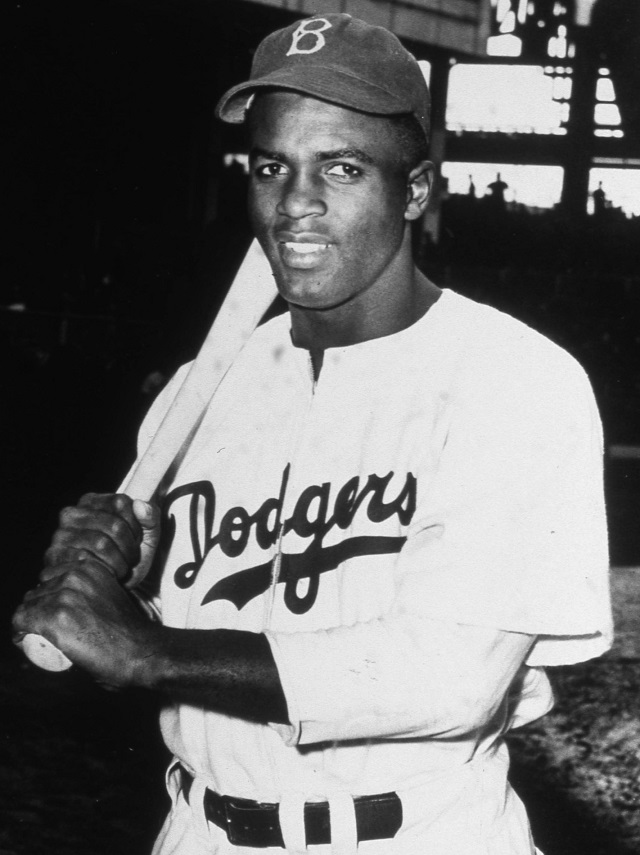
During Robinson's career with the Brooklyn Dodgers (1947-56), not only were there ballplayers who deliberately tried to injure him, there were fans of a certain mindset who claimed he really wasn't all that good. Some still say it. Of course they had to overlook his Rookie of the Years award in 1947. Same with his Most Valuable Player award in 1949. Same with his six times being selected as a National League All-Star. Robinson received those honors in spite of the abject racism in the air in those days, attitudes that blinded some of those who were voters. 

Fortunately, Robinson's stats still speak for themselves – .311 lifetime batting average; 197 stolen bases, etc. It should be noted that he didn't start his 10-year MLB career until he was 28 years old.

Like Robinson's accomplishment's were, Obama's have been made as part of a team, and they were made in spite of relentless focused efforts to undermine him and deny him fair treatment. Today, 59 years after Robinson's last game in a Dodgers uniform, those who assert that Obama has been a failure as a president obviously have no interest in speaking the truth. Some of them are still claiming he's a closet Muslim who was born in Kenya.

As it has turned out with history's view of Jackie Robinson, historians will know what label to put on all that crap. And, in my view Obama has been the most successful president in a long time, maybe since the days when Robinson was pissing off racists.  

Wednesday, September 09, 2015

Double-Take: Kass 333

cNote: In 2010 I wrote this piece for the James River Film Journal. Every time I think of this story, it makes me smile. It's a story I enjoy telling. 


Alan Rubin (one of the Biograph Theatre's owners) 
and Carole Kass in the lobby at the second
anniversary party (Feb. 11, 1974).
Photo by Gary Fisher.

This morning I thought of Carole Kass, longtime movie critic at the Richmond Times-Dispatch, who died at the age of 73 in 2000. So, for the sake of a little variety this week my post will be about her, instead of a list of five favorites.

During my nearly-12-year stint as the manager of the Biograph Theatre (1972-83) I spoke with Carole nearly every week, often more than once. Usually it was on the phone. She also came to the theater regularly to review first-run pictures. She came to see movies she liked on her own time. Plus, she was there for various social occasions and for a publicity stunt, or two. In the process, over the years, we learned to trust one another.

The genuine enthusiasm and warmth Carole brought to her work as a film critic/entertainment columnist was uncommon. Those same traits were evidenced in other things she touched. 
 
Whether she was helping out a little independent movie theater in ink, or teaching cinema history to undergraduates at Virginia Commonwealth University, or volunteering to teach film production to inmates at the Virginia State Penitentiary, Carole always cared and it showed. Carole understood the special power that motion pictures have to lift people from the grips of their vexations and depressions, if only for a few sweet moments.


My last show-biz encounter with Carole took place in 1998, when she was part of the Jewish Community Center’s presentation of a live Joan Rivers show at the then-Carpenter Center. My job, as a freelance videographer, was to record the performance for the sponsors with two cameras; one for closeups and the other for a static wide shot.

Rivers’ topic was surviving tragedy. In spite of the heavy subject she was quite funny. After her prepared remarks, Joan answered written questions submitted by the audience, then asked of her onstage by Carole. They were comfortable with one another, so their impromptu performance as a team was nearly as good as what had gone before.

At that time, it was public knowledge that Carole was battling cancer. She joked with me that night about fretting over whether she would live long enough to do the show for the JCC. A few days after that performance I went out to her home in the West End for a visit. I wanted to shoot some stills of old pictures of her to insert into the finished video, to play over the sound of her introduction in the show. I was also searching for a way to tell her how much she had always meant to the Biograph’s survival and, in general, to the film-loving community in Richmond.

Typically, Carole was her modest self. In her view, she had only been a background artist, helping out. Then there had been her forced retirement from Media General a few years before, which had never set well with her.

A week or so later, I delivered a video tape to her at her home. It included Rivers’ talk to the audience and what followed. At the end of the tape there was a tribute to Carole that I had staged, shot and edited without her knowledge. While I was there, we chatted briefly, but I didn’t let on about the surprise.

Here’s what Carole didn’t know as she watched the tape: The R-TD’s then-executive editor, Bill Millsaps, had helped me out by asking all the writers to come outside for about 20 minutes to be the performers in a tribute to Carole. Others from Richmond's film buff community, including former staff members at the Biograph, were also asked to be on hand to be in the main scene.

A the shoot the cast was directed to walk around for a while, then stand applauding in front of 333 W. Grace St., an entrance to the newspaper’s building that no longer exists. I had help shooting the scene from Jerry Williams and Ted Salins. They two of three cameras I used.

Later I edited the footage from the three tapes into a short piece, using music from the movie “8½” for sound; the imagery also imitated scenes in the movie, somewhat. That particular Fellini flick was one of her favorites. In the time that had passed no one had told Carole a word about it; it had been beautiful teamwork.

When she saw the tribute footage, watching it with pain as her only companion, Carole couldn’t fathom that all those people had actually been assembled, just to give her a standing ovation. When she called, she told me she had assumed I found the footage, somewhere, and spliced it onto end of the tape. 

Where had I found it? she asked.

With a measure of satisfaction I chuckled and informed her how the scene was actually set up. She didn’t buy it!

Carole thanked me warmly, but added a gentle, facetious scolding for my trying to fool her about the mysterious last scene, shot in front of the old entrance to 333. She reminded me of my reputation as a trickster.

Later Carole telephoned then-television critic Douglas Durden, only to hear from her old friend (they sat at desks next to one another for years) that it all had been just as I said.

After talking with others at the newspaper, to gather the whole story Carole called me back to laugh, to cry and to apologize for not believing me. She went on to say that what had started out as a rather “bad day” for her — coping with the indignities of her medical situation — had been changed into a “good day.”

As my mother died of cancer in 1984, I could grasp what Carole might have meant by “good days” and “bad days.” Carole thanked me for that good day. I told her I’d had a lot of help.

It began with an idea for a gesture to lift an old friend’s spirits and let her know how much her colleagues and the rest of us appreciated her. The finished product, with Carole’s double-take reaction actually turned out better than I had envisioned. 

Which is somewhat unusual for one of my stunts. Back in the summer of 1998, I also gave a print of the tape to Saps, to say, “Thanks.” Naturally, the JCC got a tape. No one else has seen it, as far as I know.

And, dear reader, a good day is wished to you and yours.


Note: what is shown in the YouTube video below is just the 90-minute tape’s last two minutes and 39 seconds. Unfortunately, owing to the half-ass transfer process the look of it is rough.

Monday, August 31, 2015

Bijou presents: 4K restoration of 'The Third Man'

The Bijou Film Center's next move will be to present the newly restored version of "The Third Man" (1949) at the Byrd Theatre on Sunday, September 6, at 7 p.m. Admission $10.00.

Following the one-time-only screening of the film noir gem an after-party will unfold at the New York Deli, located just two doors west of the movie theater. Gypsy Roots will perform live on stage.

Richmond Magazine's Harry "The Hat" Kollatz, Jr., offers some background on the 4K restoration of the film and its protagonist from Petersburg, Virginia -- Joseph Cotten (pictured above). This movie, set in post-WWII Vienna, is one of several collaborations between Cotten and Orson Welles. Click here to read Kollatz's piece.

Advance tickets for $7.00 are available at Bygones Vintage Clothing and Steady Sounds. To read more on one of the most beloved movies of all-time go here.

Thursday, August 27, 2015

An Over-Awareness of the Camera

Note: This piece was written in 2011. Unfortunately, again this year we're seeing murders presented as stunts. Long before most of us, Paddy Chayefsky saw it coming.

*
Behind makeshift barricades in the basement of a small church there will be 18 people, 17 of which will hostages of a 20-year-old schizophrenic full of sweet red wine and homemade speed. He will have a military rifle with a large magazine with which to threaten his hostages. And, he will also have a portable nuclear device he bought from a Middle Eastern underground arms merchant.

His laptop's camera and microphone will capture and transmit the hostage-taker's cryptic announcement: "I am the Looney Tunes Bomber, my presentation will be a one-reeler." The media covering the on-going hostage story will broadcast his "presentation" live.

The entire nine minutes and 11 seconds of the LTB’s ranting performance will be consumed by a rapt audience; there will be millions of viewers in the final minute. Although he will talk about wanting to kill lots of "deserving Americans," he won't mention how he plans to do it.

After chuckling, “Tha, tha … that’s all folks,” he will set off the bomb.

It will blow Boise, or maybe Baltimore, off the map. Videos of the suicidal bomber’s diabolical stunt will go up on YouTube about a half-hour after the appearance of the mushroom cloud.

Somewhere, in Rio, or Tokyo, or elsewhere, a heart will be beating faster in the chest of an abused and angry boy who will be instantly determined to top the LTB’s bloodthirsty audacity.

We are watching a generation grow up with an awareness of the camera that goes far beyond previous generations. And, we are also witnessing a snowballing of the ability of anyone to transmit words and images about love, hate, religion, style and politics, by way of the Internet, to a worldwide audience.

It’s anybody’s guess where the current generation’s insatiable thirst to record and share voluminous records of their everyday lives will lead ... good or bad. We do already know that revolutionaries everywhere are relying on social media in a way that is mind-boggling.

Meanwhile, more and more we are seeing news stories that are tantamount to stunts staged for willing cameras. While it's fashionable these days to scold the press for its tasteless and excessive coverage of certain events, it's not entirely the fault of media executives and editors. The stories they encounter, in some cases, have been planned and packaged by people who are damn good at planting a story.

A precedent-setter in this area occurred in 1979 with the shameful cooperation that developed between news-gatherers for television and the Iranian "students," who demonstrated on a daily basis in front of the American embassy during the hostage crisis that sabotaged the presidency of Jimmy Carter.

Now we know that much of the feverish chanting and fist waving was done on cue. Now we know the camera shots were pushed in tight because the angry horde yelling, "Death to America!" was only a dozen souls deep.

Today, it seems cultural and religious grievances are routinely becoming more heated, here and abroad, by provocative or slanted news coverage. Moreover, much of the reportage these days actually seems designed to inflame situations being covered.

On top of that, in America, the press scrutiny of angry the anti-government firestorm being stoked by some for political gain is surely helping to push some alienated militia types closer to the edge -- the sort that sees Oklahoma City bomber Timothy McVeigh as a hero.

Speaking of McVeigh, the future’s bomber in the church basement will have already seen how plenty of sullen murderers have been made into celebrities by the press. So, he'll be confident the television networks and online newspapers would not switch off a live feed from an on-going hostage situation. Sadly, even if they could see they would be magnifying the reach and power of our maniac, it’s hard to believe the mainstream media would be able to deny him his last terrible wishes.

Ka-boom!

Post-ka-boom, can’t you hear the executives explaining their decisions? "Hey, if we didn’t cover the story in real-time, the other networks would have..."

-- 30 --

Friday, August 14, 2015

The Bijou presents: "The Third Man"


The Bijou Film Center will present the newly restored 4K version of "The Third Man" at the Byrd Theatre in Carytown on Sun., Sept. 6, 2015, at 7 p.m. With The Byrd's new 4K projector and its deluxe sound system the beloved gem of a movie promises to look and sound better than ever.

"The Third Man" (1949): B&W. 104 minutes. Directed by Carol Reed. Screenplay by Graham Greene. Music by Anton Karas. Cast: Joseph Cotten, Alida Valli, Orson Welles, Trevor Howard. Note: This film noir classic is basically a who-dunnit murder mystery set in crumbling post-WWII Vienna. Or, is the real mystery a matter of who was murdered? Since each of the principal characters is hiding something, well, the truth lurking in the shadows isn’t so easy to see ... much less, to grasp.

Here are a couple of excerpts from the late Roger Ebert's review of Reed's masterpiece: 
  • "Has there ever been a film where the music more perfectly suited the action than in Carol Reed's 'The Third Man'?"
  • "Of all the movies I have seen, this one most completely embodies the romance of going to the movies." 
Click here to read Ebert's entire review. A second review of the movie is here. To see the new trailer go here.

Admission: Tickets at the box office will be $10.00. The proceeds from this one-time-only special screening will be split between the Byrd Theatre Foundation's "Journey to the Seats" and the Bijou Film Center.

Advance tickets are now available online at Eventbrite for $7.00 (plus a processing fee of $1.38) each. Paper advance tickets will be available for $7.00 (cash or check) at Bygones Vintage Clothing and Steady Sounds until the day of the show.

The After-Party will unfold at the New York Deli following the screening. Gypsy Roots will perform live on stage. Appropriate food specials will be available. Admission will be free.

-- 30 --

Thursday, August 13, 2015

1974: A Year of Unexpected Changes


The most obvious change in the air in 1974 was the unraveling of the presidency of Richard Nixon. While that was happening the culture shifted. Tastes in music, clothes, politics, movies, drugs, and you-name-it, took off in new directions. Among other things, it was also the year in which social causes went out of style for most of the baby boomers.

Going into 1974, no one would have guessed the most popular gesture of group defiance on campus -- the protest march -- would morph into spontaneous gatherings to cheer on naked people, as they ran by. Yet, in the spring of 1974, streaking on college campuses became a national phenomenon.

Richmond’s police chief, Frank Duling, announced that his department would not tolerate streakers running around in the city’s streets, alleys, etc. He didn’t care whether they were students, or not. But the VCU police department said if it took place on campus, streaking was a university matter and would be dealt with by its personnel.

The relationship between Richmond and VCU was somewhat awkward in this period. Leading up to this point, there had been a series of confrontational incidents on, or near, the VCU campus. Perhaps the most bitterly remembered of them occurred on Oct. 12, 1970, after Allen Ginsberg spoke at the VCU gym. The city police used overkill force to break up a street party in the area of the 1100 blocks of Grove Ave. and Park Ave. Debris was thrown, a cop was hit by a brick and police dogs were set loose in the crowd. 

So, leading up what happened on the 800 block of W. Franklin St. on the night of March 19, 1974, Richmond’s police department had some history with what might have been characterized as the anti-establishment crowd based in the lower Fan District.

Several groups of streakers had made runs before four naked kids rode down Franklin in a convertible at about 10 p.m. The crowd of 150-to-200 cheered as the motorized streakers waved. The mood was festive. I know this firsthand, because I was in that crowd. This scene played out a block from the Biograph Theatre and I had walked over to the commotion with Biograph usher Trent Nicholas to see what would happen.

Seconds later a group of some 50 uniformed policemen stormed in on small motorbikes and in squad cars from every direction to arrest those four streakers in the car. No VCU cops were involved.

After a lull in the action, the Richmond cops inexplicably charged into the assembled bystanders. A few of those bystanders were dragged into the middle of the street. One kid was knocked off of his bicycle and slammed repeatedly against the fender and hood of a police car. Others were beaten with clubs or flashlights.

The Richmond cops were acting like Brits in Belfast or Derry, free to abuse the gathering, at will. That the unprovoked brutality was about terrorizing fad-driven streakers on a college campus made it all the more absurd -- 17 people were arrested. Most of them were bystanders, not streakers.

In person, I've never seen so many cops go crazy violent. More important, it was without being in response to any threat to people or property. It was a shocking scene.   

Crazy violent cops made bigger news at the Cherry Blossom Music Festival (which was headlined by the Steve Miller Band and Boz Scaggs) on April 27, 1974, at City Stadium. That was where the war between Richmond's partying hippies and its police force escalated beyond all previous clashes. When police officers attempted to arrest pot-smoking members of the audience, things got out of hand. Way out of hand!

Several police cars were destroyed in what turned into a four-hour battle. In all, 76 people were arrested. This unprecedented melee, which I missed, put the kibosh on any outdoor rock 'n' roll shows in Richmond, with alcohol available, for several years.

1974

Jan. 2: To conserve on gasoline President Richard Nixon signed a bill mandating a 55 mph speed limit, coast-to-coast.

Feb. 4: Patty Hearst was abducted; eight days later the Symbionese Liberation Army told the extremely well-to-do Hearst family it had to give $230 million in food aid to the poor.

Feb. 11: Richmond's Biograph celebrated its second anniversary with free movies and free beer and a wee prank. Once all the seats were filled for the 6:30 p.m. show thousands who had lined up around the block were turned away. For more on this event see "The Devils & the Details." 

Mar. 2: Nixon was named by a federal grand jury as a co-conspirator in the Watergate cover-up. At this point it was still hard to see that he wouldn't last out the year.

Apr. 8: Playing for the Atlanta Braves outfielder Hank Aaron broke Babe Ruth’s career home run record with his 715th round-tripper. Later we found out about the death threats Aaron had received leading up to his feat.

Apr. 15: According to photographic evidence Patty “Tania” Hurst seemed to be helping her captors rob a bank at gunpoint. Nobody knew what to make of it.

May 15: Richmond-based A.H. Robins Co. yielded to pressure from the feds to take its contraceptive device, the Dalkon Shield, off the market.

June 28: One of the best films ever made, "Chinatown," premiered at the Biograph Theatre. It was owing to a lucky quirk of business that allowed the independent cinema to play several of Paramount's top first-run pictures that spring and summer. 


July 27: The House Judiciary Committee voted 27-11 to impeach Nixon. Three days later the Supreme Court said Nixon had to surrender tape recordings of White House meetings that had been sought by the Watergate investigation’s special prosecutor. Nixon's presidency was in a death spiral.  

Aug. 8: Nixon resigned in disgrace; President Gerald Ford was sworn in. Millions of hippies celebrated Nixon's downfall; some of them stayed too long at the party.

Aug. 12: The Biograph Theatre closed to be converted by a 24-hour-a-day construction crew into a twin cinema in four weeks. The after-hours Liar's Poker games were the stuff of legends.

Sept. 8: Ford pardoned Nixon, which all but sealed Ford’s defeat when he ran for reelection in 1976.

Oct. 29: Muhammad Ali regained the world heavyweight boxing crown he had lost by refusing to be drafted into the army in 1967. In Zaire, Ali defeated the heavily favored champion George Foreman by a knockout in the eighth round. 

Nov. 13: Yasir Arafat, the head of the Palestine Liberation Organization, addressed the UN with a pistol strapped to his waist. Supporters of Israel cringed. Israel's enemies puffed up their chests. Lovers of peace weren't necessarily encouraged, but hoped for the best.

Dec. 12: Georgia governor Jimmy Carter announced he would run for president. Nobody noticed. Outside of his immediate circle of friends and advisers, who could have imagined it would matter?

Monday, July 27, 2015

What About a One-of-a-Kind Museum?

A Richmond Times-Dispatch's editorial in this morning's paper sought to boost the efforts to put a museum in Shockoe Bottom.
...The Bottom and its extended neighborhood played central roles in the history of slavery and its aftermath. Human beings were bought and sold there. The protests served as reminders that neither Virginia nor the United States has directly addressed slavery, its consequences, which linger, and Jim Crow, slavery’s successor vehicle of oppression.
As well-intentioned as the concept presented by this editorial might be, the idea of creating a museum in Shockoe Bottom, to gather and present the history it mentions, may be too broad. That is, too broad to ever put together the backing to become a viable project. Although there is plenty that remains to be said about the topics of “slavery and its aftermath” and “Jim Crow,” a museum dedicated to presenting those stories would lack the special appeal of a more narrowly focused effort.

Couldn't such stories just as rightfully be told in any number of cities? What makes Shockoe Bottom's history peculiar is the huge slave market that was centered there in the decades running up to the Civil War.

Dig it: The establishment of the convenient mythology of the Lost Cause was accomplished in large part by implementing two strategies:
  • The fabricating and promulgating of a false history – school text books full of pickled history and a stately Monument Avenue help.
  • The covering up of evidence that could have told the truth.
What was it like to have been a Shockoe Bottom slave jail owner, or confinee, in pre-Civil War days? Who had given it much thought before the movie “12 Years a Slave” (2013) was such a big hit?

Now we're seeing the vestiges of the mythology's underpinning crumbling. Flags are being furled. However, the untold story Richmond could now reveal to the world is the one about its slave market era. Parts of that story still need to be dug up by archaeologists.

A one-of-a-kind museum devoted to unfurling the truth about life in Shockoe Bottom in the 1850s, with what must have been a rather bizarre atmosphere, might well prove quite interesting to the world's tourists. Those travelers might bring money with them, so it could turn out be a good investment, business-wise, in the long run.

Imagine that -- making money off of telling the truth! Either way, it would also be a fitting gesture of atonement.

Wednesday, July 22, 2015

The Bluster Meister is having fun, fun, fun


Living at the top of the news, Donald Trump is having fun, fun, fun*. Nobody knows how long his wild ride will last. My back page OpEd at STYLE Weekly tells the story. 
Like a movie monster created by a mad scientist, the candidate that Donald Trump has become was created semi-unwittingly by mischievous ultra-conservative Republicans who’ve relished annoying Democrats to distraction for the last six and a half years. Naturally, when the monster came alive, its creators marveled at their work and assumed they could control the creature when the time came for it.

To read "The Bluster Meister" click here.

Who will be the Republican "daddy" to take the keys to the T-bird away from the Bluster Meister? Maybe that will happen soon. Maybe not. Anyway, here's how that old Beach Boys song went: 
* Well she got her daddy's car
And she's cruisin' through the hamburger stand now
Seems she forgot all about the library
Like she told her old man now
And with the radio blasting
Goes cruising just as fast as she can now

And she'll have fun fun fun
'Til her daddy takes the T-Bird away
-- Lyrics to "Fun, Fun, Fun" (1964) by Brain Wilson and Mike Love

Sunday, July 19, 2015

Pop Star Populist


We've seen singers and actors who took up causes to become factors in the world of politics. There have been exceptions but in most cases it didn't last long. Since the advent of movies and the broadcast industry a few entertainers have used their show business notoriety to help them get elected to public office -- B-movie actor Ronald Reagan being the most obvious example. Still, Reagan was hardly at the top of his career as an actor, such as it was, when he first ran for governor of California. Whereas, Donald Trump is now in the process of going directly from being a high-profile presence on a popular network television program to running for president -- no stops in between.

It was bound to happen. That it has turned out to be Trump says something damning about the way politics and popular culture have merged seamlessly in the new millennium. Whatever else you might want to say about Trump's presidential campaign, he is creating a story that Americans want to watch.

Moreover, Trump has puffed up and seized control of the ultimate Reality TV show. Nobody knows where it's going, including the pop star populist who's directing and producing the show. In the doing, he's taking America deeper into the cynical terrain of catering to the low-road aspects of human nature than it's been in a while -- deeper into the amoral swamp Paddy Chayefsky imagined was in the future for us when he wrote "Network" (1976).

Unlike office-holder candidates with constituencies and fundraising responsibilities, Trump isn't beholding to anybody but his fans. Fans who want the swaggering billionaire to rock the GOP's boat. For their champion they want an untamed monster, one who breathes in paranoia and alienation like it is air, as he feeds on the hypocrisy and greed of establishment gridlock politics. Their voracious monster -- the Bluster Meister, himself -- laughs haughtily at danger warnings. He recognizes no boundaries.  

Trump's comments about whether McCain ought to be seen as a hero have drawn some criticism from some of Trump's fellow Republicans. So after jabbing at the campaign trail opponents he felt like toying with, Trump attacked John McCain with a right-cross. Trump questioned whether getting captured and held as a prisoner of war is all that heroic.

In Trump's show business world-view, heroes don't stay captured. They win their wars. Although some of Trump's opponents have mildly rebuked him for his remarks to that effect, most of Trump's fans don't seem to care all that much about military heroes in a war they see as boring history.

Since Trump's rise in the polls his rivals have been waiting for a safe way to bash him -- a way that doesn't touch on issues in a way that might offend the GOP's tea party elements. But this rally-around-the-unassailable-hero avenue is only safe because those Republican hopefuls who've squawked don't care about appearing to be hypocrites. Remember the "swift-boating" of John Kerry in 2004? What did Jeb Bush say about that shameful episode?

Bottom line: A lot of conservatives view McCain as a geezer who's a sellout -- a "Republican in name only." Mostly, Trumps fans love it that their monster seems to be striking more and more fear in his cowardly opponents' hearts. The Bluster Meister doesn't apologize.

-- Words and art by F.T. Rea

Monday, July 13, 2015

A Flash of Empathy


The thought struck me like bolt from the blue. It was about 30 years ago. Facing east on Monument Avenue I was waiting for the stoplight to change. The sights were as familiar as could be. The J.E.B. Stuart monument and the hospital named for that place on the map -- Stuart Circle. I was born in that hospital and so was my daughter.

Not too long before this moment in the mid-1980s, I had run for a seat on Richmond's City Council. The task of campaigning had exposed me to some neighborhoods in my home town that had been unfamiliar to me before I suddenly decided to run for office. Why I took that plunge, with no chance to win, is another story, for another day. But the reason for mentioning it here is how eye-opening that experience was.

For one thing, I don't think I had ever spent any time in Gilpin Court before the campaign trail took me there. It was part of the Fifth District, which also included the part of the Fan District that was behind the equestrian statue before me. Virginia Commonwealth University's academic campus was sprawled out in the blocks ahead, just beyond the statue.

Can't say for sure if I was smoking a joint, but in those days, there was a good chance of it. The reason for bringing up that factor is that for me pot used to sometimes facilitate making connections between ideas that hadn't occurred to me before. Anyway, looking at that depiction of a man on a horse I suddenly had a fresh question explode in my head: What would I have thought of that statue if I had been born black, instead of white, and I had grown up in a federal housing project like Gilpin Court?

The thought that followed made me laugh. Answering my own question provided me with a momentary walk-in-the-other-man's-shoes epiphany, as I said to myself: "By the time I was 16, I would have blown that damn thing up."

That prompted me to be amazed that it hadn't already happened. Folks who remember the 16-year-old version of me should be laughing now. At least a few of them know there would have been a decent chance I would have really done it ... had I been a headstrong black teenager, who, like me, got thrown out of school regularly.

Before that flash of empathy, I don't think I had ever tried to imagine myself as a black Richmonder looking at those statues of Confederate generals, day after day. Ever since then, I've seen those memorials to the Lost Cause in a different light.

Today I think a lot of good people in Richmond need to try to step into the other man's shoes, if only for a second, and take another look at Monument Avenue's famous statues.

Art and words by F.T. Rea

-- 30 --