With the economy struggling Republicans are demanding lower taxes on so-called job creators and less government regulation. They want the feds off of the backs of the energy industry, Wall Street, etc. Although history tells us they‘ve been calling for the same things for a hundred years -- no matter what else was going on -- it hasn’t stopped Tea Party devotees from pretending those are fresh, tailor-made solutions to current problems.
So, the GOP would want job-creators the likes of BP and Massey Energy to worry less about government regulators. Never mind those corporate citizens' recent records for disasters.
Conservatives of a certain stripe still like to claim the marketplace will always take care of correcting for problems, mistakes and so forth. They say consumers will buy what proves to be the best medicine, dog food and automobile every time. Such conservatives blithely ignore the effects false advertising and withholding scary product information can have on their precious marketplace. So, it's a snap to go own pretending that when capitalists fail the system reacts quickly to correct for the dangers that stem from blunders and bad luck.
To bring it closer to home, consider how easily Allied Chemical’s top dogs got off for deliberately flushing truckloads of a powdered pesticide, Kepone, into the James River (1966-75). Production was suddenly shut down when employees packaging the stuff for shipment were discovered to be alarmingly sick -- some of those workers were trembling so badly they couldn't work.
This bizarre episode dealt a serious blow to Virginia’s seafood industry for years. Moreover, a lot of that now-banned pesticide still rests on the bottoms of the James and the Chesapeake Bay. So, we Virginians hope nothing, dredging or a storm, will stir up the old poison.
In the late-70s, as some millions of dollars changed hands, nobody at Allied ever did a day in jail for what Kepone did to harm innocent Virginians in a myriad of ways, some we’re still finding out about.
Recent news from France offers evidence that Allied’s recklessness dramatically increased the chance its employees, who stood ankle deep in Kepone as they shoveled it into bags, would get prostate cancer. The Journal of Clinical Oncology published findings last year that bear on this matter:
Although it was totally banned in the USA in 1976, from 1973 to 1993 chlordecone (Kepone) was used as an insecticide to fight banana weevils in the French West Indies. A significant number of the population of Martinique and Guadeloupe were directly exposed to chlordecone for years. The JCO cites a telling study which says chlordecone is responsible for at least half of the epidemic of prostate cancers found on the two islands.
One is left to wonder at what point does a reckless disregard for the health of others become criminal? Is there some point where the wanton poisoning of the planet is so egregious it should be considered criminal?
Moreover, how did the marketplace do anything to react to the problems Kepone in our water presented?
Nobody said, "I'm buying a different pesticide because Allied's stuff is too nasty for the environment." If its production hadn't been outlawed by the government in 1976, nobody knows how much more Kepone would have been dumped into the James before the marketplace would have made a correction.
Here’s a serious question that should be considered by lawmakers: If a big cheese at Allied Chemical had pulled a year or two for poisoning the Bay, how much might it have changed the culture in this country?
If that episode of bad acting had been criminalized, how much would that have curbed some would-be polluters over the last 35 years? For instance, would the explosion at Massey Energy's mine in West Virginia that killed 29 have happened? Is it possible the BP oil rig explosion that killed 11 and caused the spilling of untold zillions of gallons of oil into the Gulf of Mexico wouldn’t have happened?
Instead of less government oversight, doesn’t society need more federal protection from the next batch of risky shortcuts the most aggressive capitalists -- the Allieds, Masseys and BPs -- have always been willing to take?
Of course, if you think miners have always been killed on the job, so it doesn’t matter, then such questions may not concern you sufficiently to open your eyes to reality. If you don’t believe pollution is anything to worry about, not when it takes one dollar out of a billionaire’s clutches, then your answer to the question in the paragraph above is “no.”

Since 1985, in various formats, SLANT -- an independent voice based in the heart of Richmond, Virginia -- has offered its readers original commentary on politics and popular culture. Warning: Occasionally, that means wiseass cartoons and satirical content. Naturally, all rights are reserved.
Monday, October 17, 2011


Saturday, October 15, 2011
Mic Check at Monroe Park
In case you missed the Occupy Richmond discussion/meeting at Monroe Park, today, this short video report I've thrown together is for you.
The Occupy Richmond meeting was held on what was a spectacular sunlit afternoon. With the Richmond Folk Festival drawing overflow crowds to the river bank -- just a mile away -- in solidarity with the Occupy Wall Street movement, the folks in Monroe Park were deciding where their local occupation would take place. Cops watched from a distance; all was peaceful.
A decision was eventually made by the collective that moved many of those assembled further downtown to Kanawha Plaza. Now we'll see what Richmond's powers that be will do with an "occupation" aimed at embarrassing banks.
Click here to read the Richmond Times-Dispatch's story.
This mostly young and idealistic crowd is about to get its first dose of how the establishment tends to react to such challenges to its authority. No doubt about it, there's something happening here...
Friday, October 07, 2011
Justice for Wall St. Swells
 The swells of Wall Street who created the economic meltdown of 2008 should be brought to justice. If Eric Holder can’t find those culpable, the USA needs a new attorney general. It's time for some powerful people to face the music.
Moreover, the notion of corporate personhood is not only absurd, it is poisonous. Rather than being a person, a multinational corporation is more like a Frankenstein Monster, jacked up on speed. With no sense of family, community or morality, such an entity exists only to make money. Its nature is to devour our common resources and destroy anything else in its way ... including our environment, including us.
Wise up.
Wednesday, October 05, 2011
Half-Rubber
 An excellent photographer, Jack Leigh (1948-2004), was part of the Biograph Theatre’s staff in late-1973/early-1974. While he worked at the Biograph as an usher, Leigh taught me to play Half-Rubber, a game he said originated in his home town, Savannah. Half-Rubber is a three-man baseball-like game that is played with a broom handle and half of a red rubber ball.
Jack’s best known picture was snapped in 1993, when he was commissioned to shoot the photograph in a Savannah cemetery that would appear on the cover of what became a bestselling book -- “Midnight in the Garden of Good and Evil” by John Berendt. Later the same photo was used to promote the movie with the same title.

When I knew him, Jack was earnest and quick-witted. He liked to play chess and talk about movies, and of course -- photography. In his Biograph days he was already a very good photographer.
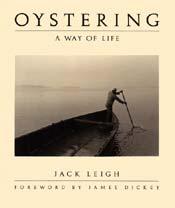
Once, when we went out shooting pictures together, he snapped his shutter maybe twice. In the same amount of time, a couple of hours, I went through two rolls of Tri-X. The quiet style Jack would use throughout his career was already evident. He eventually authored six books of photographs, including "Oystering," which featured a foreword by James Dickey.
So, to kill time one warm afternoon, I cut a ball in half, ruined a broom and crossed the street with Jack and the theater’s assistant manager, Bernie Hall, to play a new three-man game. At the time there were several vacant lots on Grace Street, across from the Biograph.
It turned out the key to pitching was to throw the half-ball with a side-arm delivery, with the flat part down. That made it curve wildly and soar, somewhat like a Frisbee. Hitting or catching the damn thing was quite another matter. Oh, and hitting the ball on a bounce was OK, too. In fact, it was better to do so, from a strategic standpoint.
The pitcher threw the half-sphere in the general direction of the batter. If the batter swung and missed, and he usually did miss, the catcher did his best to catch it, which wasn't easy, either. When the catcher did catch it, providing the batter had swung, the batter was out. Then the pitcher moved to the catching position, and the catcher became the batter, and so forth. Runs were scored in a similar fashion to other home run derby-like games.
But the best reason to play, other than the laughs stemming from how foolish we looked dealing with the crazy ball, was the kick that came from hitting it. When we connected with that little red devil it left the bat like a rocket. It felt better than crushing a golf ball. Smashing it over the theater and halfway to Broad Street was a gas.
Click here to visit Jack Leigh’s online gallery.
Tuesday, October 04, 2011
Egg McGuffin
Although most of the art shows that hung in the gallery area of the Biograph Theater's lobby displayed the work of local/VCU-connected artists that was not always the case. In the first three years, or so, when the gallery regularly featured shows that changed every couple of months, occasionally art by renown artists was on display.
Among them were Ernest Trova, Robert Indiana and sculptor George Segal.
In the summer of 1978 we had a show up that was memorable for an odd reason. It was a group of silkscreen prints and paintings by Barry Fitzgerald, a VCU-trained artist, who later played in a popular band that got some MTV exposure -- Single Bullet Theory.
Fitzgerald’s work had a pop art, reaction-to-advertising look. His droll sense of humor showed in a series of a half-dozen similar paintings. Each had a large line drawing in black against a flat field of a single color; the colors varied. The renderings were done in the sparse style one might have seen in a '50s government pamphlet's illustrations. Each had the same girl, Lois, coughing as she faced the viewer. Each had a caption written across the bottom of the colored panel which explained that Lois was choking on something.
Maybe Barry was asking about $100 apiece for them.
Let’s say the first one was blue. It might have said, “Lois chokes on a gumdrop.” I think one of them did say that. The next one could have been yellow, it would have said something like, “Lois chokes on a pocket watch,” and so forth. The only other caption I remember had Lois choking on an Egg McMuffin.
One day a man claiming to be a lawyer called me on the telephone to say I had to take the Egg McMuffin piece down, pronto. He told me he was a local guy, who’d been talking that day with an attorney for the McDonald's fast food empire. He asserted that if I didn’t take it down McDonald's was going to lay some legal action on the artist, the Biograph and me.
For my part, I said something like, “What!”
The caller explained that it wasn’t a matter of Fitzgerald saying anything against McDonald's signature breakfast sandwich, which was fairly new then. No. The problem was that McDonald's wanted to protect the use of the words “Egg McMuffin.” They didn’t want it to become a generic term for a sandwich made by anyone using the same ingredients, etc.
Then I must have said something like, “What!”
Anyway, the threat finished with how I better do what the caller said, because all the law was on McDonald's side.
Well, I called a lawyer friend, Jack Colan, to ask him what he thought. He said I ought to buy the painting. Then I told Fitzgerald what had happened. He loved it. We decided to leave it up to see what how it would play out.
Never heard from the wannabe McDonald's lawyer again. For a long time I've wished I had bought the painting.
Phil Trumbo had at least three shows at the Biograph, maybe more. For 50 bucks or less, I could have bought that infamous painting Phil did, which depicted a scene in which Mickey Mouse's little gloved hands had been chopped off with an ax. Missed out on that one, too.
Bottom line: When you see art you like a lot, for whatever reason, buy it if you have the money. Later, you'll be glad you did.
Among them were Ernest Trova, Robert Indiana and sculptor George Segal.
In the summer of 1978 we had a show up that was memorable for an odd reason. It was a group of silkscreen prints and paintings by Barry Fitzgerald, a VCU-trained artist, who later played in a popular band that got some MTV exposure -- Single Bullet Theory.
Fitzgerald’s work had a pop art, reaction-to-advertising look. His droll sense of humor showed in a series of a half-dozen similar paintings. Each had a large line drawing in black against a flat field of a single color; the colors varied. The renderings were done in the sparse style one might have seen in a '50s government pamphlet's illustrations. Each had the same girl, Lois, coughing as she faced the viewer. Each had a caption written across the bottom of the colored panel which explained that Lois was choking on something.
Maybe Barry was asking about $100 apiece for them.
Let’s say the first one was blue. It might have said, “Lois chokes on a gumdrop.” I think one of them did say that. The next one could have been yellow, it would have said something like, “Lois chokes on a pocket watch,” and so forth. The only other caption I remember had Lois choking on an Egg McMuffin.
One day a man claiming to be a lawyer called me on the telephone to say I had to take the Egg McMuffin piece down, pronto. He told me he was a local guy, who’d been talking that day with an attorney for the McDonald's fast food empire. He asserted that if I didn’t take it down McDonald's was going to lay some legal action on the artist, the Biograph and me.
For my part, I said something like, “What!”
The caller explained that it wasn’t a matter of Fitzgerald saying anything against McDonald's signature breakfast sandwich, which was fairly new then. No. The problem was that McDonald's wanted to protect the use of the words “Egg McMuffin.” They didn’t want it to become a generic term for a sandwich made by anyone using the same ingredients, etc.
Then I must have said something like, “What!”
Anyway, the threat finished with how I better do what the caller said, because all the law was on McDonald's side.
Well, I called a lawyer friend, Jack Colan, to ask him what he thought. He said I ought to buy the painting. Then I told Fitzgerald what had happened. He loved it. We decided to leave it up to see what how it would play out.
Never heard from the wannabe McDonald's lawyer again. For a long time I've wished I had bought the painting.
Phil Trumbo had at least three shows at the Biograph, maybe more. For 50 bucks or less, I could have bought that infamous painting Phil did, which depicted a scene in which Mickey Mouse's little gloved hands had been chopped off with an ax. Missed out on that one, too.
Bottom line: When you see art you like a lot, for whatever reason, buy it if you have the money. Later, you'll be glad you did.
Drake the Flake's departure
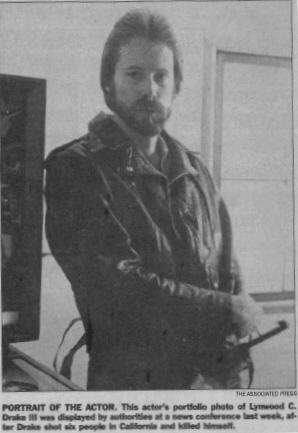 In the first months of operation at 814 W. Grace St. there was the series of annoyances that led up to Linwood “Woody” Drake (pictured right) being literally thrown out of the Biograph Theatre. Owing to his talent for nuisance, the staff had already dubbed him “Drake the Flake” before he landed face-first on Grace Street.
 Although Drake resembled many of the hippie-style hustlers of the times, it was his ineptness at putting over the scam that set him apart. Every time he darkened our door there was trouble. If he didn't try to beat us out of the price of admission or a cup of popcorn, there would be a problem of some sort in the auditorium … and so forth.
His ruse was usually rather transparent. Then, when confronted, he'd go into a fit of denial that implied a threat. Eventually that led to the incident in Shafer Court, on VCU's campus, when Drake choked a female student, Susan Kuney.
Susan was also a cashier at the Biograph.
That evening Drake showed up at the theater to see the movie, just like nothing had happened. Shoving his way past those already in line, he demanded to be admitted next. An argument ensued that became the last straw. Drake the Flake was physically removed from the building and banned from the Biograph for life.
The next afternoon as we were about to open for business Drake made what would be his final appearance at the Biograph. He burst through the lobby's exit doors and ran around the lobby for a few seconds, testifying. He claimed I had humiliated him. Then he stopped suddenly and issued a finger-pointing death threat directly at me.
Although I tried to act unruffled by the incident, it made me more than a little uncomfortable. In spite of the anger of his words, there was an emptiness in his eyes. For a moment Drake had pulled me into his world. It was scary and memorable; he left the building promptly, this time without any persuasion from me.
On Nov. 8, 1992, 20 years later, a revenge-driven crime spree in California ended as the man I remembered as Drake the Flake blew out his brains with a .32 caliber revolver.
Shortly before Drake ended his wretched life, he woke up a 60-year-old woman who was his former landlord by smacking her in the head with a blackjack. She scrambled to hide under her bed and miraculously lived to tell the story. In the 11 hours before taking his own life Drake, who had grown up in Richmond, had shot and killed six people.
The lurid news reports said that Drake, who had always fancied himself an actor, had made a list for himself of people he intended to pay back, going all the way back to Virginia. Drake wore theatrical grease paint on his face when he committed his murders.
As the cops were closing in on him, Drake the Flake punched his own ticket to hell.
Friday, September 30, 2011
Over-awareness of the camera
 Behind makeshift barricades in the basement of a small church there will be 18 people, 17 of which will hostages of a 20-year-old schizophrenic full of sweet red wine and homemade speed. He will have his finger on the trigger of a portable nuclear device.
A little camera and microphone hooked up to a laptop will capture and transmit the hostage-taker's cryptic announcement: "I am the Looney Tunes Bomber, my presentation will be a one-reeler."
The entire nine minutes and 11 seconds of the LTB’s ranting performance will be consumed by a rapt audience that some will estimate to be a billion viewers in its final minute.
After chuckling, “Tha, tha … that’s all folks,” he will set off the bomb.
It will blow Boise, or maybe Baltimore, off the map. The first video of the suicidal bomber’s diabolical stunt will go up on YouTube less than an hour after the appearance of the mushroom cloud.
Somewhere, in Rio, or Tokyo, or elsewhere, a heart will be beating faster in the chest of an abused and angry boy who will be instantly determined to top the LTB’s bloodthirsty audacity.
We are watching a generation grow up with an awareness of the camera that goes far beyond previous generations. And, we are also witnessing a snowballing of the ability of anyone to transmit words and images about love, hate, religion, style and politics, by way of the Internet, to a worldwide audience.
It’s anybody’s guess where the current generation’s insatiable thirst to record and share voluminous records of their everyday lives will lead ... good or bad. We do already know that revolutionaries everywhere are relying on social media in a way that is mind-boggling.
Meanwhile, more and more we are seeing news stories that are tantamount to stunts staged for willing cameras. While it's fashionable these days to scold the press for its tasteless and excessive coverage of certain events, it's not entirely the fault of media executives and editors. The stories they encounter, in some cases, have been planned and packaged by people who are damn good at planting a story.
A precedent-setter in this area occurred 32 years ago with the shameful cooperation that developed between news-gatherers for television and the Iranian "students," who demonstrated on a daily basis in front of the American embassy during the hostage crisis (1979-81) that sabotaged the presidency of Jimmy Carter.
Now we know that much of the feverish chanting and fist waving was done on cue. Now we know the camera shots were pushed in tight because the angry horde yelling, "Death to America!" was only a dozen souls deep.
Today, it seems cultural and religious grievances are routinely becoming more heated, here and abroad, by provocative or slanted news coverage. Moreover, much of the reportage these days actually seems designed to inflame situations being covered.
On top of that, in America, the press scrutiny of angry the anti-government firestorm being stoked by some for political gain is surely helping to push some alienated militia types closer to the edge -- the sort that sees Oklahoma City bomber Timothy McVeigh as a hero.
Speaking of McVeigh, the future’s bomber in the church basement will have already seen how plenty of sullen murderers have been made into celebrities by the press. So, he'll be confident the television networks and online newspapers would not switch off a live feed from an on-going hostage situation. Sadly, even if they could see they would be magnifying the reach and power of our maniac, it’s hard for this scribe to believe the mainstream media would be able to deny him his last terrible wishes.
Several movies have been made using this same basic hostage-holding hook.
Ka-boom!
Post-ka-boom, can’t you hear the executives explaining their decisions? "Hey, if we didn’t cover the story in real-time, the other networks would have..."
-- 30 --
Thursday, September 29, 2011
Day 11: Still 'Occupying' Wall Street
There's something happening in Manhattan that may be important. Although it has been unfolding for 11 days, it has largely been ignored or treated as a curiosity by the national media. Nonetheless, this unusual story is gradually picking up momentum.
Read the entire Reuters article here.NEW YORK, September 29 - A standoff near Wall Street between protesters opposed to what they say is corporate greed and police may drag on into winter, with a march on police headquarters the likely next test of whether tensions escalate.
The Occupy Wall Street movement was planning on Friday an unauthorized demonstration on the streets outside the New York City police center of operations.
Here's some background:
- A Sept. 19 article in The Guardian is here.
- A Sept. 27 New York Times article on Occupy Wall Street is here.
- Adbusters' OccupyWallStreet page is here.
- An Alternet report is here.
- Some background on Occupy Wall Street at The Nation is here.
- An update by Jack Johnson, reporting directly from the occupation, is posted at the Alliance for Progressive Values.
Wednesday, September 28, 2011
How Free Are We to Express Hate?
The Westboro Baptist Church stretches the word “church” into a shape that boggles the mind. It is best known for force-feeding its messages about hate into situations in which they are particularly offensive. According to the Westboro gospel, the list of people that God hates includes Jews, Catholics, Muslims, atheists and gays.
In 1955 Westboro’s founder was Fred W. Phelps; at this writing he is still the pastor of the independent church based in Topeka, Kansas. According to reports most of the church’s 70-or-so members are related to Phelps.
Members of Westboro‘s congregation were in Richmond on Mar. 2, carrying their distinctive signs about God’s hates. Since then Westboro has been in local news stories, because Virginia Attorney General Ken Cuccinelli decided against supporting a lawsuit against Westboro that was filed in Maryland by Albert Snyder.
In 2006 Snyder’s son was killed in Iraq. A Westboro contingent armed with fire and brimstone placards demonstrated outside the church at the funeral. Snyder sued Phelps for invading his privacy. Snyder prevailed and was awarded $5 million for the emotional distress he had endured.
In 2009 the 4th U.S. Circuit Court of Appeals in Richmond reversed the decision, saying it violated the First Amendment’s freedom of speech protections. Furthermore, it ordered Snyder to pay Westboro’s court costs of more than $16,000. In October the U.S. Supreme Court will hear Snyder’s appeal.
Cuccinelli apparently agrees with the 4th Circuit’s decision, his office cited a concern about curtailing “valid exercises of free speech,” as its reason for choosing to make Virginia just one of two states not to file a supporting amicus brief.
Westboro grabbed the national spotlight in 1998 when some of its members appeared at the Wyoming funeral of Matthew Shepard, a 21-year-old man who had been brutally murdered. The Phelps contingent brandished signs announcing that because he was gay Shepard was burning in hell.
Since then Westboro has routinely targeted military funerals, to inform grieving families that their lost loved one deserves an eternity in hell. Why? Because the deceased had died serving a nation that enables homosexuality.
When the Westboro group came to Richmond three months ago Hermitage High School, the Virginia Holocaust Museum and the Weinstein Jewish Community Center were among its targets. At each location four people stood on the sidewalk holding up signs with messages in block lettering that said “God Hates the USA” and “God Hates Jews.” Their pre-announced appearances generated sizable counterdemonstrations, so they got the full treatment from the media -- top of the news.
The Phelps technique, while outrageous, has been seen before in Richmond. In August of 1998 an anti-abortion/pro-life group of about 50 people staged a demonstration on Monument Ave.
The occasion was the funeral of Associate Supreme Court Justice Lewis F. Powell, Jr. at Grace Covenant Presbyterian Church. The demonstrators set themselves up on the grassy, tree-lined median strip in front of the church. Dozens of uniformed police officers were there to keep the peace.
Inside the church Chief Justice William H. Rehnquist delivered the eulogy, “…[Powell] was the very embodiment of judicial temperament; receptive to the ideas of his colleagues, fair to the parties to the case, but ultimately relying on his own seasoned judgment.”
Outside the church the eager TV crews had their cameras and microphones ready. The news-makers held up giant oozing fetus placards and posters citing Powell as a “murderer.” When Powell’s family, friends and Supreme Court colleagues came outside, following the service, they had no choice but to notice the demonstration before them. Lenses zoomed in to focus on their stunned reactions.
It’s difficult to imagine the demonstrators at Powell’s funeral changed any minds on the abortion issue by creating such a spectacle in the middle of the street. It didn’t seem they were there to persuade. It did seem they were there to punish Powell’s family and friends, because the sign-waving zealots still hated Powell for his Roe vs. Wade vote in 1973.
As disturbing as that demonstration on Monument Ave. was, it was also an example of American citizens standing on public property, exercising their right to speak their minds about matters political. Such expressions are usually protected.
However, Snyder has claimed that when he was attending his son’s funeral he was a captive audience, so he couldn’t just choose to ignore the Westboro signs.
Whether the Supreme Court will reverse the 4th Circuit’s decision on that basis remains to be seen. No doubt, it was good politics for attorneys general in those other 48 states to take Snyder’s side. Still, freedom of speech rights aren’t needed to shield popular speech. They never were. And, however designed-to-injure Phelps warmed-over Ku Klux Klan language may have seemed -- in the name of religious speech -- it was definitely political speech.
If the Supremes buy Snyder’s captive-audience argument, it seems that would open the door to laws prohibiting all sorts of demonstrations in public, because particular people couldn’t easily opt out of being subjected to them. So his lawyers may have a tough job on their hands.
If the 4th Circuit’s decision that threw out the damages on free speech grounds is upheld at the highest level, Cuccinelli is going to suddenly look smarter than the AGs in those other 48 states. Such a decision would suggest Cuccinelli wisely avoided jumping on what was an easy bandwagon … just to strike a pose.
*
Note: On March 2, 2011 the Supreme Court ruled 8-1 that the First Amendment protected the Westboro demonstrators in the Snyder case.
Chief Justice John Roberts wrote:
While these messages may fall short of refined social or political commentary, the issues they highlight -- the political and moral conduct of the United States and its citizens, the fate of our Nation, homosexuality in the military and scandals involving the Catholic clergy -- are matters of public import…Among the papers Roberts and his colleagues had to consider were copies of the piece you just read. In the brief for respondent Fred W. Phelps, et al, on Page 4 there’s a footnote that cites “How Free Are We to Express Hate?” by F.T. Rea.
When I found out from a friend about being in the footnote I was delighted. It amused me to no end that the Westboro defense team had to suck up everything else I had written about them, in order to use the part they wanted the justices to see -- the account of Justice Powell’s funeral.
In July of 2010, when I posted the unusual news at SLANTblog, about my piece being cited in the Westboro brief, Shirley Phelps-Roper -- Fred Phelps’ daughter and lead attorney -- promptly commented:
It's too bad you are compelled to work so hard to distance yourself from the Word of God! This generation hates God's commandments and will NOT have that man Christ Jesus to rule over them. You are so afraid to be aligned with anything close to God that you make a fool of yourself with all your multiplying of words. How sad.Here’s what I posted as my answer:
‘Mark 8:38 Whosoever therefore shall be ashamed of me and of my words in this adulterous and sinful generation; of him also shall the Son of man be ashamed, when he cometh in the glory of his Father with the holy angels.’
BTW, you should have done your OpEd piece as if you were speaking those words to God! ALL you do should be as if you are doing it unto God, because rebel, you are.
Thanks for the advice. And, I have a Bible saying for you, Matthew 7:15:Phelps-Roper never thanked me for writing the piece she used to defend her church's mission of spreading hate, nor has she sent me any more Bible sayings.
‘Beware of false prophets, who come to you in sheep's clothing but inwardly are ravenous wolves. You will know them by their fruits.’
So far, this is the only time I can remember agreeing with Ken Cuccinelli about anything.
-- 30 --
Tuesday, September 27, 2011
Coca-Cola, drain cleaner and a rat
Apparently some rat poisons make the victims crave water. Sometime in the mid-'70s, a popcorn-addicted rat we called Willard must have finally nibbled on some the exterminator’s poison; it died in the Biograph Theatre's Coca-Cola machine's drain and totally clogged it up.
The situation called for a manager's quick decision to be made in the field. However, not knowing about the hidden rat corpse, and thinking I knew what to do, I poured a powerful drain clearing liquid -- we called it Tampax Dynamite -- into the problem. My experience told me that stuff could eat its way though any clog in a pipe.
Although the TD had previously done wonders in the theater's rest rooms, well, this wasn't one of my better decisions. Before long before a foul-smelling brown liquid started bubbling in the drain and then backing up and into the lobby's carpet around the candy counter. There was no stopping its spread, as Willard’s revenge worked its way.
The wretched mess that ensued ran everybody out of there on a busy Saturday night -- the stench was unbearable. We had to close.
Oops!
My forgiving bosses in Georgetown had a new carpet installed in the lobby right away; it was much nicer than the original had been.
The situation called for a manager's quick decision to be made in the field. However, not knowing about the hidden rat corpse, and thinking I knew what to do, I poured a powerful drain clearing liquid -- we called it Tampax Dynamite -- into the problem. My experience told me that stuff could eat its way though any clog in a pipe.
Although the TD had previously done wonders in the theater's rest rooms, well, this wasn't one of my better decisions. Before long before a foul-smelling brown liquid started bubbling in the drain and then backing up and into the lobby's carpet around the candy counter. There was no stopping its spread, as Willard’s revenge worked its way.
The wretched mess that ensued ran everybody out of there on a busy Saturday night -- the stench was unbearable. We had to close.
Oops!
My forgiving bosses in Georgetown had a new carpet installed in the lobby right away; it was much nicer than the original had been.
Wednesday, September 21, 2011
Message to Allen's flack, Bill Riggs
 Every time I read that former-Sen. George Allen’s flack, "Bill Riggs (bill.riggs@georgeallen.com), has called former-Gov. Tim Kaine “Chairman Kaine,” I am going to post something that recalls the Macaca Meltdown that ruined Allen's reelection campaign.
You see, I'm already tired of Riggs' silly game.
The Stretch
 Originally published by STYLE Weekly on Oct. 4, 1999
With the turning of the leaves, The Fan District of Richmond, Va., will again be transformed into a living impressionistic cityscape. As they always do, the season’s wistful breezes will facilitate reflection.
All of which leads to the fact that yet another baseball season has come and gone. After 6,783 games, the last game ever has been played at Detroit’s fabled Tiger Stadium. The Giants and the Astros will be playing in new parks next season, as well. The World Series, first played in 1903, will soon be upon us. Although baseball’s claim as the National Pastime may no longer hold up, the colorful lore generated by the magic of events at baseball parks probably outweighs that of all the other sports, put together.
I began going to the Richmond V's (for Virginians) games at Parker Field with my grandfather when I was about seven. I eagerly drank in all I could of the atmosphere, especially the stories told about legendary players and discussions on the strategy of the game.
As I got older I began to go with my friends, most of whom played baseball. We usually took our baseball gloves with us to the game. We’d go early so we could watch the V’s warm up. As often as possible we talked with the players. If one of them remembered your name it was a source of pride.
When we cheered the heroics we witnessed and rose for the seventh inning stretch and stayed until the last out, regardless of the score, it was tantamount to exercising religious rites.
A few seasons before they tore Parker Field down (it was dismantled in 1984 and in its place stands The Diamond), I experienced one last thrill at the old ballpark. This was when my daughter, Katey, was about seven years old.
The home team by then — as it is now — was The Braves. Katey, her mother, and I were sitting in box seats as guests of neighbors who had gotten comps from a radio station. It was Katey’s first trip to Parker Field.
The spectacle itself was interesting to her for a while. As it was a night game, the bright lights were dazzling. The roar of the crowd was exhilarating. Being old enough to go along on such an outing, instead of staying at home with a baby sitter, was a boost to her morale. Nonetheless, by the middle of the game Katey (pictured above at about the age of this story) was getting tired of sitting still and bored with baseball.
During the sixth inning it fell to me to entertain, or at least restrain her, so the others could enjoy the game. I tried telling her more about the object of baseball, hoping that would help her pay some attention to the game.
That didn’t work for very long. She was soon climbing across seats again and this time she knocked a man’s beer into his lap. As the visiting team began their turn at bat, in the top of the seventh, I got an idea and asked Katey if she wanted to see some magic. Of course she did.
Then I got her to promise to be good if I showed her a big magic trick. She agreed to the terms without qualification. Making sure she alone could hear me, I pulled her in close and whispered my instructions.
The gist of it was that she and I, using our combined powers of concentration, were going to make everyone in the ballpark stand up at the same time. Katey was thrilled at the mere prospect of such a feat. I told her to face the ongoing game, close her eyes, and begin thinking about making the crowd stand up.
After the visiting team made their third out, I cupped my hand to her ear and reminded her to think, “stand up, stand up …”
As baseball fans know, when the home team comes to bat in the bottom of the seventh inning everyone stands up, ostensibly to stretch their legs. It’s a longtime tradition called “the seventh inning stretch.” There’s a mention of the practice in a report about a Cincinnati Red Stockings (baseball’s first professional team) game that took place in 1869.
Tradition aside — when Katey turned around, opened her big blue eyes and saw thousands of people standing up — it was pure magic in her book.
No one in the group gave me away when she told them what we had done. As I remember it, she stayed true to her word and was well-behaved the rest of the game.
It was a few years later that Katey confronted me, having learned how the trick worked. We still laugh about it.
Sports dilettantes today complain that baseball games are too slow and meandering. While I admit baseball has its lulls, nonetheless there are textures and layers of information present at baseball parks that are just too subtle and ephemeral for the lens of a TV camera to capture. To appreciate them you have to be there, and you have to bother to notice.
Sometimes there’s even a hint of magic in the air.
-- Words and photo by F.T. Rea
– 30 –
Friday, September 16, 2011
Rea never planned to play with a full deck
After seeing this old video from the 1984 City Council campaign, with WTVR's footage of yours truly, I was reminded of this article that appeared in the Richmond Times-Dispatch 17 years ago. It's a funny piece in many ways. The talented writer was so charming that she got me telling a few stories I probably should have withheld.
RT-D, Feb. 6, 1994:
"Wild Card Rea Never Planned to Play with a Full Deck"
by Sibella Connor
Provided your corset isn’t laced too tightly, you could probably understand that F.T. Rea’s artwork is actually a sort of extended Public Service Announcement. Granted, it’s not your regular P.S.A. -- rarely politically correct or even serious. But then, precious little is regular with this irreverent artist and writer.
In one sentence, Rea’s P.S.A. might go like this: “Don’t believe everything you read.”
Fair enough, it would seem.
But given the reaction his ideas -- appearing most frequently in the alternative periodical The Slant -- have received over the years, it would appear Richmond has more than its fair share of lungs grown accustomed to shallow breathing.
The fact is, not everyone enjoys reading Rea’s rambunctious little paper. His essays, which range from obituaries of the city’s more disaffected souls to discussions of TV violence, have led some people to call him a crackpot. A loony. Some weird guy living in the Fan who should shut up and get a job, for Pete’s sake.
Well, take a deep breath, Richmond, because Rea’s delivering another corset-popper.
“Slant Legends” is a deck of 12 cards with the faces of Richmond’s famous, infamous, and virtually unknown. Landing in several local bookstores last month, the $10 deck of “Legends” has already earned the mixed reaction Rea has come to expect.
“Some people really like them,” he said. “Other people sort of look at them and walk away scratching their heads.”
In addition to the obvious Virginia celebrities such as former Gov. Doug Wilder, Rea has tossed in a few oddball characters, friends he thinks should be celebrities -- a disc jockey, a guitar player and a “wizard.”
Each 2-by-3-inch card is signed by the artist and laminated for long life, although the legends themselves may hope the cards meet an early demise. Rea’s drawings verge on unflattering caricature, while the explanatory notes offer biographic tags nobody’s bragging about.
Joe Morrissey’s hyperkinetic eyebrows bounce above the identifier “Embattled Dude.” Richmond City Councilman Roy West looks nearly demonic, and has been labeled “Councilmanic Windbag.” And lawyer and BLAB-TV owner Michael Morchower has the face of a homely basset hound, with one word as explanation: “Mouthpiece.”
“I just like to tease people,” said Rea, sitting in his tidy Fan apartment.
Most of the “legends” first appeared in Slant, the biweekly broadsheet Rea has single-handedly cranked out since 1985. The Slant serves up Rea’s many splendored takes on the world, from what happened in Richmond last week to what happened years ago in Beirut.
It also offers Rea, 46, a place to show his art. But his Slant portraits usually have more words than what’s on the cards -- more words or more ammo, depending on how you look at it. For instance, Gov. George Allen pops up in the Legends deck with a simple tongue-in-cheeker: “Intellectual/Governor.”
But his grinning portrait in Slant after last November’s election carried the following quote: “...And finally, I want to thank those Democrats who helped so much -- Doug Wilder, Patricia Cornwell, and whoever dressed Mary Sue in that K mart Maggie Thatcher look.”
The jab is vintage Rea. Artist as gadfly.
In between scraping by as a graphic artist and publishing Slant, Rea has heard the disparaging words, Get a job.
“Even my good friends tell me that all the time, ‘Why don’t you get a job?’ Well I had a job for a long time, and to tell you the truth, I apply for jobs I think I’m qualified for all the time, part-time PR and things like that. And I don’t know, they never hire me. I guess I’m just not the corporate type.”
From all appearances though, it’d be hard to peg Rea as counter-culture. He looks like anything but the merry prankster, with his professorial demeanor and his dress code out a 1940s movie. Most often, he can be seen nattily attired in shirt and tie, his brown hair clipped short.
“I’ve never had a radical appearance,” he said. “Even during the hippie years, I never had long hair. Of course, that’s probably the Richmond in me.”
He can never resist another jab.
*
The city provides ample material for Rea, who’s known as Terry. But after awhile it becomes clear his relationship with the city is love-hate. Like so many gadflies, Rea bothers the sacred cow mostly because he cares about it. After all, he’s never left.
“I was raised in an offbeat fashion by my grandparents, my mother and the streets,” he said. During the 1960s, he attended Thomas Jefferson High School, but never saw the final ceremonies.
“I fled rather than graduated,” he said, laughing. “But when I went to school, I went to Thomas Jefferson. I had a very hard time sitting down for more than 10 minutes at a time. Consequently, I was tossed out of school on a regular basis.”
He bounced around Richmond for several years, landing odd jobs, then leaving them. At one point, he sold advertising for a radio station. Then in 1972, Rea found the Biograph Theatre on West Grace Street. It was a match made in heaven. A movie buff of the biggest sort, Rea appeared made [to manage] the [new] arthouse theater.
In his apartment, Hollywood biographies and film lore line his bookshelves -- not to mention the strange convolutions of his brain. Searching to explain certain situations, Rea often uses a scene from a movie -- “You know when John Wayne turns and says ... You know how Aubrey Hepburn looked in ‘Sabrina?’”
Run on a shoestring budget, the Biograph was modeled after a Georgetown theater by the same name. During the day there were Truffaut and Bergman films. And after awhile, there was porno after midnight.
“We did it to make money,” Rea said.
Along with its eclectic cinematic showings, the Biograph grew infamous for its personality, in large part due to Rea’s ring-leadership. In the summer of 1973, a Richmond civil court banned the Biograph from showing the porno movie “The Devil in Miss Jones.” Using the new yardstick sent down by the U.S. Supreme Court, judge and jury decreed the film violated the contemporary community standards of obscenity.
Four months later, the Biograph was celebrating its two-year anniversary. Rea wanted to give the public a present, so he offered free admission to anyone who wanted to see “The Devil and Miss Jones,” with the short feature “Beaver Valley.”
Five thousand people showed up for the several hundred seats in the theater. A radio helicopter circled the air above Grace Street, reporting on the line that stretched around the block. When the lights went down, not everyone in the audience was delighted to discover that “Beaver Valley” was a Disney documentary on river animals. Nor were they dancing in the aisles about the prepositional distinction that separated the banned porno flick and the 1941 black-and-white classic starring Robert Cummings -- a preposition that placed Miss Jones in vastly different proximities to the devil.
“Actually, there were people who thought they were seeing the censored version of the skin flick,” Rea said.
In the lobby, the laughing manager served cake and beer, thoroughly enjoying the joke with those patrons who could take it. Like most of Rea’s pranks, however, politics lurked near the punchline.
“Part of my point was, by whose community standards was this deemed naughty? I mean, five thousand people showed up to see what they thought was a porno flick, so you tell me whose community we’re talking about. Besides I had to come up with schemes like that to make people pay attention to the theater. We had no money for advertising.”
*
About the same time the Biograph was tossing banana peels on the pavement, Rea helped organize the Fan District Softball League. It was, typical of the Fan, a mixture of human types. Professionals, students, offbeat artists. Rea’s team quickly became known for its left-field mentality and underhanded tactics.
It included two guys from Europe who spoke no English and had no idea what softball was. Also on the roster was a life-size cardboard cutout of Mr. Natural, the hitchhiking cartoon character created by R. Crumb. Of course, not everyone appreciated the humor. But -- also, of course -- Rea milked it for all it was worth. He created a newsletter for the league, recording team statistics and standings.
“I made most of it up,” he said.
Softball in part explains why Leo Koury made the “Slant Legends” deck.
Koury remained on the FBI’s Most Wanted List for many years. And for many years, lived in Richmond. The [wanted] poster said Koury was “sought in connection with shooting murders of two individuals and attempted contract murder of three others, and conspiracy to kidnap an individual for substantial ransom payment.”
Koury was never caught, and died several years ago in San Diego, where he lived under an assumed name and worked at a convenience store. In the Legends’ deck, his card reads: “Umpire/Escape Artist.”
“Leo Koury was a softball umpire for our league,” Rea explained. “That’s how I knew him. He was the only one who put up with the Fan District league. He seemed like a very nice man, and actually if you asked a lot of people around here, you would get a full rainbow of perceptions, people who thought he was evil and people who thought he was wonderful. It depends on how you knew him.”
Rea’s softball antics eventually led him to BLAB-TV, the local public access channel. He hosted a sports sendup called “Mondo Softball,” which starred Rea’s athletic alter ego, Mutt DeVille (Rea dressed as a jock).
After Mondo Softball came "Mondo City," another sendup, this one devoted to popular culture. Both shows were almost too weird to be believed. In fact, “Mondo City” got so weird it went down in flames soon after a guest appearance by the rock/theatric group GWAR.
Rea recalled an “unusually provocative phone call from a female” coming in during the show, and a cameraman, who thought his camera wasn’t transmitting, zoomed in for a close-up of a GWAR costume -- the part of the costume bearing a rather sizable, anatomically unambiguous male body part.
Suddenly, somebody hit a switch. The camera came on. And the view of the penis was sent around the city, followed by some graphic discussion of it. Corset strings popped. And Michael Morchower, the station’s owner (and Slant Legend) issued formal apologies repeatedly.
“There were apologies all over the place,” Rea said. “But actually BLAB milked it for all the publicity they could get while protesting that they didn’t like it. It’s my understanding that the tape is a collector’s item among a certain set.”
“Actually,” he continued, “I don’t think that anybody got that upset over that. I’m sure Mike Morchower has seen worse than that. Have you ever seen his show?”
Morchower is the host of a weekly call-in show on legal matters, “Lawlines.”
“Take a look at that show and see if you think I’m being unkind.”
“Mondo City” survived the GWAR fiasco, but Rea’s rowdy heart had fled. The gadfly got swatted too hard.
“I got scared. I stayed away from the edge for a while and the next few shows just weren’t there. So I said, forget it.”
Would he consider doing it again?
“I would consider almost anything.”
As an aside -- perhaps -- Slant recently explained BLAB’s call letters: “Babbling Locals and Blowhards.” Rea did not exempt himself from categorization.
*
In 1984, Rea ran for Richmond City Council. “Predictably, I lost,” he wrote several years later in an issue of Slant. But the essay recounting his run in the 5th District was a winner. It represents the best of Slant, with writing that ranges from pungent to poignant.
He wrote: “Meeting the candidates, who ranged from soup to nuts, was a trip.” And he went on to describe the world of single-person candidacy, with Rea motoring to beleaguered housing projects like Gilpin Court to post fliers announcing his candidacy.
“Prior to my days as a candidate, Gilpin Court had been just another vague, scary place on the map,” he wrote.
Pounding the pavement with his staple gun and sneakers, he was soon joined by a group of neighborhood kids who followed him through Gilpin Court and distributed fliers. After all the other kids had grown bored “with the goofy white guy,” one boy remained with Rea.
“In an effort to be friendly, I tried to engage him in conversation,”
Rea wrote:
“That tactic met with little success. As we were finishing the last section to be covered (with leaflets), I asked him a question that had gone over well with children in other parts of town. ‘What’s the best thing and the worst thing about your neighborhood?’
“He stopped and stared through me. Although I felt uncomfortable about it, I repeated the question after a moment.
“Then he replied. His words hit hard, but he spoke without emotion.
‘Ain’t no best thing.’”
When asked about the candidacy, Rea sighed. “I found out real fast that I’m better off on the outside throwing my mudballs and making my comments than I am in the limelight and under the scrutiny that a political candidate lives with.”
“I think people want their political candidates a little more restrained than I’ve been. I’m not saying that’s the way it should be, but that’s the way it is.”
Rain or shine, poor or just dead broke, Rea continues to publish The Slant, cranking out the essays, paying tribute to the people and things he likes and dislikes, then fielding all calls for his head. He’s also branching out with more art work, which will be on display at Coffee & Co in Carytown this month. Somebody will always have something to say about Rea.
“I’ve always gotten wild reactions,” he said.
“Sometimes I can laugh it off. Other times, it’s more difficult. What’s bothered me more than anything is the hate mail and the strange characters who come out of the woodwork and think something I’ve written in The Slant is speaking to them in a special way.
“That’s just one more reason why I use a post office box.”
He distributes The Slant himself, dropping off 3,000 copies at about 90 places from Carytown to Shockoe Bottom. It’s on these distribution runs that Rea sometimes gets some of his best feedback.
“One time in the Fan Market, I was delivering a batch of The Slants and I was setting them down by the checkout,” he said. “A woman reached down and picked up a copy. She was in her late 50s, if I had to guess. Maybe a legal secretary. And she couldn’t have had any idea that the guy delivering those things was the same guy who wrote it.”
“She said to checkout guy, ‘You know why I read this?’ She waited for an answer, stuffing the periodical in her bag. Then she said: ‘Because it makes me feel less crazy.’”
Looking up at her, Rea thought one thing: “Boy, I must be doing my job.”


Wednesday, September 14, 2011
Unvarnishing Virginia History
-- Originally published by STYLE Weekly in 2007
Having grown up in Richmond, I've been steeped in its dual sense of bitterness and pride over matters to do with, and stemming from, the Civil War. Perhaps thinned out somewhat by time, it remains in the air we breathe at the fall line of the James River.
Most of my life has been spent in the Fan District, which is home to four statues honoring heroes of the Confederacy. Beyond monuments, to know what it was like in Richmond in the past, we look to history. It comes to us in many ways — stories told, popular culture and schooling among them.
In 1961, my seventh-grade history book, which was the official history of Virginia for use in public schools — as decreed by the General Assembly — had this to say about slavery at the end of its Chapter 29:
Life among the Negroes of Virginia in slavery times was generally happy. The Negroes went about in a cheerful manner making a living for themselves and for those whom they worked. They were not so unhappy as some Northerners thought they were, nor were they so happy as some Southerners claimed. The Negroes had their problems and their troubles. But they were not worried by the furious arguments going on between Northerners and Southerners over what should be done with them. In fact, they paid little attention to those arguments.In 1961 I had no reason to question that paragraph's veracity. Baseball was my No. 1 concern in those days. Now those words read quite differently.
Living through the Civil Rights era, with its bombings, assassinations, marches, sit-ins, boycotts and school-closings, did much to show me a new light, to do with truth and fairness. However, for me, there was no moment of epiphany, no sudden awareness I was growing up in a part of the world that officially denied aspects of its past. More than anything else, it took time. Life experience taught me to look more deeply into things.
Now I know that dusty old history book was a cog in the machinery that made the Jim Crow era possible.
Nonetheless, that same history book's view of how it was for those enslaved is one that some Virginians still want to believe. It's probably what they were taught as children, too. Some call it "heritage." Many of this persuasion also cling to the bogus factoid that since most Southerners didn't hold slaves, the Civil War itself was not fought over slavery.
Which is preposterous.
Of course poor Southerners, those who weren't plantation owners, had little to do with starting the Civil War. Generally speaking, poor people with no clout don't launch wars anywhere; rich people with too much power do.
So, for the most part, the men who fought in gray uniforms were doing what they felt was expected of them. As with most wars, the bulk of those who fought and died for either side between 1861 and 1865 were just ordinary Joes who had no say-so over declaring war or negotiating peace.
In Virginia, many who chose to wear gray did so to reverse what seemed to them to be an invasion of their home state.
Yet, if the reader wants to understand more deeply why Virginia eventually left the Union, to follow the secessionist hotheads of South Carolina and Mississippi into war, here's a clue from Chapter 30 of that same history book, which opened with this:
In 1790 there were more than 290,000 slaves in Virginia. This number was larger than that of any other state.Those 290,000 slaves were worth a lot of money to their owners.
Thus, the largest part of the real blame for the bloodshed of the war, and the subsequent indignities of the Reconstruction era, probably rests with wealthy slaveholders who would not give up their investments in cheap labor without a fight.
Readers interested in how much the official record of the Civil War has changed over the decades since the Civil Rights era should pay a visit to the Virginia Historical Society in Richmond. Its telling of the story of the Civil War is now based on the unvarnished truth.
Moreover, I am proud to be a Virginian. There's plenty of Virginia history that has nothing to do with picking sides in the Civil War. My ancestors go back to the 1600s in this commonwealth. But I will not stand with anyone who chooses to stay the course with the absurd denials of history — to do with slavery — that were crammed into that old public school textbook.
Even the Museum of the Confederacy, for now still housed in what was the Richmond home of the president of the Confederate States of America, is apparently poised to change its name to reflect its modern mission — telling the history of that time accurately, rather than to simply memorialize the Confederacy.
As for my friends in Richmond who haven't had a fresh thought on matters racial since they were seventh-graders, well, I don't want to pick a fight with them. So mostly we talk about other things — baseball still works.
All that said, Robert E. Lee, whose spectacular monument I see every day, remains a Virginian I admire. The dual sense of tragedy and dignity his statue conveys is striking. In his time and place, Lee clearly did what he saw as his duty. How can an honest person not respect that?
After the war Lee urged his fellow Virginians to let it go — to move on. That was good advice in 1865. It still is.
-- 30 --
Tuesday, September 13, 2011
Republicans Eschew Reality
 It seems modern Republicans like their meat red and their talk tough.
The audiences for the two recent Republican debates cheered for dealing out death to the deserving on two occasions. The first to do with Gov. Rick Perry’s plain delight in executing the guilty in Texas and his certitude that all 234 of them have been as guilty as sin. The other had to do with Rep. Ron Paul’s willingness to let a hypothetical 30-year-old patient die because he lacks insurance.
Dana Milbank's savvy piece about the CNN/Tea Party Express debate is here.
After watching those two debates and seeing how far into Fantasyland the Republicans have wandered, I feel compelled to comment about how much the Republican Party has changed in one particular respect.
If you go back a few decades, Republican conservatives stood on the idea that they were about hard-edged reality. In the old days they saw liberal Democrats as being dreamers about what ought to be, wishful thinkers. But during those two debates the live audiences had no passion for grasping reality, because they only had ears for the tough talk coming from the stage.
Last night the crowd took to Perry’s exaggerated swagger. He was clearly the early favorite, yet it also liked Paul’s attacks on Perry. It liked Rep. Michele Bachmann’s attacks on Perry, too. Then it liked Perry’s attacks on former-Gov. Mitt Romney, etc.
However, the same crowd loved it when anybody talked tough to Pres. Barack Obama. Whether any of it actually made sense mattered little to the assembled Tea Party sympathizers.
The Republican debates, so far, have been exercises in assertiveness -- style. Substance has been in rather short supply. As for reality, forget about it. The candidates have tossed phony facts/numbers around like confetti.
In the doing, at times some of the Republican hopefuls have seemed as though they were auditioning for the protagonist’s role in the remake in an old action movie.
No, not Clint Eastwood’s Harry “Make My Day” Callahan in “Sudden Impact.”
But rather, Robert De Niro’s Travis “Are You Talking to Me?” Bickle in “Taxi Driver.”
Saturday, September 10, 2011
Evil's Second Coming
Note: This reaction to 9/11 piece was written by yours truly. It was originally published by STYLE Weekly on May 15, 2002.
Washing in on what poet William Butler Yeats (1865-1939) might have called a “blood-dimmed tide,” the specter of evil suddenly emerged from the periphery of modern life eight months ago. In the blue skies of the time before 9/11’s sucker punch, the notion of pure evil had an Old World air about it. Absolutes, such as good and evil, had no seat at the table of postmodern thinking.
After 9/11, a generation of Americans suddenly learned a bitter lesson: Evil never went away. It had gone out of style, as a concept, only because times were so easy. Living in a land of plenty, it had gotten to be a pleasant habit to avert our eyes from evil-doings in lands of want.
George W. Bush apparently has little use for Franklin D. Roosevelt’s stalwart advice to a nation in need of a boost in confidence — “We have nothing to fear but fear itself.” Instead, Bush chooses to color-code fear rather than urge his people to rise above it.
The propagandists of the Bush administration have been successful in cultivating the public’s anxiety since September. Whether that’s been done for our own good remains to be seen. Perhaps it has, but this much is clear now — all the official danger alerts about nuclear power plants, bridges and crop-dusters have been effective in keeping most of the natural questioning of the administration’s moves at bay.
To hear Attorney General John Ashcroft tell it, the architects of 9/11 are the personification of the most virulent form of evil ever known. Although much of the evidence that would establish his absolute guilt in connection with 9/11 remains a state secret, Osama bin Laden is said to have shot to the top of the chart. Forget about Joseph Stalin, Adolph Hitler, Idi Amin and Pol Pot. They were amateurs.
Then again, evil, like beauty, has always been in the eye of the beholder.
Wasn’t it evil to deliberately dump tons of potent pesticide into the James River during the ’70s to make a greedy buck? Once it was in Virginia’s water, it turned out that kepone wasn’t much different from a bio-terror agent in the same water.
Although it was first reported that the 1995 Oklahoma City bombing that killed 168 people was likely to have been the work of Middle Eastern terrorists, such wild speculation soon fizzled in the face of the facts.
With the news seeping out of the cloisters about child-molesting priests and the Catholic Church’s systematic cover-ups, whose betrayal was more evil, the molester or the higher-ups who hid and facilitated his crimes?
Whether evil exists in some pure form, off in another dimension, is not my department. What’s known here is that in the real world evil is contagious. Lurking in well-appointed rooms or hiding in caves, evil remains as it ever was — ready to spread.
None of this is to suggest that al Qaida shouldn’t be put out of business. It isn’t to say that knocking the Taliban off was a bad idea. There’s no question here about whether the United States should protect itself from the networks of organized terror that are hell-bent on destroying the modern world.
Still, today’s evil is the same evil our forefathers faced in their wars. Evil hasn’t changed; technology has. With modern weapons in their hands, the fanatics of the world have the potential to wreak havoc like never before.
What has changed is the extent to which the hate festering in the souls of the world’s would-be poobahs and their sociopathic minions can be weaponized. It’s worth noting that the weapons of mass destruction that are scaring us the most were developed during the arms-race days of the Cold War by the game’s principal players.
So another question arises, who is more dangerous to civilization, the guys who spent their treasure to weaponize germs, or the guys who want to steal the stuff and use it on somebody?
Decades ago this was a concern expressed by some in the disarmament movement. Its scary what-if scenarios always included the likelihood that the super powers would eventually lose track of some of their exotic weapons. Looking back on it now, it seems obvious that there was no way any government could keep all that material locked away from the greed and hate of determined free-lancers.
A man with a briefcase-style nuclear device may be no more evil than a man armed with a knife. Either danger could kill you just as dead. Those of us who feel connected to others know which one we should fear the most.
The “rough beast” of dreadful evil “slouching towards” us is traveling on the back of technology of our own making. While we watch out for organized terrorists in the short run, with a handy color code to guide us, it’s time to think more seriously about how to get rid of a lot of very dangerous weapons in the long run.
-- 30 --
Flashback: 'Smooth Noir'
 With tobacco's status changing, so it will be controlled more and more, here's a flashback to an issue of SLANT 19 years ago. It was printed when the infamous Joe Camel ad campaign was still popular. The Tobacco industry was still riding high ... but not for much longer.
In August of 1992 the art above appeared over the text below:
It's Happy Hour. Rebus starts the Lamberts, Hendricks and Ross tape that he had selected to kick off his shift. In walks his first customer.
It's Joe Camel, smooth matchbook celebrity.
Although Rebus recognizes him immediately, even without his makeup, he doesn't call attention to it. Joe looks like he would rather not be bothered.
Joe: Two shots of Cuervo Gold. No fruit. No salt.
Rebus: Hey pal, if it's been that kind of day, let me buy the first one. It's the...
Joe: THAT kind of day? Yeah, I guess it's been about as bad a day as ... forget it.
The bar's only customer slaps the first empty glass down onto the cold marble as Rebus turns the stereo's volume up a notch.
Joe: The tests came back. It's the Big C. I'm doomed. It's too late to operate. Just like that -- cancer. Kaput!
Rebus: Well, er, in that case, I'll spring for the second one, too.
Joe: Thanks.
Rebus: How about a sandwich?
Joe: A sandwich?
Rebus: Sure. Like something to eat. We've got a killer cold meatloaf sandwich, or...
Joe: Cancer of the hump.
Rebus: The hump?
Joe: They said my five-pack-a-day habit probably had nothing to do with...
Rebus: I didn't even know you had a hump. Like, it never shows in the commercials.
Joe: I wear corset. We all do. It's part of the act. The Mad Ave. geniuses want smooth camels, not hunchbacks. Hey, let me tell ya, they tighten those babies down with a torque wrench.
Rebus: I won't say anything about it.
Joe: I'm not hungry. How 'bout another shooter?
Rebus: Sure, ah, did the doctor, er...
Joe: Did they say how, how long I've got?
Rebus: Yeah. No offense meant.
Joe: Maybe the weekend.
Rebus: Cancer of the hump! What a bad break.
Joe: I deserve it.
Rebus: Hey, nobody deserves hump cancer. Not even...
Joe: I do man. I'm paying the price for selling my soul to the devil. All those kids.
Rebus: Kids?
Joe: Innocent children that Joe Camel suckered into smoking the product. It's karma.
Rebus: You didn't invent cigarettes.
Joe: Above all else, be smooth. Don't you want to be the smoothest dude?
Rebus: Come on Joe, kids are going to smoke cigarettes regardless of...
Joe: Maybe, but this campaign was slick. They brought in behavioral voodoo scientists.
Rebus: Joe, it's not your fault. You've just been dealt a bad hand. Joe, ah, that is your real name?
Joe: What's in a name? What's real? Way back, maybe before your time, people knew me as Clyde. Since then I've...
Rebus: Right! Clyde. I knew you looked familiar. Yeah, you worked with a cat named Ahab the Arab. But, now you look, like, ah, wider.
Joe: You're talking 30 years since that gig. Who hasn't put on a little weight?
Rebus: I can dig it. But it's still not your fault if a kid smokes. Everybody's got to earn a living. You're like Tony the Tiger or Ronald McDonald, or...
Joe: No! I knew it was wrong. I went to the meetings. I knew the marketing strategy. We were going after third-graders. It was sick.
Rebus: So, what are you going to do?
Joe: Get drunk, then make a plan.
Rebus: Good move. Ready for another?
Joe: I wonder if strapping my hump down made the cancer, ah...
Rebus: Maybe it's never too late to beat the devil. They made you a celebrity; call a press conference. Go public with it. Confess! Drop a dime on the subliminal sleazemeisters.
Joe: Do you really think people would listen?
Rebus: The Marlboro Man went clean.
Joe: You're right! I knew getting drunk was a good idea. Hand me that telephone. I'll do it. I'll blow the lid off the...
Rebus: That's the spirit!
Joe: I've got work to do; call my agent. And, you know what?
Rebus: Chicken-butt!
Joe: Let me try one of those meatloaf sandwiches. And, some coffee.
Rebus opens his eyes. The dream was OK until that business about the meatloaf sandwich. Not to mention the stupid chicken-butt joke.
He gets out of bed and walks toward the bathroom. On the way, Rebus remembers the Joe Camel jacket draped over the chair by the door. A steady customer had given it to him at the bar. He picks it up and throws it into the trash can next to the toilet.
Rebus: Sorry Clyde, I'm not taking any chances.-- Fini --
Subscribe to:
Posts (Atom)