In games played through Feb. 20 eight of Virginia's 14 Division I basketball programs have winning records. If they all finish that way any of them could participate in postseason tournaments. However, barring a total collapse, just three of those programs now appear to be heading to the preferred tournament -- the NCAA Championship with its chosen field of 68.
Then there's the NIT, CBI, CIT and the Vegas 16. I may have left one out, but it seems America's basketball fans like tournament-style hoops, no matter how far removed such games are from determining the national championship.
So here are those eight schools, listed according to their latest RPI as published by CBS Sports. After the name of the team you will see their overall records (D-I games only), records in conference games, their BPIs (ESPN rankings) and their records (in bold) in February.
No. 22: UVa.: 18-9, 8-7 in ACC; BPI #8; 2-5 in Feb.
No. 25: VCU: 22-5, 12-2 in A-10; BPI #34; 6-0 in Feb.
No. 36: Va. Tech: 18-8, 7-7 in ACC; BPI #51; 2-3 in Feb.
No. 99: Richmond: 15-11, 9-5 in A-10; BPI #113; 2-3 in Feb.
No. 109: W&M: 13-12, 9-7 in Colonial; BPI #107; 3-3 in Feb.
No. 116: Mason: 18-9, 8-6 in A-10; BPI #124; 4-2 in Feb.
No. 136: ODU: 16-10, 9-5 in C-USA; BPI #127; 3-2 in Feb.
No. 163: Liberty: 15-11, 13-3 in Big South; BPI #189; 4-1 in Feb.
Make what you will of this but, generally speaking, teams trending in the wrong direction are not viewed in a favorable light by the NCAA tournament's committee. What I see at this point is that after those top three, your guess is a s good as mine as for the destiny of the rest of them. Of course, invitations and rankings aside -- same as it ever was -- any team that wins its conference tournament still qualifies for the Big Dance.
-- 30 --
Tuesday, February 21, 2017
Sunday, February 19, 2017
Citizen Trump's slo-mo train-wreck
Now we have Citizen Trump's slo-mo train-wreck presser on Feb. 16 for the record. One day that disturbing
performance may have historians somewhat at a loss to explain
to anyone who didn't live through this ongoing interregnum of
presidential sanity.
Trump said he wasn't ranting, while he ranted about "fake news" during his disturbing assault on the press. (Click here for some fact-checking.)
The foreboding sense in the air that we're all hurtling toward a crisis is getting more pervasive every day. How that crisis will manifest itself remains to be seen. Still, being president all day long, every damn day, would be exhausting enough for any 70-year-old man. But we can only imagine how stressful it must be for one who's avoided scrutiny of his methods and associations in much of his life's doings. His so-called "deals."
Sheltered from push-back, in a world of artifice, Trump has been a little king. That changed on inauguration day. Less than a month into his presidency the pressure of having to answer for his blunders is obviously weighing on the president.
Forced to endure criticism, he has appeared to be semi-delusional at times. If nothing else, in the weeks to come we're going to see just how healthy Trump's septuagenarian ticker is.
The Republicans in Congress who can see what's going on are surely riding on the horns of a dilemma: Who wants to be remembered as being foolish enough to stick by Trump too long? How long can they wait to pull the plug?
Trump said he wasn't ranting, while he ranted about "fake news" during his disturbing assault on the press. (Click here for some fact-checking.)
Meanwhile, there's a telling aspect of President Trump's bullying that overlaps with his
dishonesty -- cheating at golf.
Alice Cooper (in a 2012 interview): "The worst celebrity golf cheat? I wish I could tell you that. It would be a shocker. I played golf with Donald Trump one time. That's all I'm going to say."
Trump doesn't just want to cheat to win a hole. He'd rather cheat blatantly so you can see him doing it. Then he can savor how you are too reluctant to cause a scene, intimidated, or whatever, so you just don't call him on it.
It's a variation on his claim that he grabs crotches with impunity, because he's mighty Donald Trump and thus he's entitled to humiliate you. He doesn't cheat to enjoy his victory. He knows it's tainted. Trump cheats to deprive his opponent of victory and to prance ... he enjoys prancing.
Alice Cooper (in a 2012 interview): "The worst celebrity golf cheat? I wish I could tell you that. It would be a shocker. I played golf with Donald Trump one time. That's all I'm going to say."
Trump doesn't just want to cheat to win a hole. He'd rather cheat blatantly so you can see him doing it. Then he can savor how you are too reluctant to cause a scene, intimidated, or whatever, so you just don't call him on it.
It's a variation on his claim that he grabs crotches with impunity, because he's mighty Donald Trump and thus he's entitled to humiliate you. He doesn't cheat to enjoy his victory. He knows it's tainted. Trump cheats to deprive his opponent of victory and to prance ... he enjoys prancing.
The foreboding sense in the air that we're all hurtling toward a crisis is getting more pervasive every day. How that crisis will manifest itself remains to be seen. Still, being president all day long, every damn day, would be exhausting enough for any 70-year-old man. But we can only imagine how stressful it must be for one who's avoided scrutiny of his methods and associations in much of his life's doings. His so-called "deals."
Sheltered from push-back, in a world of artifice, Trump has been a little king. That changed on inauguration day. Less than a month into his presidency the pressure of having to answer for his blunders is obviously weighing on the president.
Forced to endure criticism, he has appeared to be semi-delusional at times. If nothing else, in the weeks to come we're going to see just how healthy Trump's septuagenarian ticker is.
The Republicans in Congress who can see what's going on are surely riding on the horns of a dilemma: Who wants to be remembered as being foolish enough to stick by Trump too long? How long can they wait to pull the plug?
-- Art and words by F.T. Rea
Thursday, February 16, 2017
An Enhanced RPI
The RPI for college basketball depends heavily on strength of schedule. So once you factor in the reward the teams in power
conferences have, for simply being in those leagues, some teams with 10 losses are
ranked, RPI-wise, over teams with five losses. Still, in the Big Dance every March in the early rounds we see
little known teams from conferences other than the five
mega-conferences upsetting the so-called "favorites."
Those Cinderellas are sometimes teams that just know how to win, no matter who they're playing or where. So how
much should that factor matter, when comparing teams that haven't played
one another and have few common opponents?
OK, for basketball junkies I've got a way to combine RPI with
the notion that some teams are good at winning. Here are the 25 teams taken from today's top 50 of the
RPI (CBS Sports) that have five losses or less (their wins and losses
are in parenthesis).
They are listed, 1-25, according to their RPI today. But please note that teams with a better RPI than some listed, which have sustained six or more
losses, have been omitted. So this way of looking at rankings combines strength-of-schedule with an appreciation for the teams' wins and losses.
The national champion should come from this field. Teams from power conferences with 10 or 12 losses might get hot and win it all, but no one should be surprised if Gonzaga wins the championship game because the still undefeated Zags know how to win.
The Enhanced RPI Top 25
1. Baylor (21-4)
2. Villanova (25-2)
3. Kansas (23-3)
4. Gonzaga (26-0)
5. Louisville (21-5)
6. Arizona (23-3)
7. Oregon (21-4)
8. UNC (21-5)
9. Florida (21-5)
10. Kentucky (21-5)
11. Florida St. (21-5)
12. Duke (21-5)
13. Cincinnati (23-3)
14. Creighton (20-5)
15. Maryland (21-4)
16. Purdue (21-5)
17. St. Mary's (22-3)
18. SMU (23-4)
19. UCLA (23-3)
20. Wisconsin (21-4)
21. VCU (21-5)
22. Dayton (19-5)
23. Illinois St. (21-5)
24. USC (21-5)
25. Akron (21-4)
-- Words and photo by F.T. Rea
Monday, February 13, 2017
Drake the Flake
On
Nov. 8, 1992, the revenge-driven crime spree ended as the man I
remembered as Drake the Flake blew out his brains with a .32 caliber
revolver. In the 11 hours before taking his own life Lynwood C. "Woody" Drake III had
shot and killed six people, wounded a seventh and beaten a former
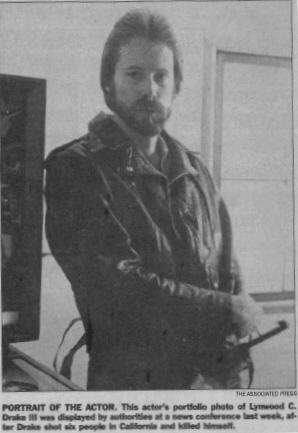
landlady with a blackjack.It had been over 20 years since I saw him last. It was in the lobby of the movie theater I then managed, the Biograph Theatre. Still, when I saw the AP photo of him in the Richmond Times-Dispatch 25 years ago, he was instantly recognizable.
More about Woody Drake later, but it should come as no surprise to most film buffs that sometimes there is a dark side to the business of doing business after the sun goes down. While some saw the Biograph (1972-87) as a beacon in the night, for others it was a place to hide from reality. So, like any business, sometimes unexpected things happened; sometimes things just went wrong.
*
There were crazy street people who would sometimes cause trouble. Although nearly everyone who worked at the Biograph during my almost-12-year-stint as its manager was on the up-and-up, there were a couple of rotten apples. As I hired both of them, I have to take the blame there. But those are stories for another time.
Then there were the customers. One man died in the Biograph. His last seconds spent among the living were spent watching "FIST" (1978), starring Sylvester Stallone, in an aisle seat in the small auditorium -- Theatre No. 2.
Yes, the movie was bad, but who knew it was that bad?
At the time I was 30 years old, and as I remember it, the dean man had been only a year or two older than I was. His man 's face was expressionless. His eyes were open. As the rescue squad guys shot jolts of electricity into his heart, his body flopped around on the floor like a fish out of water. Meanwhile, down in Theater No. 1 "The Rocky Horror Picture Show" was on the screen delighting its usual crowd of costumed screwballs.
Then there was the night someone fired five shots of high-powered ammo through one of the back door exits into Theatre No. 1. Five bullets came through the door's two quarter-inch steel plates to splinter seats. Amazingly, no one was hit.
This happened just as the crowd was exiting the auditorium, at about 11:30 p.m. It seemed then that no one caught on to what was happening. Later the police were baffled, leaving us to speculate as to why it happened.
Another night, a rat died in the Coca-Cola drain and clogged it up. Not knowing about the rat, and thinking I knew what to do to clear the clogged drain, I poured a powerful drain-clearing liquid -- we called it Tampax Dynamite -- directly into the problem.
Soon a foul-smelling liquid started bubbling and backing up all over the lobby's carpet. A flooding mess ensued. It ran everybody out of there on a busy Saturday night. We had to replace the carpet.
*
Back to Drake: The news stories reported that Drake, who fancied himself as an actor, had compiled a long list of people he intended to pay back, someday. Drake wore theatrical grease paint on his face when he committed his murders. As the cops were closing in on him Drake punched his own ticket to hell.
From what I found out Drake's childhood was straight out of a horror movie. Apparently he was always a problem to those around him. The photo above -- it was a publicity shot he used to apply for work as an actor -- ran in the Richmond Times-Dispatch on November 16, 1992. What follows are excerpts of a piece I wrote for SLANT a couple of weeks later.
...The November 16th edition of the Richmond Times-Dispatch carried Mark Holmberg's sad and sensational story of Woody Drake. As usual, Holmberg did a good job with a bizarre subject. In case you missed the news: Lynwood Drake, who grew up in Richmond, murdered six people in California on November 8. Then he turned the gun on himself. His tortured suicide note cited revenge as the motive.
An especially troubling aspect of Holmberg's account was that those Richmonders who remembered the 43 year old Drake weren't at all surprised at the startling news. Nor was I. My memory of the man goes back to the early days of the Biograph Theatre (1972). At the time I managed the West Grace Street cinema. So the unpleasant task of dealing with Drake fell to me.
Owing to his talent for nuisance, the staff dubbed him 'Drake the Flake.' Although he resembled many of the hippie-style hustlers of the times, it was his ineptness at putting over the scam that set him apart. Every time he darkened our door there was trouble. If he didn't try to beat us out of the price of admission or popcorn, there would be a problem in the auditorium. And without fail, his ruse would be transparent. Then, when confronted, he'd go into a fit of denial that implied a threat.
Eventually that led to the incident in Shafer Court (on VCU's campus) when he choked a female student [Susan Kuney] who worked at the Biograph.That evening he showed up at the theater to see the movie, just like nothing had happened. Shoving his way past those in line, he demanded to be admitted next.
An argument ensued that became the last straw. Drake the Flake was physically removed from the building, tossed onto Grace Street, and banned from the Biograph.
The next day, Drake made his final appearance at the Biograph. He ran in through the lobby's exit doors and issued a finger-pointing death threat to your narrator. Although I tried to act unruffled by the incident, it made me more than a little uncomfortable. In spite of the anger of his words, there was an emptiness in his eyes. In that moment he had pulled me into his world. It was scary and memorable.
Using a fine turn of phrase, Holmberg suggested that, "Whatever poisoned the heart of Woody Drake happened in Richmond..."
If you want more evidence of the origins of the poisoning, take the time to look him up in his high school yearbooks (Thomas Jefferson 1967/68). Pay particular attention to the odd expression in his eyes. Looking at Drake’s old yearbook photos reminded me of a line in the movie 'Silence of the Lambs.' In reference to the serial-killer who was being sought by the FBI throughout the film, Dr. Lechter (a psychiatrist turned murderer himself) tells an investigator that such a man is not born; he is created.
There is no doubt in my mind. Someone close to Woody Drake, when he was a child, systematically destroyed his soul. So while we can avert our eyes from the painful truth, we basically know where the poison is administered to the Drake the Flakes of the world.Yes, we do. The assembly line for such monsters runs through their homes. The story went that Drake liked to beat up women. After I literally threw him out of the Biograph and he disappeared, several people told us stories about various females he had hurt.
Shortly before Drake ended his wretched life, he woke up a 60-year-old woman by smacking her in the head with a blackjack. She scrambled to hide under her bed and lived to tell the story.
-- 30 --
Thursday, February 09, 2017
Discover the Fan: 1973
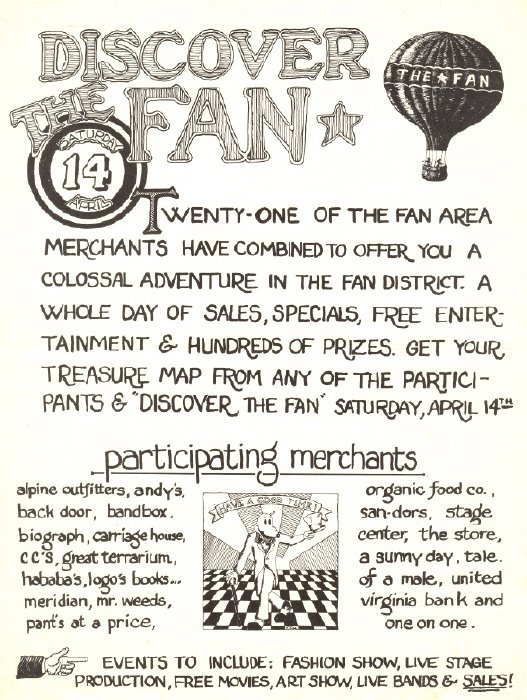
Forty-four years ago an ad hoc group of 21 merchants along the commercial strip just north of VCU's Fan District campus cooperated
for a one-time-only promotion called Discover
the Fan. It should be noted that none of the participating businesses are still there today.
Click on Rebus' nose to enlarge the art.On April 14, 1973 a lingering cold spell left town and warm breezes brought in a bright spring day. For that Saturday afternoon the 800 and 900 blocks of West Grace Street, and environs, were packed with an unprecedented amount of foot traffic. Hundreds of helium-filled balloons and free prizes donated by the merchants were given away. The street was not closed and the vehicular traffic was slowed to a crawl all day. There was live music on-stage.
Motorists traveling toward the West End were treated to an unexpected scene, given the neighborhood's then-bohemian image. (Grace Street was a busy one-way street heading west in those days.) On that Saturday there were thousands of ordinary people milling about having a good time. Many of them acted like tourists on a lark. Kids with balloons were everywhere.
The illustration above is a scan of a handbill done by yours truly. With its list of participating businesses it provides a snapshot of the area in what was probably the zenith of the hippie age. Some of the characters who ran those businesses were rather interesting people. (H/T: One-on-One owner Fred Awad came up with the name for the event.)
At this time I had been the manager of the Biograph Theatre for a little over a year and the Discover the Fan promotion itself was my project. I convinced my fellow merchants to chip in and promote our oddball collection of businesses as if we were a hip shopping center to the metro area. Many people helped put it together and worked on aspects of it, but the happening couldn't have come about without the help of Dave DeWitt and Chuck Wrenn (the Biograph's assistant manager), which was significant.
Below is a piece about this event from that era. It was penned by the late Shelley Rolfe:
Shelley Rolfe’sThe writer, Rolfe, lived only a few blocks away from the Biograph, so he was actually quite familiar with the cinema I ran and the surroundings he described. This was a day in which many things could have gone wrong, but didn't, so it was remembered fondly. Some of the merchants said they set new records for business in one day.
By the Way
Richmond Times-Dispatch (April, 16, 1973)
It was breakfast time and the high command for Discover the Fan Day had, with proper regard for the inner man, moved its final planning meeting from the Biograph Theater to Lum’s Restaurant. Breakfast tastes ran a gamut. Eggs with beer. Eggs with orange juice. H-hour -- the operations plan had set it for noon -- was less than three hours away. Neither beer nor orange juice was being gulped nervously.
Terry Rea, manager of the Biograph and the extravaganza’s impresario, was reciting a last-minute, mental things-to-do list. There was the vigilante committee, which would gather up the beer and soft drink cans and bottles that invariably infest the fronts of the shops in the 800 and 900 blocks of W. Grace St., focus area of the discovery.
The city police had promised a dragnet to sweep away the winos who also invariably litter the neighborhood. The day had bloomed crisp and sunny, the first dry Saturday since Groundhog Day. “I knew it wouldn’t rain,” Rea said with the brash confidence of the young. “Lots of young businessmen around here,” a beer drinker at another table said. The free enterprise system lives.
REA WAS assigning duties for the committee that would rope off two Virginia Commonwealth University parking lots that would serve as the setting for a fashion show and band concert. The committee to blow up balloons, with the aid of a cylinder of helium [sic]. One thousand balloons in a shrieking variety of colors. “If we only get 500 kids... two to a customer,” Rea said cheerfully.
“I need more people,” said the balloon task force leader.
Twenty-one businesses were involved in the project. Each of them had contributed prizes, and gift certificates had been put into plastic Easter eggs. An egg hunt would be part of the day, and Rea had a message for the committee that would be tucking the eggs away: “Don’t put them in obvious places, but don’t put them were people can get hurt looking for them.”
“We talked about doing this last summer but we never got it together,” Rea said. There had been fresh talk in late February, early March, and it had become airborne. The 21 businesses had anted up $1,500 for advertising, which was handled by Dave DeWitt, proprietor of a new just-out-of-the-Fan, small, idea-oriented agency.
“Demographically, we were aiming for people between 25 and 34,” Rea said. There had been newspaper advertising and spots on youth-oriented radio stations. “We had a surplus late in the week...” Rea said. The decision was made to have a Saturday morning splurge on radio station WRVA. “Hey,” said a late arrival, “I heard Alden Aaroe talking about it.”
“We wanted people to see what we have here,” Rea said. “People who probably close their windows and lock their doors when they drive on Grace Street and want to get through here a quickly as possible.”
Well, yes, there must be those who look upon the 800 and 900 blocks as symbolic of the counterculture, as territory alien to their visions of West End and suburban existence. Last November the precinct serving the 800 and 900 blocks went for George McGovern, by two votes. Not a landslide, but, perhaps, a trend.
NOON WAS approaching. Rea and DeWitt set out on an inspection tour. Parking lot ropes were being put into place. Rock music blared from exotically named shops. The balloon committee was still short on manpower. An agent trotted out of a shop to report, “They’ve got 200 customers ...” And how many would they normally have at this hour of a Saturday” “They wouldn’t be open,” Rea said.
Grace Street was becoming clogged with cars It would become more clogged. Don’t know how many drivers got out of their cars, but, for a while they were a captive audience making at least vicarious discovery.
Also much pedestrian and bicycle on the sidewalks. Merchants talked of espying strangers, of all ages. A white-haired woman held a prize egg in one hand, a balloon in the other. A middle-aged man had rakishly attached a balloon to the bill of his cap.
The fashion show went on to the accompaniment of semijazz music and popping balloons, most of them held by children. Fashions were subdued. A dress evocative of the 1840s. Long skirts. Loudest applause went to a man who paraded across the stage wearing a loud red backpack. Everybody’s urge to escape?
ON GRACE STREET a sword swallower and human pin cushion was on exhibition. No names please. “My mother ...” he said. He wished to be identified only as a member of “Bunkie Brothers Medicine Show.”
Discounted merchandise on sale included 20-yesr-old British Army greatcoats and a book fetchingly titled “Sensuous Massage.” Sales resistance remained firm.
On Harrison Street a sidewalk artist was creating. A wino, who had somehow escaped the dragnet, lurched across the sidewalk art muttering. “Free balloons ...” In a shop a man said, “I want the skimpiest halter you have ... for my wife.”
On an alley paralleling Grace Street, a man holding a hand camera and early on a VCU class assignment was directing actors. One stationed in a huge trash bin. “Waiting for Godot” revisited? The second, carrying a an umbrella in one hand, popcorn in another, approached the bin. A hand darted out for popcorn. “I ran out of film!” screamed the director.
Everything was being done again. The actor in the bin emerged, seized the umbrella and ran. “Chase him,” from the direct. Actor No. 2 did a Keystone Kop-style double take, jumped and ran. A small crowd that had gathered applauded.
LATE IN the day. Traffic still was at a saturation level. Early settlers said the territory hadn’t seen such congestion since the movie, “Deep Throat.” Rea spoke of objectives smashingly achieved. Euphoric talk from him on another day of discovery in September. City Hall would be petitioned to block off Grace Street.
Thanks, Aimee
Note: This piece was first published 17 years ago by Richmond.com (Feb. 16, 2000).
Anniversaries are knives that can cut both ways. Although we may raise the glass to remember certain events, sometimes we end up drinking to forget. Since I tend to dwell on the calendar more than I should, last Friday afternoon I was in a somber mood.
Then, shortly after 4 p.m., I received an e-mail from a friend who lives in D.C. Until then, I hadn't realized that I had been fretting all day over the notion that I was alone in remembering that it was the Biograph Theatre's 28th anniversary. Upon looking at the e-mail, I smiled.
On Feb.11, 1972, the Biograph Theatre at 814 W. Grace St. was set in motion by a gem of a party. The first feature presentation was a French war-mocking comedy, "King of Hearts" (1966). On the screen, Genevieve Bujold was dazzling opposite the droll Alan Bates. In the lobby, the Fan District's version of "beautiful people" was assembled. The champagne flowed and the flashbulbs popped.
As the new cinema house's first manager, at 24, this yarn's recounter was convinced he had the best job in the Fan District.
Repertory movie theaters such as the Biograph became popular in large cities and college towns in the late '60s and early '70s. The fashion of the era, driven by a film-buff in-crowd, elevated many foreign movies, certain American classics, and selected underground films above their current-release Hollywood counterparts. A repertory cinema's regulars viewed most of the product coming out of Hollywood then as naïve or corrupt.
For me, the gig lasted nearly 12 years, including five years of Rocky Horror midnight shows. Four years after my departure, seven years after the arrival of cable TV in Richmond, the Biograph's screen went dark in December '87. Times had changed and the theater could no longer pay its way.
But in that little independent cinema's heyday, Feb. 11 meant something to those familiar with the nightlife in the VCU area. The Biograph's second anniversary was the party that established the occasion of the theater's birthday as a date to mark on the calendar. That was the year of The Devil Prank.
Following a circuit court judge's well-publicized banning of a skin flick, "The Devil in Miss Jones" (1973), we booked an old RKO light comedy with a similar title - "The Devil and Miss Jones" (1941) for a one-day event.
A press release announced that the theater was throwing a party to celebrate the anniversary of its opening day, admission would be free, and the titles of the movies were listed. (A Disney nature short subject - entitled "Beaver Valley" - was added to flesh out the program.)
As planned, no one at the theater answered any questions from the public or the media about the nature of the shows. The people who didn't notice the difference in the two titles were left to assume whatever they liked.
On the day of the party the staff decorated the lobby with streamers and balloons, laid out the birthday cake, and tested the open keg of beer. Spurred on by news reports of the Biograph's supposed intention to defy a court order, hundreds were in line by lunch time.
By show time, 6:30 p.m., the line of humanity stretched almost completely around the block. Thousands of people were waiting to see a notorious X-rated movie without knowing a Jean Arthur/Bob Cummings comedy was going to be shown instead.
The atmosphere was electric when I unlocked the front. Only the first 500 in line could be admitted because that was the auditorium's seating capacity. Later on, contrary to what I had expected, the audience didn't all get the joke at once. The realization came in waves.
Most of those who were admitted enjoyed the night, one way or another. The movies had to be funnier in that context than ever before, as long as you could laugh at yourself. To wash down the taste of the hoax, free beer was available.
Of course, there were a few people who were still miffed, but so many more loved being in on such a massive joke that the grumbles hardly mattered.
The story of the stunt hit the wire services and it appeared in newspapers all over the country. NPR did a piece on it. Needless to say, the frothy publicity only added to the luster of what was truly a unique night.
In subsequent years, the occasion of the annual party served as a reunion for everyone who had ever worked or hung out at the theater. Sometimes special films were brought in for a screening, or a band would play after hours.
Another anniversary that was rather unusual was the tenth. In 1982, a Louis Malle film that had been shot in the Jefferson Hotel was in its initial release. We booked the picture to open on Feb. 11 and combined with VCU's Anderson Gallery to stage a party that served as a benefit for the art gallery.
"My Dinner with Andre" was a movie about two friends talking over dinner. The actual meal they ate in the movie was provided by a local caterer named Chris Gibbs. He also created restaurants such as Gatsby's, Fifth Avenue, and Winston Churchill's. Each day of the movie's shooting schedule, the flamboyant Gibbs would show up at the set with another batch of Cornish Hens and wild rice for the actors to pick over as they spoke their lines.
For our party, Gibbs served the art movie/art gallery patrons the same dinner as the actors on the screen were having. It went over like gangbusters. The local media ate it up, which of course validated the notion that a good time was had by one and all.
Naturally, since then, the theater closed and the tradition has atrophied. There was a small party for the 20th anniversary even though the cinema's screens had long been dark.
Back to the e-mail that made my day - here's how it worked: A few weeks ago, Style Weekly ran an interview with singer/songwriter Aimee Mann, a Richmond native and former lead singer of the '80s New Wave band 'Til Tuesday. The article mentioned her recent success with the song "Save Me" from the movie "Magnolia." Among her fond memories of Richmond, she spoke of having enjoyed going to the Biograph as a teenager.
Aimee looks familiar, but I don't really remember her from her Open High School days (in the late '70s). I sent the article to the friend I mentioned, Ernie Brooks, because I knew he was enthusiastic about "Magnolia."
Brooks, a regular at the Biograph in the '70s, subsequently attended Mann's recent performance at the Birchmere in Alexandria. During a break, he presented her with an almost never-worn Biograph T-shirt from his collection.
Ernie claims she was nearly overwhelmed by his gesture. However, in spite of what my experience tells me about such stories, I'm choosing to believe him.
In turn, she autographed a copy of her "Magnolia" CD for him. Ernie then e-mailed me a scan of it attached to an account of his conversation with Aimee.
On the cover art she had written - "To the Biograph, many memories, Love Aimee."
Upon seeing her simple message, my frame of mind changed instantly. Instead of letting mid-February's inevitable dreariness continue to bum me out, it even occurred to me how lucky I was to have been in on the adventure the Biograph was.
Because of a quirky art-movie connection, facilitated by way of an old friend of the Biograph, a willowy blond from the past beamed me a pleasant mood swing: a virtual happy anniversary present.
Thanks, Aimee. And congratulations on your Best Original Song Oscar nomination for "Save Me." I'll be watching to see what you are wearing on Oscar presentation night.
Ain't life grand?
*
Anniversaries are knives that can cut both ways. Although we may raise the glass to remember certain events, sometimes we end up drinking to forget. Since I tend to dwell on the calendar more than I should, last Friday afternoon I was in a somber mood.
Then, shortly after 4 p.m., I received an e-mail from a friend who lives in D.C. Until then, I hadn't realized that I had been fretting all day over the notion that I was alone in remembering that it was the Biograph Theatre's 28th anniversary. Upon looking at the e-mail, I smiled.
On Feb.11, 1972, the Biograph Theatre at 814 W. Grace St. was set in motion by a gem of a party. The first feature presentation was a French war-mocking comedy, "King of Hearts" (1966). On the screen, Genevieve Bujold was dazzling opposite the droll Alan Bates. In the lobby, the Fan District's version of "beautiful people" was assembled. The champagne flowed and the flashbulbs popped.
As the new cinema house's first manager, at 24, this yarn's recounter was convinced he had the best job in the Fan District.
Repertory movie theaters such as the Biograph became popular in large cities and college towns in the late '60s and early '70s. The fashion of the era, driven by a film-buff in-crowd, elevated many foreign movies, certain American classics, and selected underground films above their current-release Hollywood counterparts. A repertory cinema's regulars viewed most of the product coming out of Hollywood then as naïve or corrupt.
For me, the gig lasted nearly 12 years, including five years of Rocky Horror midnight shows. Four years after my departure, seven years after the arrival of cable TV in Richmond, the Biograph's screen went dark in December '87. Times had changed and the theater could no longer pay its way.
But in that little independent cinema's heyday, Feb. 11 meant something to those familiar with the nightlife in the VCU area. The Biograph's second anniversary was the party that established the occasion of the theater's birthday as a date to mark on the calendar. That was the year of The Devil Prank.
Following a circuit court judge's well-publicized banning of a skin flick, "The Devil in Miss Jones" (1973), we booked an old RKO light comedy with a similar title - "The Devil and Miss Jones" (1941) for a one-day event.
A press release announced that the theater was throwing a party to celebrate the anniversary of its opening day, admission would be free, and the titles of the movies were listed. (A Disney nature short subject - entitled "Beaver Valley" - was added to flesh out the program.)
As planned, no one at the theater answered any questions from the public or the media about the nature of the shows. The people who didn't notice the difference in the two titles were left to assume whatever they liked.
On the day of the party the staff decorated the lobby with streamers and balloons, laid out the birthday cake, and tested the open keg of beer. Spurred on by news reports of the Biograph's supposed intention to defy a court order, hundreds were in line by lunch time.
By show time, 6:30 p.m., the line of humanity stretched almost completely around the block. Thousands of people were waiting to see a notorious X-rated movie without knowing a Jean Arthur/Bob Cummings comedy was going to be shown instead.
The atmosphere was electric when I unlocked the front. Only the first 500 in line could be admitted because that was the auditorium's seating capacity. Later on, contrary to what I had expected, the audience didn't all get the joke at once. The realization came in waves.
Most of those who were admitted enjoyed the night, one way or another. The movies had to be funnier in that context than ever before, as long as you could laugh at yourself. To wash down the taste of the hoax, free beer was available.
Of course, there were a few people who were still miffed, but so many more loved being in on such a massive joke that the grumbles hardly mattered.
The story of the stunt hit the wire services and it appeared in newspapers all over the country. NPR did a piece on it. Needless to say, the frothy publicity only added to the luster of what was truly a unique night.
In subsequent years, the occasion of the annual party served as a reunion for everyone who had ever worked or hung out at the theater. Sometimes special films were brought in for a screening, or a band would play after hours.
Another anniversary that was rather unusual was the tenth. In 1982, a Louis Malle film that had been shot in the Jefferson Hotel was in its initial release. We booked the picture to open on Feb. 11 and combined with VCU's Anderson Gallery to stage a party that served as a benefit for the art gallery.
"My Dinner with Andre" was a movie about two friends talking over dinner. The actual meal they ate in the movie was provided by a local caterer named Chris Gibbs. He also created restaurants such as Gatsby's, Fifth Avenue, and Winston Churchill's. Each day of the movie's shooting schedule, the flamboyant Gibbs would show up at the set with another batch of Cornish Hens and wild rice for the actors to pick over as they spoke their lines.
For our party, Gibbs served the art movie/art gallery patrons the same dinner as the actors on the screen were having. It went over like gangbusters. The local media ate it up, which of course validated the notion that a good time was had by one and all.
Naturally, since then, the theater closed and the tradition has atrophied. There was a small party for the 20th anniversary even though the cinema's screens had long been dark.
Back to the e-mail that made my day - here's how it worked: A few weeks ago, Style Weekly ran an interview with singer/songwriter Aimee Mann, a Richmond native and former lead singer of the '80s New Wave band 'Til Tuesday. The article mentioned her recent success with the song "Save Me" from the movie "Magnolia." Among her fond memories of Richmond, she spoke of having enjoyed going to the Biograph as a teenager.
Aimee looks familiar, but I don't really remember her from her Open High School days (in the late '70s). I sent the article to the friend I mentioned, Ernie Brooks, because I knew he was enthusiastic about "Magnolia."
Brooks, a regular at the Biograph in the '70s, subsequently attended Mann's recent performance at the Birchmere in Alexandria. During a break, he presented her with an almost never-worn Biograph T-shirt from his collection.
Ernie claims she was nearly overwhelmed by his gesture. However, in spite of what my experience tells me about such stories, I'm choosing to believe him.
In turn, she autographed a copy of her "Magnolia" CD for him. Ernie then e-mailed me a scan of it attached to an account of his conversation with Aimee.
On the cover art she had written - "To the Biograph, many memories, Love Aimee."
Upon seeing her simple message, my frame of mind changed instantly. Instead of letting mid-February's inevitable dreariness continue to bum me out, it even occurred to me how lucky I was to have been in on the adventure the Biograph was.
Because of a quirky art-movie connection, facilitated by way of an old friend of the Biograph, a willowy blond from the past beamed me a pleasant mood swing: a virtual happy anniversary present.
Thanks, Aimee. And congratulations on your Best Original Song Oscar nomination for "Save Me." I'll be watching to see what you are wearing on Oscar presentation night.
Ain't life grand?
-- 30 --
Friday, February 03, 2017
BIOGRAPH 45
On Sat., Feb. 11, The Bijou will host the party to celebrate the 45th anniversary of the opening party at the Biograph Theatre (1972-87) in Richmond. The doors to its downtown screening room at 304 E. Broad St. will open at 2 p.m.
Admission: $5.00; Bijou members admitted FREE. Party until 7 p.m.
The Big
Guys will play two sets live. Beer, wine and soft drinks for sale. Raffles.
Prizes. T-shirts. Surprises. Proceeds from this special event will
benefit The Bijou Film Center.
View the
Facebook Event Page to see some of those on Facebook who are planing to have
a good time at the Biograph's birthday party.

The Biograph's RKO festival (1982)
In
its day RKO was known for its ability to produce well-crafted,
sometimes artsy or offbeat features using a smaller budget than the
other so-called major studios. Nonetheless, it was almost always in
trouble, financially. RKO stopped making movies in 1953 and eventually
sold its lot and production facilities to television's Desilu
Productions.In July and August of 1982 the Biograph Theatre's Program No. 60 played out in Theatre No. 1, the larger of the two auditoriums. It was an unusual program in that all 24 of the feature films were from one company, RKO, which still operated as a distributor.
The 12 double features in this festival were: Top Hat (1935) and Damsel in Distress (1936); The Hunchback of Notre Dame (1939) and The Informer (1935); King Kong (1933) and Mighty Joe Young (1949); Suspicion (1941) and The Live By Night (1948); Sylvia Scarlett (1936) and Mister Blandings Builds His Dream House (1948); Murder My Sweet (1945) and Macao (1952); The Mexican Spitfire (1939) and Room Service (1938); Journey Into Fear (1942) and This Land Is Mine (1943); The Thing (1951) and Cat People (1942); The Boy With Green Hair (1948) and Woman on the Beach (1947); Citizen Kane (1941) and Fort Apache (1948); The Curse of the Cat People (1944) and The Body Snatcher (1945).
Thursday, February 02, 2017
Krugman: 'Just say no'
Although the Trump ride is just starting, I think what he's
doing is obvious. He's showing everybody who has the power. With his mock-worthy executive orders he's also making things go bad, as fast as he can. Why?
That's his plan and there
will be blood. Here's my take: Once he's made some examples of what happens to
those with the temerity to defy him, after a while, he'll slow up. He will make things
less bad; let some wounds heal.
Trump expects we will then all gush with gratitude and start to feel hopeful. That's when I expect Trump will launch his move to eliminate his enemies – the No. 1 target will be the pesky fourth estate – and consolidate his power. Sound familiar?
For the history-challenged among my readers, please know that what I'm describing is the classic dictator path. So, although I am coming to this point
begrudgingly, I'm moving toward the idea that Trump's every move
toward converting the USA's government into a strongman dictatorship must be
resisted. Waiting for more proof of how utterly nefarious our sitting president's intentions are is foolhardy and probably dangerous.
On the surface, Trump's pick for
the Supreme Court looks acceptable, if a decidedly
conservative/throwback judge can be acceptable in 2017. Neil
Gorsuch may very well be a decent, even fair-minded judge. But his
appointment at this time is simply not legitimate, not in its context. Why?It's a stolen appointment. What the Republicans in the Senate did to deny Obama's pick (Merrick Garland) for a year cannot be left to stand as a precedent for how vacancies on the court are filled.
Much as I don't like saying it, I have now come to believe Paul Krugman isn't exaggerating when he predicts that either our democracy, such as it has been for all of our lives, or Trump himself will be gone within a year. Scary?
Yes, but don't say it can't happen here. Krugman writes:
Anyone considering working for or with this White House — Senators, officials, businessmen — shouldn’t,” he concludes. “Either you’re going to go down with a disgraced president, or you’re going to be complicit in the death of democracy. Just say no.Click here to read more about Krugman's warning.
-- Words and art by F.T. Rea
Wednesday, February 01, 2017
Swordfish on Spring Street
We called our first Biograph Theatre softball team the Swordfish, after a
joke in a Marx Brothers movie. The lucky Swordfish won 15 games of
the 17 we played in 1976. (We never had another season with such success.) Both of the Swordfish losses that summer came in unusual situations. The first was the championship game of one of the
two tournaments we entered. The second was played inside the walls of
the old state penitentiary.
Located at Belvidere and Spring Streets, the fortress prison loomed over the rocky falls of the James River for nearly 200 years. As it happened, the guy in charge of recreation at the pen frequented J.W. Rayle (located at Pine and Cary). During a conversation there he asked if my team would consider taking on the prison’s softball team on a Saturday afternoon.
Sure, why not? As it turned out, the first date set up was canceled, due to something about a small riot.
OK.
Nonetheless, a couple of weeks later the Swordfish entered the Big House. To get into the prison yard we had to go through a process, which included a cursory search. We had been told to bring nothing in our pockets.
As we worked our way through the ancient passageways, sets of bars were unlocked and then locked behind us. Each of us got a stamp on our hands that could only be seen under a special light. Someone asked what would happen if the ink got wiped off, inadvertently, during the game. He was told that was not a good idea.
OK.
The umpire for the games — Rayle played the prison team first, then the Biograph -- was Dennis “Dr. Death” Johnson, a rather high-profile Fan District character, at the time, who played on yet another team. Among other things, Johnson did some professional wrestling, so he was good as hamming up the umpire's role.
The fence in left field was the same high brick wall that ran along Belvidere Street. It was only about 230 to 240 feet from home plate. Yet, because of its height, maybe 30 feet, a lot of hard-hit balls caromed off of it. What would have been a routine fly ball on most fields was a home run there. It was a red brick version of Boston’s Green Monster.
The prison team, known as the Raiders, was quite good at launching softballs over that towering brick wall. They seemed to have an unlimited budget for softballs, too. Under the supervision of watchful guards, about a hundred other prisoners seated in stands cheered for the home team. Actually, they cheered the loudest for good plays in the field and sliding collisions on the base paths.
During a conversation with a couple of my teammates behind the backstop, I referred to the home team as “the prisoners.” Our opponents’ coach, who was within earshot, immediately stepped toward me. Like his teammates, he was wearing a typical softball uniform of that era with “Raiders” printed across the chest in a script and a number on the back.We wore Biograph T-shirts.
“Call us the Raiders,” he advised, sternly, as he pointed to an awkward-looking mural on the prison wall that said, “Home of the Raiders.” It looked like a jailhouse tattoo, blown up large. It was obvious, I had made a faux pas.
“While we are on this ballfield, we’re not the Prisoners,” he said with conviction. “We’re the Raiders.”
“Raiders,” I said. “Right.”
“And, all our games," he deadpanned, "are home games.”
We all laughed, grateful the tension had been broken. The Raiders coach patted me on the back and thanked us for agreeing to play them.
In a tight, high-scoring affair the Raiders prevailed. Johnson knew how to play to the crowd with his calls, too. Afterward, I was glad the Swordfish had met the Raiders. And, I was glad to leave them, too.
Located smack dab in the middle of Richmond that ancient prison was a perpetual nightmare in our midst. I bet most of the guys from the Biograph's first team, in 1976, still remember more details about their meeting with the Raiders than any of the other games we played that season.
-- 30 --
Located at Belvidere and Spring Streets, the fortress prison loomed over the rocky falls of the James River for nearly 200 years. As it happened, the guy in charge of recreation at the pen frequented J.W. Rayle (located at Pine and Cary). During a conversation there he asked if my team would consider taking on the prison’s softball team on a Saturday afternoon.
Sure, why not? As it turned out, the first date set up was canceled, due to something about a small riot.
OK.
Nonetheless, a couple of weeks later the Swordfish entered the Big House. To get into the prison yard we had to go through a process, which included a cursory search. We had been told to bring nothing in our pockets.
As we worked our way through the ancient passageways, sets of bars were unlocked and then locked behind us. Each of us got a stamp on our hands that could only be seen under a special light. Someone asked what would happen if the ink got wiped off, inadvertently, during the game. He was told that was not a good idea.
OK.
The umpire for the games — Rayle played the prison team first, then the Biograph -- was Dennis “Dr. Death” Johnson, a rather high-profile Fan District character, at the time, who played on yet another team. Among other things, Johnson did some professional wrestling, so he was good as hamming up the umpire's role.
The fence in left field was the same high brick wall that ran along Belvidere Street. It was only about 230 to 240 feet from home plate. Yet, because of its height, maybe 30 feet, a lot of hard-hit balls caromed off of it. What would have been a routine fly ball on most fields was a home run there. It was a red brick version of Boston’s Green Monster.
The prison team, known as the Raiders, was quite good at launching softballs over that towering brick wall. They seemed to have an unlimited budget for softballs, too. Under the supervision of watchful guards, about a hundred other prisoners seated in stands cheered for the home team. Actually, they cheered the loudest for good plays in the field and sliding collisions on the base paths.
During a conversation with a couple of my teammates behind the backstop, I referred to the home team as “the prisoners.” Our opponents’ coach, who was within earshot, immediately stepped toward me. Like his teammates, he was wearing a typical softball uniform of that era with “Raiders” printed across the chest in a script and a number on the back.We wore Biograph T-shirts.
“Call us the Raiders,” he advised, sternly, as he pointed to an awkward-looking mural on the prison wall that said, “Home of the Raiders.” It looked like a jailhouse tattoo, blown up large. It was obvious, I had made a faux pas.
“While we are on this ballfield, we’re not the Prisoners,” he said with conviction. “We’re the Raiders.”
“Raiders,” I said. “Right.”
“And, all our games," he deadpanned, "are home games.”
We all laughed, grateful the tension had been broken. The Raiders coach patted me on the back and thanked us for agreeing to play them.
In a tight, high-scoring affair the Raiders prevailed. Johnson knew how to play to the crowd with his calls, too. Afterward, I was glad the Swordfish had met the Raiders. And, I was glad to leave them, too.
Located smack dab in the middle of Richmond that ancient prison was a perpetual nightmare in our midst. I bet most of the guys from the Biograph's first team, in 1976, still remember more details about their meeting with the Raiders than any of the other games we played that season.
-- 30 --
Thursday, January 12, 2017
Five Favorite Folk Songs
In choosing my five, I added credit to songs that have been recorded by artists other than the original. Songs we've heard sung by various people. So this list is mostly about songs, not just one rendition of a song. As with all my five favorites lists I'm picking what they are today, off the top of my head, and listing them alphabetically. Tomorrow's list could be different. Next week's list surely would be.
Anyway, my five favorites from this list of 100 titles are (I've linked the titles to a good version of the songs on YouTube):
- "Angel From Montgomery" written by John Prime
- "Blowing in the Wind" written by Bob Dylan
- "Goodnight Irene" written by Huddie "Lead Belly" Ledbetter
- "This Land Is Your Land" written by Woody Guthrie
- "Turn, Turn, Turn" written by Pete Seeger
Monday, January 09, 2017
Bijou News: Facing Fascism: Time Capsules
Facing Fascism: Time Capsules is what The Bijou is calling its mini-fest (small festival) of time-honored art-house films to be presented in its screening room at 304 E. Broad St. As you will see there's a theme that ties the four features together.
The
screenings will run Thursday through Sunday over two weekends. The first pair of classics will be
presented January 19-22: Two easy-to-love uplifting films. Both
chuckle in the face of the pomposity of fascist dictatorships:
Charlie Chaplin's “The Great Dictator” and Federico
Fellini's “Amarcord.”
The second pair will be presented
January 26-29: One, a story that reveals the special lure fascism can
have for a rube on-the-make looking to improve his station,
quickly. The other, a film that pulls back the curtain to reveal the
methods of control of a brutal authoritarian regime: Louis Malle's
“Lacombe, Lucien” and Costa-Gavras' “Z.”
More news about this mini-fest will soon be released. In the meantime, RVA Dirt has the scoop.
The Facebook event page is here.
Sunday, January 08, 2017
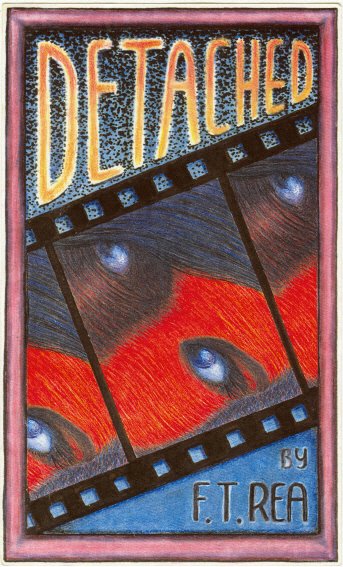
D E T A C H E D: As a Walking Song
The name Detached first came to me as what to call a stoned-out,
one-time-only magazine project. Mostly, it was a trip to San
Francisco in early-1981 that gave me the inspiration. Spending an hour
looking at a ton of artsy, one-off publications of all sorts on the magazine rack in the famous City
Lights Bookstore did the trick. In the spring of '81 Detached was becoming a collection of comix-style art created by several artists. It was also to include a flexi-disc, so I was writing material with music and comedy for it. A small group of us even rehearsed some of it once or twice. Now such a concept might be called a book-zine, or something like that.
Although some good material was created and submitted, this was one of those far-flung projects that got away from me. Sadly, it was never produced. Yes, I still feel guilty about it. Somewhere in a box I still have a few of the submissions. Fortunately, some of the material and ideas for Detached did make their way into issues of SLANT later on ... but that's another story.
In the spring of 1985, Detached, as a title, became the name for a song. It was one of those songs I invented during a walk. It was a practice that started when I was a kid, then went on for decades -- I used to sometimes make up songs in the course of solitary walks. The cadence of my steps would serve as the beat, for singing them softly to myself or just in my head.
When I finished the walk I'd almost always forget the new song. Sometimes it was quite frustrating, because I had liked it. Other thoughts, like solutions, inventions, schemes and so forth, would stick in my head long enough to be written down when I got home. But most of the time these walking songs refused to be gathered.
Alas, although I do tend to see everything in life as if it's a movie, too often what's going on in my head is more like a kaleidoscope than a narrative story. So those walking songs were like dreams that fade away moments after waking up. Like those rare dreams that have remained coherent hours or days later, only a few of my walking songs stayed assembled in my head, so I could remember the tune ... much less write down the words.
With regard to walking alone, I've generally put extra trust in ideas that came to me during a purposeful walk. Something about the rhythm would make tunes, sometimes with words, pop into my head. Today I have to smile at the thought of missing the private sense of delight those walking songs gave me. Here are the words to Detached, the song:
D E T A C H E DWith this one I still remember the tune. It usually has a south-of-the-border rhythm to it. Sometimes I still whistle it while I'm walking, but I don't sing any songs to myself much, anymore. Hardly ever play my chromatic harmonica along with canned music that calls out to me, either. My neighbors are probably happy about that.
I want to thank you pal
for helping out
While I went crazy.
It wasn’t all fun
It just had to be done.
Beauty mark and a ponytail
Hey!
Your check’s in the mail.
De-tached.
When I could close my eyes
And float away
Life seemed so easy.
Watching tides of fashion
Riding waves of passion.
Smokey edges of a photograph
Yo!
We just had to laugh.
De-tached.
Now I use Detached as a title for a group of short stories. To see about them go here.
-- 30 --
Thursday, December 29, 2016
Fake News Cops?
Since
election day most of the concern about fake news has been focused on
the role such off-brand political stories may have played in
tilting the presidential race. However, the bizarre Comet Pizza story
about a pitifully gullible, assault-rifle-toting vigilante -- claiming
he was aiming to rescue captive children -- bodes of more crazy-sounding real news stories to come. Happy new year.
Speaking of craziness, most folks know it's quite likely there are more wannabe vigilantes waiting for just the right provocation. So, dear sane reader, I'm wondering if we may be about to see a snowballing of paranoia over what troubles fake news could animate. Given all the propaganda and misleading advertising we have absorbed the irony of such a national panic would be noteworthy.
All of which could be seen as an opportunity for some players inside the beltway. Goosed on by a muscular Trump administration, Republicans in Congress might just imagine it's their duty to shield the citizenry from counterfeit stories masquerading as curated news, crafted and published by sources you can find and hold accountable. Accordingly, those emboldened legislators could opt to outlaw forms of fake news deemed to be dangerous.
More breaking news stories, a la Comet Pizza, but with corpses strewn about the crime scene. In 2017, if planted bogus news is viewed as having played a significant role in a couple of spectacular bloodbaths, one can almost hear a cacophonous chorus of cries for action.
Twelve months from now, picture a Saturday Night Live skit being busted, in progress. In this scenario, it would be for presenting a satirical news item about the White House being painted gold, President Trump quibbling over the deal, cheating the contractors, etc. If this were to happen, SNL cast members would go down in history as the first comedians arrested for violating the new ban on disseminating fake news stories about certain government officials.
It wouldn't be a matter of putting the kibosh on a comedic performance testing obscenity laws, such as in Lenny Bruce's dirty-talking days. This would be branding satire as illegal when it constitutes a threat to order by transmitting words, sounds and images depicting deliberately false information about specific protected officials.
In this case, the fake news cops would be protecting a sitting president who may be more thin-skinned than any of his predecessors. What limits on his power Trump will accept are yet to be known. He's already blustered aplenty about how he will curb the "lying press," once he's in power. Furthermore, it's hardly a reach to suggest that President-elect Trump now appears to believe he's got a blank-check mandate to do what he pleases about vexations from the mainstream media.
After inauguration day on Jan. 20, no one should be surprised if protest marches denouncing the Trump administration's policies are confronted with a more robust response than did those in the days after election day's surprise. No doubt, Trump's "strongman" style is going to be appreciated and emulated by some in the law enforcement/security business.
Hey, don't say it can't happen here. I'm old enough to remember Selma in 1965 and Kent State in 1970. Our American history is replete with displays of black-boot tactics to quell dissent.
Sure the feds ought to pursue criminal hackers and spies, but it would be a mistake for us to ask the government to solve our current fake news problem. The last thing this country needs is a new police force dedicated to imposing a solution.
If the battered fourth estate and we the befuddled people don't soon find a practical way to solve this problem, one of our favorite forms of push-back humor -- satire -- may be in for a rough ride with Trump in the Gold House. As satire has often been used more effectively by the left than the right, there are surely some Trump advisers already licking their chops at the prospect of scaring lefty satirists out of their wits.
Meanwhile, the
legit news people in the mainstream media have to recognize that their
routine mashing up of news and entertainment, a dumbing-down trend
that's become more prevalent over the last decade, helped to pave the way for
this dilemma. It's on the industry itself to establish and adhere to some rules -- new reliable
standards that draw a bright line between a calm reality and
attention-getting exaggeration, even hokum.
Then the rest of us need to think about the inherent peril of living in an echo chamber that reinforces preconceived notions and makes us more gullible. On Facebook, maybe we should take more care not to share those unverified click bait stories and trashy memes.
Furthermore, the trending notion from that there's no such thing as truth, in our time, should be rejected; preferably with sarcasm. Our media culture -- both mainstream and social -- needs to evolve to where the whole scamming mindset of misleading headlines, doling out fake news and trolling for hire, or just sicko amusement, etc., becomes as uncool as it gets.
Kaput!
Promoting that simple concept is a worthwhile cause for 2017. Happy new year, again. What could be cooler than saving satire?
– 30 –
-- Words and art by F.T. Rea
Thursday, December 08, 2016
Can Satire Survive a Fake News Ban?
Still just weeks after election day most of the interest in the fake news story surrounds the role it may have played in deciding the presidential
race. However, the bizarre Comet Pizza story about a vigilante
trying to rescue imaginary captive children may be providing a
dark preview of what's to come -- more troubling real news about the
impact of fake news.
Happy New Year!
Given how contagious hysteria tends to be in these always-online days, will 2017 be the year a tidal wave of fake news paranoia washes over the nation? Will Congress be able to resist the call to do something about dangerous fake news?
Just 12 months from now, picture a Saturday Night Live skit being busted in progress on live TV. In this scenario, for presenting a satirical news story about President Trump having the White House painted gold -- quibbling over the deal, cheating the contractors, etc. -- the SNL cast members would be hauled off. In handcuffs. For testing the nation's brand new laws forbidding the dissemination of fake news stories about government actions or officials.
Crazy? No doubt. What the hell would have to happen in the USA to spur on such an Orwellian censorship crackdown?
The answer is more Comet Pizza-like stories, only with plenty of blood strewn about the crime scene. Then throw in more damning evidence suggesting some of the election-tilting scams of 2016 were indeed dished out by Russians ... well, that could set the voters' collective fear and indignation to boiling and bubbling.
If the spreading of more bogus news stories is seen as causing a couple of bloodbaths, well, it gets a little easier to picture outcries calling for action. In response, the Republican-led Congress – goosed by a muscular Trump administration – might leap at the chance to stem the wicked tide. Federal scrutiny of the press and the entertainment industry would likely follow Congressional hearings.
If enforcement of anti-fake news laws becomes vigorous enough that live bust scene on SNL starts to morph from an absurd reach, to being more likely than it ought to be. After all, while candidate Trump was all over the map on some issues, his bombastic attacks on the mainstream media were consistent.
Furthermore, to assume President-elect Trump now feels he has a mandate to crack down on any sedition that irritates him is hardly a reach. After inauguration day on Jan. 20, protest marches denouncing the Trump administration's policies may be confronted with a somewhat harsher response than did those that followed election day. Can't happen here?
Think again, I'm old enough to remember Selma in 1965 and Kent State in 1970. Our American history is replete with examples of governmental heavy-handed tactics to quell dissent. It has happened here and could again. If it does come to that don't think there won't be plenty of cheerleaders in favor of punishing anti-Trump demonstrators by roughing them up.
Although some folks will always enjoy seeing pranks ruffle feathers, the fake news epidemic is bound to overstay it's welcome. Which means sooner or later we're probably going to see both clumsy laws and clever laws crafted to wipe it out. Where that will lead is anybody's guess. You've just read mine.
Maybe we all need to think about the perils of living in an echo chamber that only reinforces our preconceived notions. Maybe none of us should share those unverified click bait stories and trashy memes on Facebook.
Moreover, if the battered fourth estate and we the befuddled people don't find a practical way to solve this fake news problem, ASAP, one of our favorite forms of humor may be in for a rough ride with Trump in the Gold House.
Happy New Year!
Given how contagious hysteria tends to be in these always-online days, will 2017 be the year a tidal wave of fake news paranoia washes over the nation? Will Congress be able to resist the call to do something about dangerous fake news?
Just 12 months from now, picture a Saturday Night Live skit being busted in progress on live TV. In this scenario, for presenting a satirical news story about President Trump having the White House painted gold -- quibbling over the deal, cheating the contractors, etc. -- the SNL cast members would be hauled off. In handcuffs. For testing the nation's brand new laws forbidding the dissemination of fake news stories about government actions or officials.
Crazy? No doubt. What the hell would have to happen in the USA to spur on such an Orwellian censorship crackdown?
The answer is more Comet Pizza-like stories, only with plenty of blood strewn about the crime scene. Then throw in more damning evidence suggesting some of the election-tilting scams of 2016 were indeed dished out by Russians ... well, that could set the voters' collective fear and indignation to boiling and bubbling.
If the spreading of more bogus news stories is seen as causing a couple of bloodbaths, well, it gets a little easier to picture outcries calling for action. In response, the Republican-led Congress – goosed by a muscular Trump administration – might leap at the chance to stem the wicked tide. Federal scrutiny of the press and the entertainment industry would likely follow Congressional hearings.
If enforcement of anti-fake news laws becomes vigorous enough that live bust scene on SNL starts to morph from an absurd reach, to being more likely than it ought to be. After all, while candidate Trump was all over the map on some issues, his bombastic attacks on the mainstream media were consistent.
Furthermore, to assume President-elect Trump now feels he has a mandate to crack down on any sedition that irritates him is hardly a reach. After inauguration day on Jan. 20, protest marches denouncing the Trump administration's policies may be confronted with a somewhat harsher response than did those that followed election day. Can't happen here?
Think again, I'm old enough to remember Selma in 1965 and Kent State in 1970. Our American history is replete with examples of governmental heavy-handed tactics to quell dissent. It has happened here and could again. If it does come to that don't think there won't be plenty of cheerleaders in favor of punishing anti-Trump demonstrators by roughing them up.
Although some folks will always enjoy seeing pranks ruffle feathers, the fake news epidemic is bound to overstay it's welcome. Which means sooner or later we're probably going to see both clumsy laws and clever laws crafted to wipe it out. Where that will lead is anybody's guess. You've just read mine.
Maybe we all need to think about the perils of living in an echo chamber that only reinforces our preconceived notions. Maybe none of us should share those unverified click bait stories and trashy memes on Facebook.
Moreover, if the battered fourth estate and we the befuddled people don't find a practical way to solve this fake news problem, ASAP, one of our favorite forms of humor may be in for a rough ride with Trump in the Gold House.
Tuesday, November 22, 2016
'You Mock Me!"
Donald Trump doesn't like to be mocked. His predicable reactions to Saturday Night Live skits and other publicly-seen comedic jabs have revealed that weakness. His Dandyship-Elect just can't resist returning fire.
So I have to smile at what that exposure of his addiction to payback invites. Sound the trumpets! (pun intended):
Attention cartoonists, standup comedians and wise-asses of all stripes -- Trump is the living embodiment of the Lord Edmund character in Saturday Night Live's Jan. 21, 1989, skit that featured John Malkovich, Jan Hicks, Jon Lovitz, Dana Carvey, and others.
And, given Trump's manufactured squabbles with the press has any politician ever painted such a brightly-colored bull's-eye on his chest?
Here's a portion of the famous skit's script:
Doorman: My Lord! The Royal Artist has completed his portrait of your Lordship, he seeks your approval.You get the picture. Here's a clip of the hilarious skit at NBC's website.
Lord Edmund: Show him in.
Royal Artist: [ enters with painting ] Master, I humbly present the fruit of two years' labor.. [ displays painting ] The Royal Portrait!
Lord Edmund: [ examines it disapprovingly ]
Royal Artist: My Lord is not pleased with the portrait?
Lord Edmund: You mock me.
Royal Artist: My Lordship, quite the contrary.. The portrait celebrates your noble bearing! I put you in uniform to capture the lion heart that beats within your heroic breasts!
Lord Edmund: Will this mockery never cease? Away with you. If there is one thing I cannot abide, it is being mocked! now, go! And take your grotesque caricature with you! [ runs Royal Artist out, as the Servants mock his running ] I will not be mocked!! [ walks across the room, as the Servants continue to mock his movements ] Was I wrong?
Servant #1: Heavens no, your Highness. His most contempt was rendering. The talks on canvas. Wouldn't you say so, Thomas?
Servant #2: Oh, yes, yes, yes.. The affrontary of his derisive painting was surpassed only by his brazen gall!
Lord Edmund: Exactly!
Who, in real life, is likely to play the roles of the mocking servants? Once he's in office, who will stand right next to him -- just off to the side -- seeming to praise him, while all along slathering his Dandyship with the total Lord Edmund treatment?
-- Art and words by F.T. Rea
Friday, November 11, 2016
The Cheaters
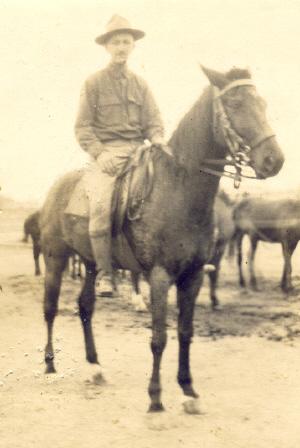
A Veterans Day Remembrance: This 1916 photograph of
my grandfather, Frank W. Owen (1893-1968), was shot when he was in the Richmond Light Infantry
Blues. At the time he was stationed in Brownsville, Texas, as part of a
contingent called up and assigned to protect the border. Mexican
revolutionary/bandit Pancho Villa had been crossing over to raid small
towns ... or so it was said. The next year the Richmond Blues were thrown into WWI in France. The story below is about my grandfather. It's set in the summer of 1959. I wrote it 25 years ago for SLANT. A version of it was later published in STYLE Weekly in 2000.
The Cheaters
by F.T. Rea
Having devoted countless hours to competitive sports and games of all sorts, nothing in that realm is quite as galling to this grizzled scribbler as the cheater’s averted eye of denial, or the practiced tones of his shameless spiel.
In the middle of a pick-up basketball game, or a friendly Frisbee-golf round, too often, my barbed outspokenness over what I have perceived as deliberate cheating has ruffled feathers. Alas, it's my nature. I can't help it any more than a watchful blue jay can resist dive-bombing an alley cat.
The reader might wonder about whether I'm overcompensating for dishonest aspects of myself, or if I could be dwelling on memories of feeling cheated out of something dear.
OK, fair enough, I don't deny any of that. Still, truth be told, it mostly goes back to a particular afternoon's mischief gone wrong.
*
A blue-collar architect with the Chesapeake & Ohio Railway for decades, my maternal grandfather, Frank Wingo Owen was a natural entertainer. Blessed with a resonant baritone/bass voice, he began singing professionally in his teens and continued performing, as a soloist and with barbershop quartets, into his mid-60s.
Shortly after his retirement, at 65, the lifelong grip on good health he had enjoyed failed; an infection he picked up during a routine hernia surgery at a VA hospital nearly killed him. It left him with no sense of touch in his extremities. Once he got some of his strength back, he found comfort in returning to his role as umpire of the baseball games played in his yard by the neighborhood's boys. He couldn't stand up behind home plate, anymore, but he did alright sitting in the shade of the plum tree, some 25 feet away.
This was the summer he taught me, along with a few of my friends, the fundamentals of poker. To learn the game we didn’t play for real money. Each player got so many poker chips. If his chips ran out, he became a spectator.
The poker professor said he’d never let us beat him, claiming he owed it to the game itself to win if he could, which he always did. Woven throughout his lessons on betting strategy were stories about poker hands and football games from his cavalry days, serving with the Richmond Blues during World War I.
As likely as not, the stories he told would end up underlining points he saw as standards: He challenged us to expose the true coward at the heart of every bully. "Punch him in the nose," he'd chuckle, "and even if you get whipped he'll never bother you again." In team sports, the success of the team trumped all else. Moreover, withholding one’s best effort in any game, no matter the score, was beyond the pale.
Such lazy afternoons came and went so easily that summer there was no way then, at 11, I could have appreciated how precious they would seem looking back on them.
On the other hand, there were occasions he would make it tough on me. Especially when he spotted a boy breaking the yard's rules or playing dirty. It was more than a little embarrassing when he would wave his cane and bellow his rulings. For flagrant violations, or protesting his call too much, he barred the guilty boy from the yard for a day or two.
F. W. Owen’s hard-edged opinions about fair play, and looking directly in the eye at whatever comes along, were not particularly modern. Nor were they always easy for know-it-all adolescent boys to swallow.
Predictably, the day came when a plot was hatched. We decided to see if artful subterfuge could beat him at poker just once. The conspirators practiced in secret for hours, passing cards under the table with bare feet and developing signals. It was accepted that we would not get away with it for long, but to pull it off for a few hands would be pure fun.
Following baseball, with the post-game watermelon consumed, I fetched the cards and chips. Then the four card sharks moved in to put the caper in play.
To our amazement, the plan went off smoothly. After hands of what we saw as sly tricks we went blatant, expecting/needing to get caught, so we could gloat over having tricked the great master. Later, as he told the boys' favorite story -- the one about a Spanish women who bit him on the arm at a train station in France -- one-eyed jacks tucked between dirty toes were being passed under the table.
Then the joy began to drain out of the adventure. With semi-secret gestures I called the ruse off. A couple of hands were played with no shenanigans but he ran out of chips, anyway.
Head bowed, he sighed, “Today I can’t win for loosing; you boys are just too good for me.” Utterly dependent on his cane for balance he slowly walked into the shadows toward the back porch. It was agonizing.
The game was over; we were no longer pranksters. We were cheaters.
As he carefully negotiated the steps, my last chance to save the day came and went without a syllable out of me to set the record straight. It was hard to believe that he hadn’t seen what we were doing, but my guilt burned so deeply I didn't wonder enough about that, then.
*
My grandfather didn’t play poker with us again. He went on umpiring, and telling his salty stories afterwards over watermelon. We tried playing poker the same way without him, but it didn’t work; the value the chips had magically represented was gone. The boys had outgrown poker without real money on the line.
Although I thought about that afternoon's shame many times before he died nine years later, neither of us ever mentioned it. For my part, when I tried to bring it up, to clear the air, the words always stuck in my throat.
Eventually, I grew to become as intolerant of petty cheating as F.W. Owen was in his day, maybe even more so. And, as it was for him, the blue jay has always been my favorite bird.
-- 30 --
Subscribe to:
Posts (Atom)