Wednesday, July 22, 2020

You say, 'Half-Rubber'?

Photographer Jack Leigh (1948-2004) was part of the Biograph Theatre’s staff in late-1973/early-1974 (I managed the place in those days). While he worked at the Biograph as an usher, Leigh taught me to play Half-Rubber, a game he said came from his home town, Savannah. Half-Rubber is a three-man baseball-like game that is played with a broom handle and half of a red rubber ball.

Probably Jack’s best known photograph was snapped in 1993, when he shot the photo in a Savannah cemetery that would appear on the cover of what became a bestselling book -- “Midnight in the Garden of Good and Evil” by John Berendt. Later the same image was used to promote the movie with the same title.

When I knew him, Jack (pictured right) was earnest and quick-witted. He liked to play chess and talk about movies, and of course -- photography. In his Biograph days he was already a very good photographer. At one point we had a show of his hanging in the lobby.

Once, when we went out to wander around shooting pictures together, he snapped his shutter maybe twice. He was using slow black and white film. Maybe Verichrome Pan? In the same amount of time, a couple of hours, I went through a couple of rolls of fast Tri-X.

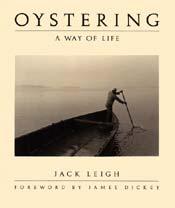
Yes, the quiet style Jack would use throughout his career was already evident. He eventually authored six books of photographs, including "Oystering," which featured a foreword by James Dickey.

Back to Half-Rubber: To kill time one pleasant afternoon, at Jack's prompting I cut a ball in half, cut the sweeping part off of a broomstick and crossed the street with the Half-Rubber instructor and the theater’s assistant manager, Bernie Hall. At the time there were a couple of vacant lots on Grace Street, across from the Biograph. With the alley behind us, it was a good spot to play the new game.

Berine and I soon learned the key to pitching was to throw the half-ball using a side-arm delivery, with the flat part down. That made it curve wildly and soar, somewhat like a Frisbee. Hitting it with a broomstick or even catching the damn thing was quite another matter. Oh, and hitting the ball on a bounce was OK, too. In fact, it was better to do so, from a strategic standpoint.

The pitcher threw the half-sphere in the general direction of the batter. If the batter swung and missed, and he usually did miss, the catcher did his best to catch it. When the catcher did catch it on the fly, providing the batter had swung, the batter was out. Then the pitcher moved to the catching position, and the catcher became the batter, and so forth. Runs were scored in a similar fashion to other home run derby-like games.

But the best reason to play, other than the laughs stemming from how foolish we looked dealing with the crazy, flat-sided ball, was the kick that came from hitting it. When we connected with that little red devil it left the broomstick bat like a rocket. Smashing it across the lot, completely over the theater and halfway to Broad Street was a gas!

Click here to read more about Jack Leigh.

Friday, July 17, 2020

Satchel Paige at Parker Field

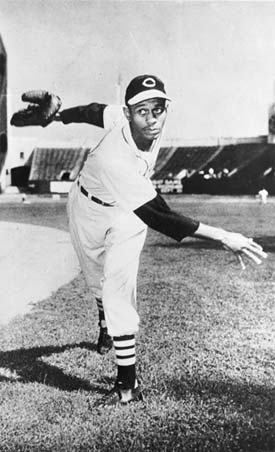
Satchel Paige as a Cleveland Indian
Missing Major League Baseball I can’t help but think of what was a temple of baseball in my youth, Parker Field, which was located where the Diamond is now.

Parker Field opened in 1954 to serve as home for a new International League club — the Richmond Virginians. The Baltimore Orioles (formerly the St. Louis Browns) joined the American League that year, leaving an opening in the IL for the Richmond entry.

A couple of years later the V’s became one of the New York Yankees’ Triple A farm clubs. Accordingly, in those days the Bronx Bombers paid Richmond an annual visit in April. Just before the Big Leagues opening day, Mickey Mantle, Yogi Berra, Whitey Ford and the other great Yankees of that era played an exhibition game in Richmond against V’s.

It was always a standing-room-only affair. I wish I hadn't lost track off the photos I shot of a few of those Yankees stars with my Brownie Hawkeye at one of those games. When it ended I climbed over a low wall, to get out on the field, Then I fired off a few closeup shots before I was shooed away.

Other than the pinstripe-clad hometown V’s my favorite club of the IL in those days was the pre-revolution Havana Sugar Kings. They played with an intensity, bordering on reckless abandon, that made them a lot of fun to watch, especially for the kids.

One of my all-time favorite players I saw perform on that ball field was Leroy “Satchel” Paige (1906-82). Yes, the legendary Paige, with his windmill windup, high kick and remarkably smooth release still working for him, plied his craft on the mound here in Richmond.

In 1971, Paige (pictured above, circa 1949) was the first of the Negro Leagues’ great stars to be admitted to Major League Baseball’s Hall of Fame, based mostly on his contributions before he helped break the Major League color line in 1948, as a 42-year-old rookie. The statistics from his pre-Big League days are mind-boggling. It's been said he won some 2,000 games and threw maybe as many as 45 no-hitters.

Furthermore, long before the impish poet/boxer Muhammad Ali, there was the equally playful Satchel Paige, with his widely published Six Guidelines to Success:
  • Avoid fried meats that angry up the blood.
  • If your stomach disputes you, lie down and pacify it with cool thoughts.
  • Keep the juices flowing by jangling gently as you walk.
  • Go very lightly on the vices, such as carrying-on in society - the society ramble ain’t restful.
  • Avoid running at all times.
  • Don’t look back, something may be gaining on you.
Long after his days as the best pitcher in the Negro Leagues (and maybe any league), following his precedent-setting stint in the American League, Paige was on the roster of the Miami Marlins (1956-58). Like the V’s the Marlins played in the International League. When I saw him Paige was in his 50s. Not a starter, anymore, he worked out of the bullpen.

In the late-1950s live professional baseball in Richmond was mostly a white guys’ scene. Which meant the boos would start as soon as the crowd noticed Paige’s 6-3, 180-pound frame warming up in the middle of a game. When he’d be called in to pitch, in relief, the noise level would soar. Not all the grown men booed, but many did. That, while their children and grandchildren were split between booing, cheering, or embarrassed and not knowing what to do.

Naturally, some of the kids (like me) liked seeing the grownups getting unraveled, so Paige was all the more cool to them. Sadly, for some white men in Richmond, then caught up by the thinking that buoyed Massive Resistance, any prominent black person was seen as someone to be against. So, they probably would have booed Duke Ellington or A. Philip Randolph, too.

The showman Paige would take forever to walk to the mound from the bullpen. His warm-up pitches would each be big productions, with various slow-motion full windups. Then the thrown ball would whistle toward home plate with a startling velocity, making some of the kids cheer and laugh ... to mix with the boos.

Paige as a Miami Marlin

Paige, from Mobile, Alabama, must have understood what was going on better than most who watched him pitch then. He was a veteran performer, who knew perfectly well there wasn’t much he could do to change the boos; they were coming from folks trapped in the past.

So, Paige played to the cheers, as experience over time had surely taught him to do. Of course, as a 10-year-old I lacked the overview to understand that what I was seeing was an aspect of the changes the South was going through, to do with race.

My guess is few knew the reaction to Paige, largely being split on generational lines then, was a sign of how America’s baseball fans were going to change -- one day Jim Crow attitudes would have no place at baseball temples.

Now, with the benefit of decades of reflection, I understand that Satchel Paige was a visionary. He was seeing the future by following his own advice -- Don’t look back.

– Images from satchelpage.com

Wednesday, July 15, 2020

Rams Team Statement

Yesterday afternoon (July 14) Brent Bettinger was at the site of Richmond’s famous/notorious Lee Monument (some now call that location “Marcus-David Peters Circle”) to shoot pictures. The next thing he knew, VCU’s basketball team, with some coaches and associated personnel, showed up. He was told they had planned to gather on the graffiti-adorned pedestal of the statue for a photo.

Accordingly, that‘s what they did. Apparently Bettinger, who has a photographer’s eye, knew an opportunity when he saw it. So he snapped off a photo of his own. By the way, he said the members of the VCU group were wearing masks when they showed up. Then, in the heat, they took them off briefly for the shoot.

Not surprisingly Bettinger’s powerful image has been viewed and shared quite a bit in the last 24 hours. I haven’t seen what pictures the VCU team’s photographer shot, yet, but right now Bettinger’s is getting a lot of play.

Photo credit: Brent Bettinger Media.

Saturday, July 11, 2020

Accordingly, My Favorite Bars

Was talking on the phone with a pal. It seemed we both needed to confess that 2020’s accumulating sense of despair is taking a toll. Like me, he’s a geezer who’s been struggling with the lack of sleep … the vexations thick in the air we breathe … the no-light-at-the-end-of-the-tunnel bleakness ... the goddamn indignities.

We talked for a good while. Between the aforementioned confessions we shared some familiar laughs from hearing old stories recounted, again. In hard times I suppose that's what longtime friends do for one another. Facilitating momentary escapes to a joyous time has always been a good thing. 

Accordingly, we also laughed at the grim and daunting notion that folks may never again crowd into live music shows, or go to cinemas, or to ball games. At least, not like they used to. After we got off the phone it dawned on me that for the time being the natural conviviality of a happy hour -- something I’ve experienced countless times -- can’t be found in reality.

Instead of answering the beer-thirty call, we must settle for reading magazine pieces like this one. And, of course, watching old movies. Especially those with bar scenes in black and white. 

OK, I freely admit that up until I was about 50, I probably spent way too many hours bellied up to the bar. In my favorite bars, I generally preferred to stand as I drank my bottled beer.  

Now my septuagenarian eyes can see that maybe, in the future, America will be better off with less of its social life centered around saloons. Maybe. But right now I’m thinking about my all-time favorite watering holes. Not favorite places for lunch or dinner. Not popular live music venues that served food and drink. Bars.

After that intro, that’s what this piece is about -- my favorite Richmond bars.  

To be continued…

Tuesday, July 07, 2020

When Donald Cooper got what he deserved


With the temperature now in the 90s maybe it's a good time for a snowball story.

Maybe the best snowball shot I ever made was in the early '80s on West Grace Street. Rebby Sharp and I were across the street from the Biograph Theatre, ducked down behind some parked cars. It was after dark but I can't say how late it was. There was a snowfall underway and it was sticking. Rebby and I were battling some friends, who were in front of Don's Hot Nuts, next door to the cinema that I managed in those days.

Rebby and her band, the Orthotonics, used to practice sometimes in the theater's large auditorium during off-hours. Some fans of Rebby's music and art might not know it, but she was a decent athlete; she pitched for the Biograph's women's softball team had a pretty good throwing arm.

When some snowballs thumped off of Donald Cooper's peculiar bright green candy business storefront, he came out on his porch to command the snowball fighters to scram. As everyone associated with the Biograph knew Cooper to be an utter pest and the worst next-door neighbor in the world, Rebby and I had no need for a plan ... we knew what to do.

Rebby threw first. My throw left with dispatch a split second later. Both were superbly well put shots. When Cooper extended his hand to block Rebby's accurate incoming snowball it shattered to shower him. Then, my righteous throw hit him square in the face ... boom!

Cooper promptly quit defiant his stance and retired for the night.

-- Words and art by F.T. Rea

Sunday, June 21, 2020

About My Grandfather and Poker

In 1916 the fit young volunteers who were members of the Richmond Light Infantry Blues were dispatched to Brownsville, Texas, to watch over the border and chase Mexican bandit/revolutionary Pancho Villa, who had crossed the border to stage a few raids on American soil ... or, so people said.

To do the job the Richmonders were quickly converted into a cavalry unit. My grandfather, Frank W. Owen (1893-1968), seen at the age of 23 in the 1916 photo above, was one of those local boys in that Richmond Blues outfit.

Following that campaign, in 1917 the Blues were sent to Fort McClellan, located in the Alabama foothills, near the town of Anniston, for additional training. Then it was across the pond to France to finish off the Great War -- the war to end all wars.

Frank Owen grew up in South Richmond in what was then called Manchester. Before his active duty he had mostly made his living as a vocalist. The stories I remember him telling from his years as a soldier were all about his singing gigs, playing football and poker, and various other adventures.

Owen is on the right in the photo above. Like other men of his generation, who saw war firsthand, he apparently saw no benefit in talking about the actual horrors he'd seen. At least I never heard such stories. However, he was always quick to point with pride at having been in the Richmond Blues, then seen by many in Richmond as an elite corps.

F.W. Owen depended completely on his own view of life. He passed what he could of that self-reliance on to me. My grandson's middle name is Owen. It's a name he should always wear proudly. A long way from home, almost a century ago, his great-great-grandfather certainly did.

The story below is about my grandfather. A previous version of it was published in SLANT in 1990. This version was published in Style Weekly in 2000.

*
The Cheaters
by F.T. Rea
Having devoted countless hours to competitive sports and games of all sorts, nothing in that realm is quite as galling to this grizzled scribbler as the cheater’s averted eye of denial, or the practiced tones of his shameless spiel.
In the middle of a pick-up basketball game, or a friendly Frisbee-golf round, too often, my barbed outspokenness over what I have perceived as deliberate cheating has ruffled feathers. Alas, it's my nature. I can't help it any more than a watchful blue jay can resist dive-bombing an alley cat.
The reader might wonder about whether I'm overcompensating for dishonest aspects of myself, or if I could be dwelling on memories of feeling cheated out of something dear.
OK, fair enough, I don't deny any of that. Still, truth be told, it mostly goes back to a particular afternoon's mischief gone wrong.
*

A blue-collar architect with the Chesapeake & Ohio Railway for decades, my maternal grandfather, Frank Wingo Owen was a natural entertainer. Blessed with a resonant baritone/bass voice, he began singing professionally in his teens and continued performing, as a soloist and with barbershop quartets, into his mid-60s.
Shortly after his retirement, at 65, the lifelong grip on good health he had enjoyed failed; an infection he picked up during a routine hernia surgery at a VA hospital nearly killed him. It left him with no sense of touch in his extremities.
Once he got some of his strength back, he found comfort in returning to his role as umpire of the baseball games played in his yard by the neighborhood's boys. He couldn't stand up behind home plate, anymore, but he did alright sitting in the shade of the plum tree, some 25 feet away.
This was the summer he taught me, along with a few of my friends, the fundamentals of poker. To learn the game we didn’t play for real money. Each player got so many poker chips. If his chips ran out, he became a spectator.
The poker professor said he’d never let us beat him, claiming he owed it to the game itself to win if he could, which he always did. Woven throughout his lessons on betting strategy were stories about poker hands and football games from his cavalry days, serving with the Richmond Blues during World War I.
As likely as not, the stories he told would end up underlining points he saw as standards: He challenged us to expose the true coward at the heart of every bully. "Punch him in the nose," he'd chuckle, "and even if you get whipped he'll never bother you again." In team sports, the success of the team trumped all else. Moreover, withholding one’s best effort in any game, no matter the score, was beyond the pale.
Such lazy afternoons came and went so easily that summer there was no way then, at 11, I could have appreciated how precious they would seem looking back on them.
On the other hand, there were occasions he would make it tough on me. Especially when he spotted a boy breaking the yard's rules or playing dirty. It was more than a little embarrassing when he would wave his cane and bellow his rulings. For flagrant violations, or protesting his call too much, he barred the guilty boy from the yard for a day or two.
F.W. Owen’s hard-edged opinions about fair play, and looking directly in the eye at whatever comes along, were not particularly modern. Nor were they always easy for know-it-all adolescent boys to swallow.
Predictably, the day came when a plot was hatched. We decided to see if artful subterfuge could beat him at poker just once. The conspirators practiced in secret for hours, passing cards under the table with bare feet and developing signals. It was accepted that we would not get away with it for long, but to pull it off for a few hands would be pure fun.
Following baseball, with the post-game watermelon consumed, I fetched the cards and chips. Then the four card sharks moved in to put the caper in play.
To our amazement, the plan went off smoothly. After hands of what we saw as sly tricks we went blatant, expecting/needing to get caught, so we could gloat over having tricked the great master. Later, as he told the boys' favorite story -- the one about a Spanish women who bit him on the arm at a train station in France -- one-eyed jacks tucked between dirty toes were being passed under the table.
Then the joy began to drain out of the adventure. With semi-secret gestures I called the ruse off. A couple of hands were played with no shenanigans but he ran out of chips, anyway.
Head bowed, he sighed, “Today I can’t win for loosing; you boys are just too good for me.” Utterly dependent on his cane for balance he slowly walked into the shadows toward the back porch. It was agonizing.
The game was over; we were no longer pranksters. We were cheaters.
As he carefully negotiated the steps, my last chance to save the day came and went without a syllable out of me to set the record straight. It was hard to believe that he hadn’t seen what we were doing, but my guilt burned so deeply I didn't wonder enough about that, then.
*

My grandfather didn’t play poker with us again. He went on umpiring, and telling his salty stories afterwards over watermelon. We tried playing poker the same way without him, but it didn’t work; the value the chips had magically represented was gone. The boys had outgrown poker without real money on the line.
Although I thought about that afternoon's shame many times before he died nine years later, neither of us ever mentioned it. For my part, when I tried to bring it up, to clear the air, the words always stuck in my throat.
Eventually, I grew to become as intolerant of petty cheating as F.W. Owen was in his day, maybe even more so. And, as it was for him, the blue jay has always been my favorite bird.

-- 30 --

Friday, June 12, 2020

The Battle of Monument Avenue: Report No. 7


In spite of alarming news of the incidents at the Lee Monument, involving the confiscation of guns -- but no shooting -- early Friday morning, the grassy circle at the intersection of Monument Avenue and Allen Avenue in the Fan District continued to be a gathering place for photographers, graffiti artists, sign-makers, tourists and you-name-it.


In fact, from what I've seen, personally, the scene is more like a crowded park than the site of protests. Kids pose in front of the base of the monument wearing graduation gowns. Activists hand out free bottles of water. Looking at the garishly decorated pedestal through the lens, the combination of markings and signs on and around it take on the feel of free-spirited abstract expressionist paintings from the 1960s and '70s.


-- Words and photos by F.T. Rea

Thursday, June 11, 2020

Epiphany at a Stop Light

My depiction (2007) of Fred Monihan's sculpture of J.E.B. Stuart fading into the mists.

Facing east on Monument Avenue I was waiting for the stoplight to change. It was about 35 years ago. The sights were as familiar as could be. Through the windshield I could see the J.E.B. Stuart monument. To the right was the hospital named for that place on the map -- Stuart Circle. I was born in that hospital and so was my daughter.

Suddenly, like a bolt from the blue, a fresh thought struck me. It felt like an epiphany.

Background: Not too long before this moment, in 1984, I had run for a seat on Richmond's City Council. The task of campaigning had exposed me to some neighborhoods in my home town that had been mostly unfamiliar to me before I decided to run for office.

Why I took that plunge, with no chance to win, is another story, for another day. But the reason for mentioning it here is how eye-opening that experience was. For one thing, I don't think I had ever spent any time in Gilpin Court before the campaign trail took me there. It was part of the Fifth District, which also included the part of the Fan District that was behind the equestrian statue before me. As Richmonders know, Virginia Commonwealth University's academic campus is sprawled out in the blocks just beyond the statue.

Looking at that glorifying depiction of a man on a horse, resting on a plinth, a question exploded in my head: What would I have thought of that so-called "monument" if I had been born black, instead of white? What if I had grown up in Gilpin Court?

The thought that followed made me laugh. I said to myself: "By the time I was 16, I probably would have blown that damn thing up." Answering my own question had provided me with a momentary walk-in-the-other-man's-shoes.

That prompted me to be amazed that it hadn't already happened. Boom! For the first time, I wondered how it had survived in that public space since the early 1900s. 

Folks who remember the 16-year-old version of me should be laughing now. At least a few of them know there would have been some chance, indeed, that I would have really done it ... had I been a headstrong black teenager, who, like me, got thrown out of school regularly.

Before that flash of empathy, I don't think I had ever tried to imagine myself as a black Richmonder looking at those looming statues of Confederate generals, day after day. Ever since then, I've seen those memorials to the Lost Cause in a different light.

Now, in June of 2020, Monument Avenue is being subjected to a mind-boggling transformation at the hands of young people who have seen to it that the spell those damn Confederate memorials have had on Richmond is kaput.

Art and words by F.T. Rea

-- 30 --

Monday, June 08, 2020

The Battle of Monument Avenue: Report No. 6


Let it be said: Just a few blocks from VCU, with its much-celebrated art school, Gen. Robert E. Lee lost his last battle ... to graffiti artists in June of 2020.

Sunday, June 07, 2020

The Battle of Monument Avenue: Report No. 5


How fast will the Confederate memorial removal process ordered by Gov. Northam proceed? A telling first clue to answer to that question may be have been revealed by a fresh batch of signs that has been dropped off at the site of the Lee Monument. (See closeup below.)


There could be some good strategic reasons to begin to get ready for the removal job. First, I'm assuming a huge scaffolding needs to be built. Then the Sons of the Lost Cause, or some group, will probably initiate legal action to stop it, soon. If that comes, it could take a few weeks to get past that. So if Northam wants to do the physical work in early July, after the law will actually allow for it, maybe getting started now makes more sense.

Shortly after 7 p.m. on Saturday night a  group marched in led by the man in the bow tie.
Now is also the time to begin a constructive conversation about what to do with the empty spaces. My take is that Richmond needs to use this unique opportunity, following the historic peaceful demonstrations on Monument Avenue, to do the right thing in the same public spaces where we, the people, have seen the wrong thing being done for way too long. 

Rather than merely cheering on the process of removal -- and yes, there will be parties! -- Richmond's mayor and councilpersons should launch a project to use those empty spaces wisely. After all, something remarkable has happened in the Fan District in the last week: Truth and atonement won the Battle of Monument Avenue.  

Thus, rather than shrug off the integral role that marching peacefully and messaging -- signs and graffiti -- played in affecting a long overdue change, the City of Richmond should own it. The spell has been broken. 

At long last those Confederate memorials have lost their mojo. The Lee Monument was the first to go up. It was unveiled on May 29, 1890. Now it seems it will be the first to come down. 

That circle the bronze of Lee on horseback loomed over for 130 years should become a shrine to truth and atonement. It should be the centerpiece of an outdoor museum documenting what has happened here this week. Displays ought to further document the history of Richmond's struggle to throw off the cruel grip that "massive resistance" and Jim Crow once held on Richmond. Maybe a small amphitheater should be established in that circle for performances and speechifying. Maybe the four green median that flank the circle could be used, too. 

All that would become a nice tourist attraction and serve the neighborhood well. For a city that was once the second largest slave market in the USA, it would be a noteworthy step toward atonement. 

Rather than try to minimize the role of the demonstrators the city government should call for a celebration of the great victory that Richmond has won. The role of the demonstrators should be praised. Let's face the truth: They acted as modern patriots who dared to make their city a more likely place in which to pursue happiness and justice.  

-- 30 --


Saturday, June 06, 2020

The Battle of Monument Avenue: Report No. 4

Kennedy George and Ava Holloway celebrating the moment.
Friday, June 5, 2020: The culture developing around the much-photographed base of the Lee Monument has continued to evolve. The metamorphosis of the milieu during the week, from threatening-and-perhaps-dangerous to loosely-organized-and-peaceful, has been remarkable to watch.

Note: I didn't witness firsthand any of the fires and violent battles of last weekend in Richmond. They happened in other parts of town. I'm only reporting what I've seen.  

The 1600 block of Monument Avenue and the green circle around the Lee Monument have become a particularly cool place in the Fan District to party in the beautiful weather. Several small tents were standing at Happy Hour time. Cars rode by and drivers blew their horns. In response, young people who had been drawn to scene cheered.

Music was in the air. In short, the celebration was in full bloom.

Each day this week more graffiti has been added to the pedestals of the J.E.B. Stuart and Robert E. Lee monuments. All up and down the long block between those looming statues, the residents in the old townhouses have posted signs in their front windows in support of the marchers.

Like it or not, thousands of demonstrators seeking justice for George Floyd, who died of asphyxiation May 25, 2020 -- with a cop's knee on his neck -- chose this site in Richmond to express their outrage. That, as well as their hopes for a better future. Most of the demonstrators have been young.

Now the four police officers who executed Floyd in Minneapolis are in jail. And, Richmond's most well known/infamous Confederate propaganda in bronze is about to be 86-ed.

They are students at the Central Virginia Dance Academy.
Saturday: Unlike many cities, coast-to-coast, in Richmond the demonstrators who came to the neighborhood each night of the week ending today, something noteworthy has already been accomplished. The call for removing Monument Avenue's five statues of Confederate heroes has been answered. On Thursday, Richmond's mayor and Virginia's governor both announced they will be acting in the days to come to remove the monuments.

Apparently, Gov. Ralph Northam can order the six-story-high Robert E. Lee statue taken down on his own volition. The grassy circle on which it rests, between the 1600 and 1800 blocks of Monument Avenue, is an island of property owned the Commonwealth of Virginia. 

The other four Confederate memorials on Monument Avenue are on city property. So Mayor Levar Stoney's ambitious plan to remove the others needs City Council's OK for it to happen. However, word has already begun to spread that the nine-member Council will follow the mayor's lead with unanimous consent.

So it's reasonable to guess that before the summer is over the five Confederate "monuments" on Richmond's Monument Avenue will have been dismantled and moved elsewhere. What will happen to the empty spaces?

Since those spaces were for so long devoted to elevating myths of the Lost Cause it is important for Richmond's future to take care to do the right thing with filling up those publicly-owned spaces. Therefore, I'll be writing about that tomorrow (Sunday). In the meantime, the spontaneous party is still happening.

*

Note: My photos.    

Thursday, June 04, 2020

The Battle of Monument Avenue: Report No. 3.

All day long people posed for pictures with the Lee Monument as a backdrop.

8:45 p.m.: This morning I watched Richmond's mayor, Levar Stoney and Virginia's governor, Ralph Northam, both say plainly they want the bronze generals on Monument Avenue gone. Local television carried their remarks.

"Yes, that statue has been there for a long time," Northam said. "But it was wrong then and it's wrong now. So, we're taking it down."

Outdoors it was another beautiful day. As June 4th wore on lots of visitors came to the neighborhood to bask in the collective sense in the air. In short, that sense was that the multitude of peaceful protestors won yesterday's battle. Friendliness was plentiful.

What will happen after dark remains to be seen. Mayor Stoney and Gov. Northam announced they were moving to rid Monument Avenue of its statues of Confederate heroes on pedestals. Northam can apparently order the Lee Monument removed on own volition. A recently passed Virginia law now allows for it.

On the other hand, Stoney has to convince City Council to see it his way. It won't surprise me if some of them drag their heels. Maybe a faction would like to watch to see how it goes for Northam's bold plan to 86 Gen. Robert E. Lee, sometime after July 1, 2020, when the change in the state law will take effect.

The Lee Monument, six stories tall, was unveiled in 1890, which was 25 years after the Civil War ended. So Lee, depicted as aboard his horse, Traveler, has loomed over the Fan District for 130 years. It was the first of the series of five statues of Confederate heroes to be placed at various intersections along Monument Avenue.

Wednesday, June 03, 2020

The Battle of Monument Avenue: Report No. 2

Not all the political messages were painted on the monuments.

Last night, at approximately 7:20 p.m., thousands of demonstrators were assembling on the 1600 block of Monument Avenue. The grassy areas of the median and the circle around the Lee Monument were completely full of people. More people were marching in on the street. the sound of it was hair-raising. The sight of it was stunning.

Chanting as they marched, the participants were not being restrained by any concerns about social distancing. Still, many wore masks.

From my vantage point there was no sign of violence being directed toward anyone, or toward property. But the crowd was so large, I can't say that nothing like that happened, since there were thousands of marchers. In general, they appeared to be young and quite purposeful. At quick glance, it seemed every skin color was well represented.  

Almost magically, by 8:30 p.m. the vast majority of them had moved on. Since I didn't stay to watch what happened next, I'm only guessing the demonstrators proceeded west toward the Davis and Jackson monuments. There were still a few hundred people lingering in the area. They were peaceful and seemed to be leaving.


Day 6: This morning the good weather continued as I examined the peaceful block and photographed some signs left over from last night's demonstration. So, not all the political messages have been applied to the thoroughly abused monuments. Some of my young neighbors have been giving out supplies free from tables set up on the front steps. Water. Fruit. Masks. They have signs on their porches supporting the protests, as do several other neighbors.

No doubt, a culture is forming around these events. Each day the doings seem more organized. And, remember, I only know firsthand about my own neighborhood. So my reports don't speak for what has happened in the rest of the city. 


At 2:50 p.m. today I heard the telltale sounds of a growing crowd. So went back outside to see what the noise meant. A much smaller group than last night's was marching east on the median. All seemed quite peaceful.

When I came back inside I learned from news accounts that the charges in Minneapolis against George Floyd's executioners are about to change: "second degree" for Chauvin, the maniacal cop with his knee on Floyd's neck; "aiding and abetting" for his soulless accomplices.

Tuesday, June 02, 2020

The Battle of Monument Avenue: Report No. 1


Tuesday, June 2, 2020: As I toured the 1600 block of Monument Avenue with my morning coffee in hand I noticed the signs on front porches and in windows. Mostly, they supported Black Lives Matter and decried police brutality. There were plastic bottles of water on front steps still waiting to be picked up by demonstrators who were defying the curfew last night. I saw parked cars that had been painted with slogans.

As I stopped to shoot photos of the graffiti-laden Confederate memorials (Stuart and Lee), I decided to move in closer, to be better able to read the messages left for our consideration. As I live in the neighborhood, I've seen those same monuments decorated with outlaw art before.

Then it struck me how different the graffiti looks this time. This time many different hands did the painting. And, for what it's worth, the messages were varied, in terms of what they seemed to convey.

The first thing that came to mind, as far as what to compare the look with, is the way the graffiti-covered remnants of the Berlin Wall appeared in photos I remember seeing, once the hated wall had been dismantled, to no longer divide the city. 

*

Yes, the 1600 block of Monument Avenue has been established as an epicenter of the ongoing series of battles between mostly young demonstrators and various brands of cops. The stark difference between day and night has become routine. We're now living in Day 5.

During the daytime's beautiful weather, along the celebrated wide thoroughfare's grassy areas it's like a happening, out in the public way, during the long-gone hippie era. At night it's a tense conflict over who controls the turf adjacent to Richmond's most famous/most despised Confederate memorials -- Lost Cause monuments that in recent years have become magnets for troubles.

People running between houses and down alleys, with a soundtrack of yelling mixed with hovering helicopters. So far, so good: it seems nobody has been killed or hurt badly. But it's easy to believe that will change if it keeps going every night. There's a lot of frustration in the tear-gas-spiced air.

Monday night (June 1), just minutes after Trump's publicity stunt in which some sort of cops on horseback routed a gathering of peaceful protesters around the White House, in Richmond a few cops lost control and set off tear gas in order to run off a group of peaceful protesters that were gathered in the neighborhood.

The mayor has apologized. The explanation for why the cops did it – a half-hour before the mayor's published curfew for the city! – was that they came to believe some in the crowd were trying to topple the monuments.

To the pull bronze statues off of their pedestals?

Really?

-- 30 --

Monday, May 25, 2020

Five Film Favorites: War Films

Note: This piece was originally published on Sept. 5, 2013. All rights are reserved.

As a setting for compelling stories, the extremes of war have been useful to filmmakers throughout the history of cinema. The first American feature-length motion picture to receive widespread distribution was D.W. Griffith’s rather warped melodrama about the end of the American Civil War and its aftermath, “The Birth of a Nation” (1915).

Depending on what might be called a “war movie,” 20 or so such feature films have won the Academy Award for Best Picture. The problem with arriving at an exact number is that while some movies are set during wars, not all of them seem like traditional “war movies.” Which opens the door to the problem of defining that term.

Well, for today’s purpose “war movies” are going to be divided into two categories: heroic and anti-war. Still, most of the best war movies, at least in my book, have at least a hint of anti-war sentiment in them. Some might call it sanity. After all, war isn’t just hell, it’s crazy hell. 

So for this list of favorites, a “heroic war film” is about the quest to bravely fight through that crazy hell as part of a larger purpose. Such films are usually about losing oneself in the pursuit of that quest. Whereas, an “anti-war film” is more about the toll of war, or the sheer folly of it. Thus, for edition's list two different sets of five favorites are needed. 

Heroic War Films

  • “Attack” (1956): B&W. 107 minutes. Directed by Robert Aldrich. Cast: Jack Palance, Eddie Albert, Lee Marvin. Note: This gritty WWII yarn pits extremes against one another with cynicism as the referee. Cooney is the hated officer who owes his rank to political pull. Caught in the throes of a fit of cowardice he fails to support his men when it counts most. One of them, Costa, survives and wants Cooney to pay.
  • “The Deer Hunter” (1978): Color. 182 minutes. Directed by Michael Cimino. Cast: Robert De Niro, Christopher Walken, Meryl Streep, John Savage, John Cazale. Note: This tense story pulls three pals loose from their familiar blue collar moorings. It drops them into unimagined horrors in another world -- Vietnam. Then it explores the nature of heroism staring into the madness of a dilemma with no good options.
  • “The Great Escape” (1963): Color. 172 minutes. Directed by John Sturges. Cast: Steve McQueen, James Garner, Richard Attenborough, Charles Bronson, Donald Pleasence. Note: McQueen is at his antihero best in this somewhat true WWII story about captured Americans and Brits in a German prisoner of war camp, plotting a massive escape. Their ingenuity and dedication are the stuff of a great adventure … whether they get away with it or not.
  • “The Thin Red Line” (1998): Color. 170 minutes. Directed by Terrence Malick. Cast: Sean Penn, Nick Nolte, Adrien Brody, James Caviezel, Woody Harrelson. Note: When Malick makes a WWII movie it’s going to be different from most war movies. This one lingers on the soldiers’ dreams and boredom, then explodes into action that most of them have difficulty handling. Of course, there are those charmed individuals who somehow think clearly and thrive in combat; who knows why?
  • “The Train” (1964): Color. 133 minutes. Directed by John Frankenheimer. Cast: Burt Lancaster, Paul Scofield, Jeanne Moreau. Note: In 1944 a German colonel wants to grab a bunch of important art and take it out of France, to Germany, before the approaching Allied troops can liberate Paris. The French resistance wants to prevent the Nazis on the train from completing their thieving mission.

Anti-War Films
  • “Dr. Strangelove or: How I Learned to Stop Worrying and Love the Bomb” (1964): B&W. 95 minutes. Directed by Stanley Kubrick. Cast: Peter Sellers, George C. Scott, Sterling Hayden, Slim Pickens, Keenan Wynn. Note: Coming just after the Cuban Missile Crisis this outrageous, nuke-mocking black comedy worked like a charm. Poof! The fallout shelter-building-craze began to go out of style in the suburbs. Trivia: owing to the assassination of JFK in November of 1963 this film's release was delayed two months.
  • “Forbidden Games” (1952): B&W. 86 minutes. Directed by René Clément. Cast: Brigitte Fossey, Georges Poujouly, Amédée. Note: An orphaned and confused little girl is taken in by a family. In this subtle anti-war classic the devastating toll of mechanized war, as seen by children -- who can hardly grasp what’s happening around them -- is stunning. Don’t look for a lot of battle scenes in this one. Death, but no battles between opposing military forces.
  • “King of Hearts” (1966): Color. Directed by Philippe de Broca. Cast: Alan Bates, Geneviève Bujold, Pierre Brasseur. Note: The first movie to play at Richmond’s long-lost Biograph Theatre (in 1972) was a zany French comedy; Bujold was dazzling opposite the droll Bates. The story is set amid the harsh but absurd realities of way too much war (WWI). Hey, when the world goes crazy, why shouldn’t the crazy people run the show in the town?
  • “Paths of Glory” (1957): B&W. 88 minutes. Directed by Stanley Kubrick. Cast: Kirk Douglas, Ralph Meeker, Adolphe Menjou. Note: In the trench warfare stalemate of WWI, the search for glory becomes a fool’s errand. Living in mud with dead bodies piling up, blame-shifting begins to obscure the mission. What is the mission? Honest men start to look like enemies to their corrupt superior officers.
  • “Seven Beauties” (1975): Color. 115 minutes. Directed by Lina Wertmüller. Cast: Giancarlo Giannini, Fernando Rey, Shirley Stoler. Note: This film is a unique combination of comedy and tragedy. Caught in a war, if they want to survive, what -- if anything! -- will captive soldiers refuse to do? What will their families at home, facing starvation, refuse to do? This unforgettable look at Italy in WWII takes you there.
Couldn‘t figure out which category "The Battle of Algiers" (1966) belongs in, but if you watch it that docudrama will tattoo your mind.

-- 30 --

Thursday, May 14, 2020

Favorite Unavailable Sandwiches

They may not be deemed to have been worthy by professional restaurant critics or know-it-all foodies. Still, my all-time five favorite sandwiches from Richmond restaurants that no longer exist are as follows:
  • The original Commercial Café’s BBQ, as served on N. Robinson St. from about the early-80s to the late-80s.
  • The Clover Room’s club sandwich, as served on W. Broad St. from sometime in the late-50s to the late-70s.
  • Grace Place’s open-faced muenster/tomato/sprouts sandwich, as served on W. Grace St. approximately from the late-70s to the early-90s.
  • Texas-Wisconsin Border Cafe’s soft-shell crab sandwich, as served on W. Main St. approximately from the mid-80s to the mid-90s.
  • The original Village Restaurant’s submarine sandwich, as served on W. Grace St. from the late-60s to about 1980 (when Steve and Stella Dikos owned it).  
By the way, I haven't looked up the dates these places actually opened and closed. Instead, the dates I've offered above are when I was eating those beloved sandwiches.

Friday, May 01, 2020

Biograph Derby Day Group Toast Set for 4:20 p.m.

May 4, 2019: Group shot at the 40th Biograph Derby Day party.
Since 1980 the first Saturday of May has meant another Biograph Derby Day reunion party. A day of seeing old friends gathered. This year that's not possible, so we have to get creative. Accordingly, I hope some friends will join with me tomorrow afternoon in toasting what will be the (imaginary) 41st Biograph Derby Day party.

So at 4:20 p.m. tomorrow, Sat., May 2, Chuck Wrenn and I plan to both open a Pabst Blue Ribbon and toast (over the telephone) the many good times we've had on this day each year.

Please join us (virtually) at 4:20 p.m. by opening a cold beer, or pouring yourself a glass of wine or favorite whatever, or maybe even firing up something to smoke. So, do whatever you feel, medicine-wise, is most appropriate for such a special occasion.

And, here's to having a good time (again).

May 4, 2019: To your health from Emily, Katey and Terry at last year's party. 

-- Photos by Dutch.

Wednesday, April 29, 2020

39-year string of Biograph Derby Day parties broken

The Biograph Naturals in 1980. (Original photo by Phil Trumbo.)

Referred to as the “hippie league” by softball players who played in the polyester-clad softball world governed by recreation and parks departments, the Fan District Softball League had its own style. Its games were played on “open fields,” rather than in softball complexes with fences. Among other things that meant the Fan League game put more emphasis on defensive play, rather than simply a home-run derby, with big-bellied Bubbas trotting around the bases.

It also meant the league’s activities received less scrutiny by authorities outside of itself, which was wisely viewed then as a good thing. The unorthodox Fan League bubbled up out of the pop culture ooze of the summer of 1973, which was the heyday of WGOE, the daytime AM radio station that then dominated the Fan District in a way that's never been equaled. Its sound could be heard in the shops and on the sidewalks of the bohemian commercial strip of West Grace Street, adjacent to Virginia Commonwealth University.

Anyway, it was WGOE that set what eventually became the whole shebang in motion, when its promotional softball team of DJs and a few ringers -- the ‘Nads -- played a few games against impromptu squads representing a few regular advertisers on the station, mostly bars.

By the next summer casual teams began to jell into rosters, but still there was no formal schedule. Fields were being commandeered, rather than secured by arrangement with any proper authority.

By 1975 the name "Fan District Softball League" had come into use and the six-team organization had its first commissioner — Van “Hook” Shepherd. Cassell’s Upholstery beat the Bamboo Cafe in a one-game playoff for the first season’s championship finale. The four other teams in the league that inaugural season were the Back Door, Sea Dream Leather, Uptop Sub Shop and WGOE.

In 1976, in addition to the regular season the league staged two tournaments. Teams representing the Biograph Theatre, Hababas, J.W. Rayle, deTreville, the Pinheads (the VCU sculpture department and friends) and the Rainbow Inn were formed in 1976.

As the years wore on more bars, and whatnot, came and went. During the first decade of summers of the league’s existence, next to the music and bar scene, softball-related activities were at the heart of the Baby Boomer-driven culture in the Fan District.

Unlike most softball leagues in those days, the FDSL usually had lots of fans at its games. Of course, the kegs of beer that were around — which meant free beer — probably had something to do with that. The freewheeling FDSL was also the only organized-yet-independent softball league in the Richmond area.

Thus, the Fan League governed itself, made its own schedule, cut its own deal with the umpires, etc. It remained so through its last season in 1994.

*

On the first Saturday of May, every year since 1980, a softball reunion is held. Anyone who ever played on one of the Biograph softball teams from any year has been welcome, along with their families, friends, etc.

Serendipitously, that first reunion/old timers game was staged on the afternoon in which the Kentucky Derby would be run. Chiefly, the annual get-togethers were set in motion by the initiative of the original Biograph team’s third baseman, Ernie Brooks, who had left Richmond to resume graduate studies at Virginia Tech in 1979.

Brooks corralled enough former players (1976-79) to challenge what was then the current Biograph team in 1980. At this time the Biograph’s softball franchise was one of the cars, maybe the clown car, attached to the runaway train known as the Fan District Softball League.

Serendipitously, that first reunion/old timers game was staged on the afternoon in which the Kentucky Derby would be run. The game was played at Thomas Jefferson HS. Afterward most of us went to the Track Restaurant to join a Derby-watching party already underway.
The reunion subsequently became an institution and it’s been Derby Day ever since. Over the years, the game has moved around to various locations. Several of the guys at recent Derby Day gatherings were teammates of mine in 1976, the first summer of organized softball at the Biograph.

We called our team the Swordfish, after a joke in a Marx Brothers movie. That first year the Swordfish played a schedule that was not set in advance. Instead, our practice was to challenge established teams to play us for a keg of beer.

The lucky Swordfish won 15 games of the 17 we played that initial season. In spite of having few experienced softball players on a roster made up of employees, old friends and a few film buffs -- including two French guys who'd never seen a baseball game -- we probably won half of those keg games by coming from behind in late innings.

Typically, our opponents saw themselves as more experienced/athletically superior, which only made it more fun when they bumbled their way into handing us the victory. That first year, it was uncanny how often those supposedly better teams seemed willing to overplay their hands.

Now, having played and observed a lot of organized softball, I know that virgin Swordfish squad was absolutely charmed. In any sport, it was the loosest team with which I’ve ever been associated.

Both of the Swordfish’s losses came in extreme situations. The first was the championship game of one of the two tournaments we entered. Yes, we won the other one.

The second was played inside the walls of the old state penitentiary. Located at Belvidere and Spring Streets, the fortress prison loomed over the rocky falls of the James River for nearly 200 years (it was demolished in the early-1990s).

As it happened the guy in charge of recreation at the pen frequented J.W. Rayle, a popular bar of the era, located at Pine and Cary. During a conversation there he asked me if the Biograph team — I played outfield and served as the coach — would consider taking on the prison’s softball team on a Saturday afternoon. Chuck Wrenn, the bar manager at Rayle, had already told the guy the restaurant's team would do it. So I went along with it, too.

As it turned out the first date the prison guy set up was canceled, due to something about a small riot.

OK.

A couple of weeks later the Swordfish entered the Big House. To get into the prison yard we had to go through a process, which included a cursory search. We had been told to bring nothing in our pockets.

As we worked our way through the ancient passageways, sets of bars were unlocked and then locked behind us. Each of us got a stamp on our hands that could only be seen under a special light. Someone asked what would happen if the ink got wiped off, inadvertently, during the game. He was told that was not a good idea.

OK.

The umpire for the games — Rayle played the prison team first, then the Biograph -- was Dennis “Dr. Death” Johnson, a rather high-profile Fan District character, at the time, who played on yet another team. Among other things, Johnson did some professional wrestling, so he was good as hamming up the umpire's role.

The fence in left field was the same high brick wall that ran along Belvidere Street. It was only about 230 to 240 feet from home plate. Yet, because of its height, maybe 30 feet, a lot of hard-hit balls caromed off of it. What would have been a routine fly ball on most fields was a home run there. It was a red brick version of Boston’s Green Monster.

The prison team, known as the Raiders, was quite good at launching softballs over that towering brick wall. They seemed to have an unlimited budget for softballs, too. Under the supervision of watchful guards, about a hundred other prisoners seated in stands cheered for the home team. Actually, they cheered the loudest for good plays in the field and sliding collisions on the base paths.

During a conversation with a couple of my teammates behind the backstop, I referred to the home team as “the prisoners.” Our opponents’ coach, who was within earshot, immediately stepped toward me. Like his teammates, he was wearing a typical softball uniform of that era with “Raiders” printed across the chest in a script and a number on the back.

“Call us the Raiders,” he advised, somewhat sternly, as he pointed to an awkward-looking mural on the prison wall that said, “Home of the Raiders.” It looked like a jailhouse tattoo, blown up large.

OK ... it was obvious, I had made a faux pas.

“While we are on this ball-field, we’re not The Prisoners,” he said with, ahem, conviction. “We’re the Raiders.”

“Raiders,” I said. “Right.”

“And, all our games ... are home games,” he deadpanned.

We all laughed, grateful the tension had been broken. The Raiders coach patted me on the back and thanked us for being there, for agreeing to play them.

In a tight, high-scoring affair the Raiders prevailed. Johnson knew how to play to the crowd with his calls, too. Afterward, I was glad the Swordfish had met the Raiders. And, I was glad to leave them, too. Located smack dab in the middle of Richmond that prison was a perpetual nightmare in our midst. 

In terms of winning and losing, the Biograph teams that played on in the FDSL through 1994 never found anything close to the success that first year's team knew. Still, popups and bad hops aside, I'll wager most of the guys from the 1976 team remember more details about their meeting with the Raiders than many of the games we won playing at Chandler Ballfield, the home of the "hippie league" for 18 years.

*
In 1978 the league expanded to 12 teams. That's the year the FDSL began throwing a party draped around its All-Star Game, in the middle of each season. Each summer in mid- to late-June, the stars of the Mars Division played the stars of the Jupiter Division. As I remember it, Buddy Noble came up with the notion of using planets for the names of the two six-team divisions.

The method for selecting the all-stars varied with the year. Occasionally there were votes held, more times there were caucuses of the bossiest guys; the best teams always put more men on those squads. Other times, each manger just named three players from his team. No matter how it was done, popularity, or the lack of it, always influenced the results. 

In 1980, blonde bombshell Donna Parker and the aforementioned Dennis Johnson made a memorable appearance at one of the All-Star Games at Chandler Ballfield. The ever-outrageous Johnson was dressed in his Dr. Death mask and wrestling costume. His date was outfitted in a black leather bikini. Space limitations don't allow for elaboration at this time, but Johnson left town soon afterward.

In 1982, the Bamboo Cafe went through the regular season undefeated, 33-0, but lost to its bitter rival, Hababas, in the finals of the playoffs. Throughout the decade of the '80s one of those two outfits won the playoffs every time.
 
The 1984 Biograph team at a preseason practice.

For several years during the ‘80s the all-star exhibition/party was staged at the Colombian Center in Henrico County. That era had the largest turnouts for the annual event, as between 200 and 300 people paid five bucks each to attend. Once admitted the beer was free and the food was plentiful.

One particularly hot day for the party, according to the Budweiser truck guy, the attendees went through 22 kegs of beer. Figuring 200 beer drinkers, do the math.

For music, a couple of years Chuck Wrenn deejayed the parties. In 1986 the Motovators played live. The softball games were played on what was a field always in poor shape -- rocks in the infield and overgrown clumps of weeds in the outfield. We played with a rule against sliding on the base paths, to prevent injuries. The late Pudy Stallard was once called out, when, out of habit, he slid into second to beat a throw from the outfield.   

In 1987 and ’88 the food contest was at the center of festivities. Each team put out a spread to share and the consumers voted for the best of them. Some teams went to great lengths to coordinate their overall entry, others simply had people bring out covered dishes and whatnot. 
 
 In the foreground: Artie Probst, Fitz Marston and Paul Sobel at the 
1985 All-Star Game at the Colombian Center.  

The most talked about of all the efforts was the 3rd Street Diner’s 100 pound hamburger in ‘88. The beef was packed into a giant patty at the Diner. It was hauled around with great care, so as not to break it apart. The huge bun was put together at the Tobacco Company and baked in one of its large ovens.

Cooking the burger on an open grill at the picnic site turned out to be the best part of the ordeal. There must have been 25 experts and assistant experts standing around that grill, opining on how to go about doing the the job. The burger itself was a good eight inches thick. The flipping of the thing, to cook it all the way through -- without having it fall apart -- turned out to be an engineering task.

After all the kibitzing, it was done without mishap, much to the delight of one and all. A spontaneous celebration ensued ... smoke-um-if-ya-got-um. 

The FDSL also established its Hall of Fame in 1986. The first class was elected by the 12-team outfit’s designated franchise representatives. To be eligible then one had to have retired from play and considered to be among the founders. Ten names were selected as the first class of Hall-of-Famers.

The same rule held true in 1987, when six new names were put on the plaque. However, by 1988, a few of those who had been inducted into the Hall had un-retired.

So, in 1988, eligibility to the Hall was opened up to anyone who seemed deserving. Those already in got to vote, as well. Nine new members were selected. The meetings to select new inductees were always quite lively, as were most FDSL meetings, the voting process was probably no more twisted than any hall of fame’s way of choosing new names.

For 1989 six additional names were added. The class of ‘90 included seven names, and in ‘92 the last five names were tacked on. In all, 41 players and two umpires were tapped. The list leans heavily toward those who made significant contributions to the league's lore in its early years.

Those men who were inducted into the FDSL’s Hall between 1986 and 1992 are as follows: Ricardo Adams, Herbie Atkinson, Howard Awad, Boogie Bailey, Yogi Bair, Jay Barrows, Otto Brauer, Ernie Brooks, Hank Brown, Bobby Cassell, Jack Colan, Willie Collins, Dickie deTreville, Jack deTreville, Henry Ford, Danny Gammon, Donald Greshham, James Jackson, Dennis Johnson, Mike Kittle, Leo Koury, Jim Letizia, Junie Loving, Tony Martin, Kenny Meyer, Cliff Mowells, Buddy Noble, Randy Noble, Henry Pollard, Artie Probst, Terry Rea, John Richardson, Jerry Robinson, Larry Rohr, Billy Snead, Jim Story, Hook Shepherd, Pudy Stallard, Durwood Usry, Jumpy White, Barry Winn, Chuck Wrenn.

*

Group shot at the 2019 Biograph Derby Day party

With the pandemic-forced postponement of 2020's Biograph Derby Day party the string has been broken. Every year since 1980 a reunion gathering of some sort has been held on the first Saturday of May. Still, hopefully, this isn't the end of this story.  

-- 30 --